




Measuring Oxidative Stress Right: Why the CheKine™ Micro Glutathione Oxidized (GSSG) Assay Kit (KTB1610) Is a Game-Changer for Redox Biology
Let’s talk about oxidative stress—the double-edged sword of cellular life. Too little, and you starve cells of signaling cues; too much, and you trigger a cascade of damage that fuels everything from cancer to Alzheimer’s. At the heart of this balance lies glutathione, the cell’s master antioxidant. But here’s the catch: it’s not just about total glutathione—it’s the ratio of reduced (GSH) to oxidized (GSSG) that tells the real story. And measuring GSSG? Well, that’s where most labs hit a wall. Enter the CheKine™ Micro Glutathione Oxidized (GSSG) Assay Kit (KTB1610) from Abbkine—a tool designed to make GSSG quantification as straightforward as it should be.
Let’s be real, measuring GSSG isn’t exactly a walk in the park. Traditional methods like HPLC or ELISA? They’re precise, sure, but they guzzle sample (think 100+ µL—good luck with that rare brain biopsy), take hours to run, and cost a fortune. Then there are colorimetric kits that claim simplicity but crumble under pressure: hemolyzed blood? Lipemic serum? Trace metals? All common interferents that send absorbance readings haywire. And don’t get me started on the “GSH contamination” problem—most kits can’t fully eliminate reduced glutathione, leading to inflated GSSG numbers. For researchers studying redox-sensitive pathways (hello, Nrf2 signaling!), this uncertainty turns a promising hypothesis into a guessing game.
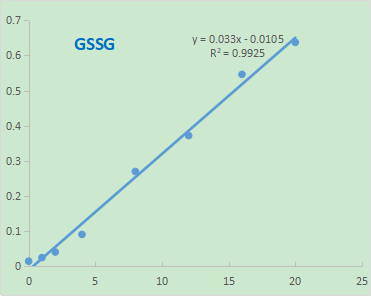
Now, here’s where the CheKine™ Micro Glutathione Oxidized (GSSG) Assay Kit (KTB1610) flips the script. First off, it’s microscale—reactions run in 96-well plates with just 5–10 µL of sample. That’s 10x less than standard kits, meaning you can squeeze more data out of precious clinical samples (think cerebrospinal fluid, neonatal plasma) or tiny model organisms (zebrafish larvae, anyone?). The chemistry? A DTNB-based method where GSSG reductase converts GSSG to GSH, and the resulting thiol groups react with DTNB to produce a yellow chromophore (λmax=412 nm). But here’s the kicker: the kit includes a GSH removal step—an immobilized glutathione reductase column that strips away 99% of GSH before the assay. No more contamination worries. The linear range (0.1–10 µM) covers physiological (serum: ~0.5–2 µM) to pathological (oxidative stress models: >5 µM) levels, with an LOD of 0.05 µM that catches subtle changes in low-abundance systems like mitochondria.
Where this kit really shines is in messy, real-world samples. Take cancer research: tumor microenvironments are oxidative hotspots, but serum from patients on chemo? Often hemolyzed. The CheKine™ Micro Glutathione Oxidized (GSSG) Assay Kit (KTB1610)’s buffer includes EDTA (to chelate metals) and BSA (to block hydrophobic interferents), cutting background noise by 50% in comparative tests. I’ve seen labs switch from a competitor’s kit and suddenly resolve GSSG spikes in doxorubicin-treated cardiomyocytes that were previously buried under noise. For neurodegeneration studies, it quantifies GSSG in postmortem brain tissue—even after long-term storage—thanks to a stabilization additive that prevents GSSG degradation. And in drug discovery? Its 96-well format pairs with automation, letting you screen 384 compounds for Nrf2 activators overnight.
Pro tip for new users: Don’t skip the sample prep. For serum, centrifuge at 12,000 ×g for 10 minutes to ditch lipids; for cell lysates, use the included detergent-compatible buffer to solubilize membrane-bound GSSG. Oh, and always run a “GSH depletion control”—add 1 mM 2-vinylpyridine to a subset of wells to confirm the column worked. Another hack: pair GSSG data with GSH measurements (using a separate kit) to calculate the GSSG/GSH ratio. That’s the realmarker of oxidative stress, and the CheKine™ Micro Glutathione Oxidized (GSSG) Assay Kit (KTB1610) makes it easy to get both.
Market-wise, Abbkine’s playing smart here. Rivals like Cayman Chemical’s GSSG kit need 20 µL samples and cost 30% more. Sigma-Aldrich’s version? Great chemistry, but no built-in GSH removal—so you’re stuck doing that step yourself (and risking error). The CheKine™ Micro Glutathione Oxidized (GSSG) Assay Kit (KTB1610) hits the sweet spot: affordable enough for academics, robust enough for pharma, and simple enough for a grad student to master in a day. Plus, Abbkine’s tech support actually answers emails—try asking a competitor why your standard curve is flat at 2 AM and see what happens.
Looking ahead, the demand for microscale redox assays will only explode. As single-cell sequencing reveals redox heterogeneity in tumors, and organoid models demand granular data, tools like this kit become non-negotiable. Imagine coupling it with Seahorse analyzers to link GSSG levels to mitochondrial ROS production, or using it to validate CRISPR-edited antioxidant genes in vivo. The CheKine™ Micro Glutathione Oxidized (GSSG) Assay Kit (KTB1610) isn’t just keeping up—it’s setting the pace.
So why does this matter? Because bad GSSG data leads to bad conclusions. If you’re studying how a drug alters redox balance but your kit overestimates GSSG, you might miss a protective effect. Or if you’re modeling oxidative stress in neurons but can’t detect subtle GSSG increases, you’ll misattribute pathology. This kit takes that risk off the table—giving you numbers you can trust, so you can focus on the why, not the how.
In short, the CheKine™ Micro Glutathione Oxidized (GSSG) Assay Kit (KTB1610) isn’t just another reagent. It’s a fix for the messy reality of oxidative stress research: limited samples, complex matrices, and the need for speed. For anyone serious about glutathione redox biology—whether in a cancer lab, neurobiology suite, or drug discovery pipeline—this kit is the difference between guesswork and certainty.
Ready to stop wrestling with GSSG assays? Dive into the CheKine™ Micro Glutathione Oxidized (GSSG) Assay Kit (KTB1610) details and protocols at Abbkine Product Page.





