




Mastering DNA Labeling with Hoechst 33342 (Abbkine BMD0062): An Essential Practical Handbook for Biological Researchers
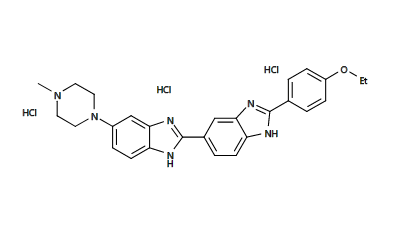
In the rapidly advancing realm of biological and biomedical research, the quest for precise, non-disruptive DNA labeling reagents has never been more pressing—fueling the demand for tools that seamlessly blend specificity, versatility, and adaptability to diverse experimental workflows. Hoechst 33342 has long been recognized as a gold standard among blue fluorescent DNA stains, valued for its unique ability to interact with double-stranded DNA while preserving cellular function. Abbkine, a reputable provider of life science tools, delivers this high-performance reagent under catalog number BMD0062 (product link: https://www.abbkine.com/?s_type=productsearch&s=BMD0062), offering researchers a cost-effective, reliable solution for applications ranging from live-cell imaging to flow cytometry. This practical handbook is designed to equip scientists with actionable insights, step-by-step protocols, and critical considerations to optimize the use of Hoechst 33342 (Abbkine BMD0062) and elevate the quality of their DNA labeling experiments.
Hoechst 33342, a cell membrane-permeant blue fluorescent DNA stain, stands out due to its ability to bind selectively to the minor groove of double-stranded DNA (dsDNA) without compromising cell viability in most experimental settings. This characteristic makes it an ideal choice for live-cell imaging, flow cytometry analysis, and fluorescence microscopy applications where preserving cellular integrity is critical. Unlike some DNA dyes that require cell fixation or permeabilization, Abbkine’s Hoechst 33342 (BMD0062) can penetrate intact cell membranes, enabling real-time observation of DNA dynamics, such as chromatin condensation during cell cycle progression or apoptotic events. Its blue fluorescence emission (typically around 460 nm when excited at ~350 nm) minimizes spectral overlap with other common fluorophores like GFP or RFP, facilitating multiplexing experiments to study multiple cellular targets simultaneously.
To maximize the performance of Hoechst 33342 (Abbkine BMD0062), adherence to optimized experimental protocols is essential. First, reagent preparation: the dye is supplied as a solid (10 mg per vial, priced at $39), and it is recommended to reconstitute it in high-quality DMSO to create a concentrated stock solution (e.g., 10 mg/mL). DMSO ensures optimal solubility, but researchers must avoid excessive exposure of cells to DMSO, as high concentrations can induce cytotoxicity. A working concentration range of 1–10 μg/mL is typically effective for most cell types, though titration may be necessary to balance signal intensity and minimal cell stress. For live-cell labeling, incubate the cells with the diluted dye at 37°C in a CO₂ incubator for 15–30 minutes; this allows sufficient time for membrane penetration and DNA binding while preventing non-specific staining. For fixed-cell samples, Hoechst 33342 (BMD0062) can be added post-fixation and permeabilization, with incubation times reduced to 5–10 minutes, as membrane barriers are no longer intact.
Key considerations for successful DNA labeling with Hoechst 33342 (Abbkine BMD0062) extend beyond protocol optimization. Photostability is a critical factor in long-term imaging experiments—while Hoechst 33342 exhibits moderate photostability, prolonged exposure to excitation light can lead to photobleaching, reducing signal intensity over time. To mitigate this, researchers can use anti-fade mounting media for fixed samples or limit excitation time during live-cell imaging. Additionally, pH sensitivity should be noted: the dye’s binding affinity to DNA can be affected by extreme pH values, so maintaining a physiological buffer environment (e.g., PBS, pH 7.2–7.4) is crucial for consistent results. It is also important to distinguish between Hoechst 33342 and related analogs like Hoechst 33258; while both bind dsDNA, Hoechst 33342 offers superior cell membrane permeability, making it the preferred choice for live-cell applications—a distinction that underscores the value of Abbkine’s BMD0062 for researchers prioritizing non-invasive labeling.
Troubleshooting common challenges is integral to harnessing the full potential of Hoechst 33342 (Abbkine BMD0062). Non-specific staining, often caused by excessive dye concentration or prolonged incubation, can be resolved by reducing the working concentration or shortening incubation time. Weak signal intensity may stem from insufficient dye penetration (especially in thick tissue sections or cells with altered membrane permeability) or improper excitation/emission filter settings. In such cases, increasing the dye concentration slightly (within the recommended range) or using a permeabilization step (for live cells with compromised membranes) can enhance signal. For flow cytometry applications, ensuring proper cell washing after dye incubation is vital to remove unbound dye, which can contribute to high background noise and inaccurate data interpretation.
In summary, Hoechst 33342 (Abbkine BMD0062) is a robust, versatile DNA labeling reagent that addresses the core needs of researchers in cell biology, immunology, and drug discovery. Its cell membrane permeability, specific dsDNA binding, and compatibility with multiple imaging platforms make it a staple in laboratories worldwide. By following the practical guidelines outlined here—from reagent reconstitution and concentration optimization to troubleshooting common issues—researchers can achieve reliable, high-quality results in their DNA labeling experiments. Abbkine’s commitment to quality ensures that BMD0062 delivers consistent performance, making it a trusted choice for both basic research and translational studies. For more detailed product specifications and technical support, visit the official product page at https://www.abbkine.com/?s_type=productsearch&s=BMD0062 and unlock the full potential of Hoechst 33342 in your research endeavors.





