




Magnetic Beads Conjugated Anti-V5 Tag Mouse Monoclonal Antibody (11D5) by Abbkine (Catalog ABT2174): A Practical Guide to Streamlined V5-Tagged Protein Immunoprecipitation
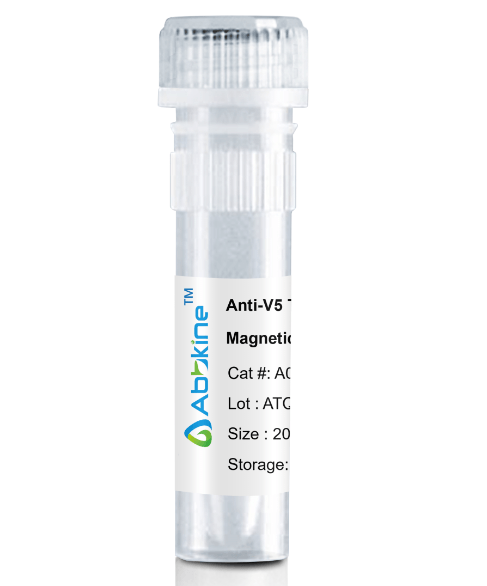
In the realm of protein interaction and purification research, V5 tags have become a cornerstone tool due to their small size, high solubility, and minimal interference with protein structure or biological function. Immunoprecipitation (IP)—the gold standard technique for isolating V5-tagged proteins and their binding partners—relies heavily on the efficiency of antibody-bead conjugation, as non-specific binding, low recovery rates, and cumbersome workflows often hinder experimental progress. This is where Abbkine’s Magnetic Beads Conjugated Anti-V5 Tag Mouse Monoclonal Antibody (clone 11D5), catalog number ABT2174 (available at https://www.abbkine.com/?s_type=productsearch&s=ABT2174), emerges as a transformative solution. Engineered specifically for IP applications with cross-reactivity to mammalian and bacterial systems, this promoted reagent combines the specificity of monoclonal antibody technology with the convenience of magnetic bead separation to address core pain points in V5-tagged protein research. This practical guide delivers step-by-step optimization strategies, technical insights, and best practices to maximize the performance of ABT2174, empowering researchers to achieve reliable, high-yield IP results.
Understanding the unique advantages of magnetic bead conjugation in ABT2174 is the first step toward mastering V5-tagged protein IP. Traditional IP uses agarose or sepharose beads, which require centrifugation for separation— a process that risks sample loss, increases handling time, and introduces mechanical stress that can disrupt protein complexes. Magnetic beads eliminate these issues: they form stable conjugates with the 11D5 monoclonal antibody, enabling rapid separation via magnetic racks without centrifugation, reducing workflow time by 30–40% and minimizing protein degradation. Abbkine’s proprietary magnetic bead formulation ensures uniform antibody loading (≈2–5 μg antibody per mg beads) and high binding capacity for V5-tagged proteins, while the beads’ superparamagnetic properties prevent aggregation and ensure consistent performance across experiments. Unlike free antibodies that require pre-incubation with beads (adding extra steps and variability), ABT2174 comes ready-to-use with pre-conjugated beads—eliminating the need for antibody-bead coupling optimization and reducing the risk of inconsistent conjugation efficiency. For researchers, this translates to streamlined workflows, higher protein recovery rates, and more reproducible results—directly addressing the industry’s frustration with time-consuming, error-prone traditional IP methods.
Optimizing sample preparation is critical to unlocking the full potential of Magnetic Beads Conjugated Anti-V5 Tag Mouse Monoclonal Antibody (11D5) in IP. Start with lysate preparation: use a detergent-compatible lysis buffer (e.g., RIPA buffer with 1% Triton X-100) supplemented with protease and phosphatase inhibitors to preserve protein integrity and prevent degradation of V5-tagged proteins or their interaction partners. For mammalian cells (e.g., HEK293, CHO), seed cells to 80–90% confluency before lysis, ensuring a lysate concentration of 1–5 mg/ml—too dilute a lysate reduces binding efficiency, while overly concentrated samples increase non-specific background. For bacterial cultures (e.g., E. coli BL21 expressing recombinant V5-tagged proteins), harvest cells during log-phase growth and use a lysozyme-supplemented lysis buffer to break down cell walls, followed by sonication to release soluble proteins. Clarify lysates via centrifugation (12,000 × g for 15 minutes at 4°C) to remove cell debris—uncleared lysates will bind to magnetic beads, increasing background noise. Key tip: Avoid using high concentrations of SDS (exceeding 0.1%) in lysis buffers, as it can disrupt the antibody-antigen interaction between the 11D5 clone and V5 tag.
Mastering the binding and washing steps with ABT2174 is essential to minimizing non-specific binding and maximizing target protein recovery. Begin by equilibrating the magnetic beads: resuspend the ABT2174 solution thoroughly (magnetic beads may settle during storage), then transfer 20–50 μl of beads (per 500 μg lysate) to a microcentrifuge tube. Place the tube on a magnetic rack for 30 seconds to pellet beads, discard the supernatant, and wash beads twice with 500 μl of IP wash buffer (e.g., PBS with 0.05% Tween-20) to remove residual storage buffer. Add the clarified lysate to the equilibrated beads, then incubate with gentle rotation at 4°C for 1–2 hours (or overnight for low-abundance proteins). Overnight incubation is preferred for bacterial lysates or low-expression V5-tagged proteins, as it allows for more thorough binding without increasing non-specific interactions. After incubation, place the tube on the magnetic rack to separate beads from the lysate, discard the supernatant (containing unbound proteins), and perform 4–5 wash cycles with 500 μl wash buffer—each wash involves resuspending beads, incubating for 1 minute, and separating via magnet. The final wash should use buffer without detergent (e.g., plain PBS) to prevent interference with downstream applications (e.g., WB, mass spectrometry).
Elution of V5-tagged proteins from ABT2174 magnetic beads requires a balance between efficient release and preservation of protein integrity. Two primary elution methods are recommended, depending on downstream use: For Western Blot (WB) or SDS-PAGE analysis, use denaturing elution: resuspend beads in 20–30 μl of 2× Laemmli buffer, incubate at 95°C for 5 minutes, then place on the magnetic rack— the supernatant contains eluted V5-tagged proteins, ready for loading onto gels. For native protein applications (e.g., co-IP for protein-protein interaction studies, enzyme activity assays), use non-denaturing elution: resuspend beads in 50–100 μl of V5 peptide elution buffer (100 μg/ml V5 peptide in PBS), incubate with gentle rotation at room temperature for 15–20 minutes, then separate via magnet. The V5 peptide competes with the V5-tagged protein for binding to the 11D5 antibody, enabling native elution without disrupting protein complexes. Key consideration: Avoid harsh elution buffers (e.g., high pH >10 or low pH <2) as they can denature the 11D5 antibody and magnetic beads, reducing their reusability (ABT2174 beads can be reused 2–3 times with proper regeneration via acid wash and neutralization).
Troubleshooting common IP challenges with Magnetic Beads Conjugated Anti-V5 Tag Mouse Monoclonal Antibody (11D5) ensures consistent, reliable results. If experiencing high background noise (common in complex lysates), add 0.5–1 mg/ml BSA to the lysis and wash buffers to block non-specific binding sites on the beads. Alternatively, pre-clear the lysate with non-specific mouse IgG-conjugated magnetic beads for 30 minutes at 4°C before adding ABT2174—this removes proteins that bind non-specifically to mouse IgG or magnetic beads. For low recovery of V5-tagged proteins, increase the bead volume (up to 100 μl per 500 μg lysate) or extend the incubation time to overnight. Ensure that the V5 tag is accessible (N-terminal or C-terminal tags are preferred; internal tags may be hidden due to protein folding). If eluted proteins are degraded, check that protease inhibitors were fresh and properly added to the lysis buffer—consider adding a broad-spectrum protease inhibitor cocktail and storing all samples on ice during processing. For bacterial lysates with low soluble protein, optimize induction conditions (e.g., lower IPTG concentration, shorter induction time) to reduce inclusion body formation, as ABT2174 primarily binds soluble V5-tagged proteins.
Best practices for storage and handling of ABT2174 extend its lifespan and maintain performance. Store the antibody-bead conjugate at 4°C (do not freeze) to prevent bead aggregation and antibody denaturation—freezing can disrupt the conjugation between the 11D5 clone and magnetic beads, reducing binding efficiency. Avoid repeated vortexing or vigorous pipetting, as this can damage the beads’ surface and reduce their magnetic properties. When not in use, keep the solution resuspended by gently inverting the tube 2–3 times weekly—settled beads may form clumps that are difficult to resuspend. The reagent is stable for up to 12 months when stored properly, and each 1ml vial can support 20–50 IP experiments (depending on bead volume per assay), offering cost-effectiveness for high-throughput labs despite the $359 price point. Additionally, always bring the reagent to room temperature and resuspend thoroughly before use—cold beads can reduce binding kinetics with the V5 tag.
In the context of modern IP research, Magnetic Beads Conjugated Anti-V5 Tag Mouse Monoclonal Antibody (11D5) (ABT2174) addresses a critical industry need for streamlined, specific, and reliable V5-tagged protein isolation. As researchers increasingly focus on studying dynamic protein interactions and low-abundance targets, the demand for IP reagents that minimize variability and maximize recovery has never been higher. Abbkine’s ABT2174 meets this demand by combining the specificity of the 11D5 monoclonal clone (which binds a conserved epitope on the V5 tag, ensuring no cross-reactivity with endogenous proteins) with the convenience of magnetic beads—eliminating the inefficiencies of traditional IP methods. Its cross-reactivity to mammalian and bacterial systems further enhances its utility, allowing researchers to use the same reagent for recombinant protein purification in bacteria and functional interaction studies in mammalian cells. For labs seeking to elevate their IP workflows, ABT2174 is not just a reagent but a catalyst for more efficient, reproducible research.
In conclusion, Abbkine’s Magnetic Beads Conjugated Anti-V5 Tag Mouse Monoclonal Antibody (clone 11D5) (catalog ABT2174) is a precision-engineered tool that simplifies and strengthens V5-tagged protein IP. Its magnetic bead conjugation streamlines workflows, the 11D5 clone ensures exceptional specificity, and its cross-system reactivity supports diverse experimental designs. By following the practical optimization strategies, troubleshooting tips, and best practices outlined in this guide, researchers can unlock the full potential of ABT2174—achieving high-yield, low-background IP results that drive meaningful discoveries in protein science. Whether you’re studying protein-protein interactions, purifying recombinant V5-tagged proteins, or validating target expression, ABT2174 delivers the reliability and efficiency that modern research demands. To integrate this essential IP tool into your workflow, visit its product page at https://www.abbkine.com/?s_type=productsearch&s=ABT2174 and take the first step toward more robust, streamlined V5-tagged protein research.





