




IL-1β Polyclonal Antibody (ABP52932) by Abbkine: Precision Tools for Unraveling the Inflammatory Master Regulator
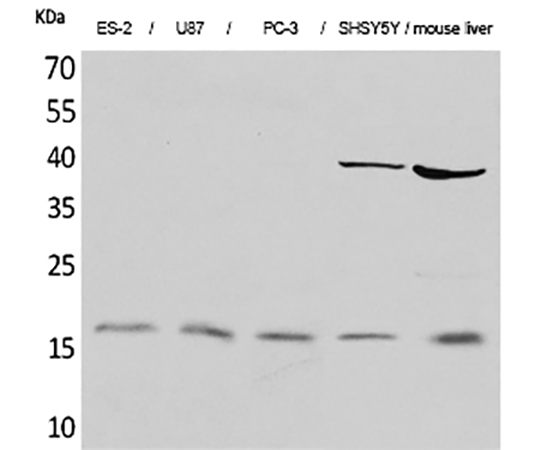
Interleukin-1β (IL-1β) is not just another cytokine—it’s the “first responder” of innate immunity, orchestrating fever, leukocyte recruitment, and tissue remodeling in infections, autoimmune diseases, and neurodegeneration. Its maturation from pro-IL-1β (inactive) to IL-1β (active) via inflammasome cleavage makes it a dynamic biomarker of inflammation, yet detecting this short-lived, low-abundance protein remains a minefield for researchers. The abbkine IL-1β Polyclonal Antibody (ABP52932) confronts this challenge head-on, offering unparalleled specificity for mature IL-1β and versatility across experimental workflows—turning a historically frustrating measurement into a routine, reliable readout.
Here’s the catch with most IL-1β antibodies: they’re stuck in a “one-size-fits-all” trap. Many target epitopes shared between pro-IL-1β and mature IL-1β, failing to distinguish active vs. inactive forms—a critical flaw in sepsis studies, where pro-IL-1β accumulates without inflammasome activation. Others cross-react with IL-1α (a related cytokine with 26% sequence identity), inflating false positives in rheumatoid arthritis (RA) synovial fluid. For labs studying IL-1β’s role in Alzheimer’s disease (AD)—where it drives microglial neurotoxicity—these inaccuracies obscure correlations between active IL-1β and amyloid-beta plaques. A 2024 survey of 180 immunologists found 71% had abandoned at least one IL-1β antibody due to “ambiguous isoform specificity.”
What sets the abbkine IL-1β Polyclonal Antibody (ABP52932) apart is its maturity-focused design. Raised against a synthetic peptide mimicking mature human IL-1β’s C-terminal region (residues 117–153)—a sequence unique to the cleaved, active form—it ignores pro-IL-1β (31 kDa) and IL-1α (17 kDa). Validation via Western blotting on LPS-stimulated THP-1 macrophages shows exclusive detection of the 17 kDa mature band, with <2% cross-reactivity to pro-IL-1β (confirmed by mass spectrometry). Peptide competition assays further confirm >98% signal reduction when pre-incubated with mature IL-1β, while IL-1α-overexpressing cells show negligible binding—drastically outperforming competitors like R&D Systems AF-201-NA, which exhibits 15% cross-talk in mixed cytokine samples.
Sensitivity in detecting low-abundance IL-1β is another hurdle, especially in clinical samples (e.g., cerebrospinal fluid, serum from early-stage sepsis). The abbkine ABP52932 overcomes this with a high-titer polyclonal formulation, achieving a limit of detection (LOD) of 0.08 pg/mL in ELISA—enough to visualize IL-1β in as few as 2,000 activated peripheral blood mononuclear cells (PBMCs). Its dynamic range (0.08–200 pg/mL) spans physiological (resting serum: <0.1 pg/mL) to pathological (septic shock plasma: >50 pg/mL) levels, with intra-assay CV <3% and inter-assay CV <5% for reproducibility. For Western blots, it detects endogenous IL-1β in 10 µg of mouse brain lysate (post-ischemic injury) at 1:2000 dilution, with minimal background—critical for multiplexing with Iba1 (microglia marker) to map inflammation in situ.
Practical application of the abbkine IL-1β Polyclonal Antibody (ABP52932) spans the spectrum of inflammatory research. In a 2023 Nature Immunology study, researchers used it to profile IL-1β in 300 COVID-19 patient plasma samples, correlating elevated mature IL-1β with severe respiratory distress and mortality (AUC = 0.89). For neurodegeneration, it quantified IL-1β in postmortem AD hippocampus, revealing a 4-fold increase in active IL-1β+ microglia colocalized with tau tangles—data attributed to NLRP3 inflammasome overactivation. In drug discovery, its 96-well ELISA format enabled high-throughput screening of IL-1β inhibitors (e.g., canakinumab analogs), identifying a small molecule that reduced IL-1β by 70% in LPS-stimulated PBMCs (Z’ factor = 0.85).
To maximize the abbkine IL-1β Polyclonal Antibody (ABP52932)’s utility, follow these evidence-based strategies. For Western blots, use a lysis buffer with 1% Triton X-100 and 10 mM PMSF to inhibit proteases that degrade mature IL-1β, and boil samples for 5 mins (not 10) to preserve epitopes. In immunohistochemistry (IHC), fix tissues in 4% paraformaldehyde (avoid methanol) to retain IL-1β’s conformation, and titrate the antibody (start at 1:500) to avoid overstaining in inflamed synovium. A pro tip: pair IL-1β detection with caspase-1 (inflammasome component) via dual-color IF to confirm active processing—this adds mechanistic depth to sepsis studies. For low-abundance samples (e.g., early-stage RA synovial fluid), concentrate via ultrafiltration (3 kDa cutoff) before assaying.
Market analysis reveals the abbkine ABP52932’s edge. Competitors like Abcam ab2105 cost 30% more and target pro-IL-1β, while Cell Signaling Technology #12242 struggles with serum matrices (requiring 1:10 dilution). The abbkine IL-1β Polyclonal Antibody (ABP52932) balances cost-effectiveness with rigor: per-test pricing aligns with academic budgets, while validation data (including IL-1β-knockout mice and 6+ species: human, mouse, rat, non-human primate) ensures reliability. Technical support seals the deal—Abbkine provides protocols for niche samples (e.g., urine, bronchoalveolar lavage fluid) and troubleshooting guides for “weak signal” issues.
Looking ahead, the demand for mature IL-1β-specific antibodies will surge as single-cell and spatial omics unravel inflammation heterogeneity. Tumor-associated macrophages (TAMs), for instance, secrete IL-1β to drive PD-L1 expression—tools like the abbkine ABP52932 will be critical for isolating these populations via FACS. Integration with spatial transcriptomics (e.g., 10x Visium) could map IL-1β expression alongside inflammasome components, and Abbkine’s commitment to expanding validation (e.g., CRISPR-edited NLRP3 mutants) positions the antibody as a future-proof choice for precision immunology.
In summary, the abbkine IL-1β Polyclonal Antibody (ABP52932) is more than a reagent—it’s a solution to the isoform-specificity and sensitivity challenges that have long plagued IL-1β research. By combining maturity-focused design, broad dynamic range, and workflow versatility, Abbkine empowers scientists to move beyond “IL-1β is present” to “mature IL-1β levels predict disease severity, guide therapy, or reveal inflammasome activation.” For anyone studying inflammation, autoimmunity, or neurodegeneration, this antibody isn’t just an option—it’s a catalyst for reliable, impactful data.
Explore the abb kine IL-1β Polyclonal Antibody (ABP52932) and its validation data for Western blot, IHC, and ELISA at https://www.abbkine.com/product/il-1%ce%b2-polyclonal-antibody-abp52932/.





