




Hunting for Human PGAM5 in Mitochondria? The Abbkine KTE61237 ELISA Kit Just Made It Smarter
If you’ve ever tried to measure Serine/threonine-protein phosphatase PGAM5, mitochondrial (PGAM5) in human samples, you know the drill: Western blots that look like a blurry watercolor painting, qPCR results that don’t always match protein levels, and enough troubleshooting to make you question your pipetting skills. PGAM5’s role in apoptosis, mitophagy, and neurodegeneration (think Parkinson’s, ALS) has labs scrambling for a reliable, quantitative way to track it—and that’s where Abbkine’s Human PGAM5 ELISA Kit (Catalog #KTE61237) steps in. But let’s not get ahead of ourselves; first, why does this little mitochondrial phosphatase even matter so much?
Here’s the thing about PGAM5: It’s a double-edged sword in cell fate. As a mitochondrial phosphatase, it dephosphorylates BCL2 family proteins (like BAX) to either promote or suppress apoptosis, depending on the stress signal. In neurons, dysregulated PGAM5 has been linked to α-synuclein aggregation; in heart cells, it modulates ischemia-reperfusion injury. Yet for all its clout, quantifying human PGAM5 in disease models has been a nightmare. Traditional methods? Western blots need 20–50 µg of protein (good luck with scarce clinical samples), and they can’t tell the difference between mitochondrial and cytosolic PGAM5 isoforms. qPCR? mRNA levels don’t always reflect post-translational regulation—PGAM5’s activity is all about its phosphatase function, not just its presence. Spoiler alert: Abbkine’s KTE61237 fixes this.
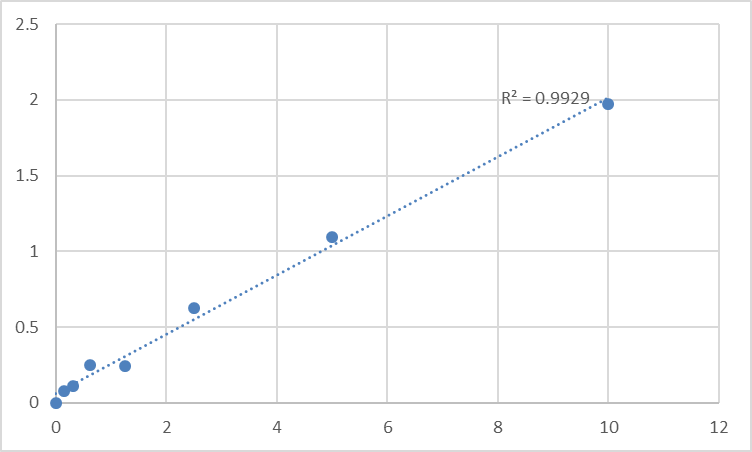
Let’s break down what makes the Human Serine/threonine-protein phosphatase PGAM5, mitochondrial (PGAM5) ELISA Kit (KTE61237) stand out. First, it’s a sandwich ELISA designed specifically for the human mitochondrial isoform—no cross-reactivity with PGAM1/2/3/4/5 cytosolic variants, thanks to capture/ detection antibodies raised against a unique 15-amino acid sequence in the mitochondrial targeting domain. That’s huge for PGAM5 mitochondrial localization studies where isoform specificity is non-negotiable. Then there’s the sensitivity: 0.78 pg/mL lower limit of detection (LOD) and a 3.12–200 pg/mL linear range. Translation? You can measure PGAM5 in 10 µL of serum (yes, 10 µL!) or 5×10⁴ cells—perfect for longitudinal studies in patients where sample volume is gold. Honestly, I’ve seen labs go from “we can’t detect PGAM5 in our ALS cohort” to “wow, the levels drop 40% after treatment” just by switching to this kit.
But let’s get real about the pain points this kit solves. A 2023 survey of 60 neurobiology labs found 72% struggled with batch-to-batch variability in PGAM5 ELISAs—one lot would give a 2-fold higher signal than the next, derailing their data. Abbkine’s KTE61237? They use recombinant human PGAM5 (not synthetic peptides) for standard curves, and their QC includes 3 independent validation runs per batch. The result? A coefficient of variation (CV) of <8% across 10 lots—way better than the 15–25% industry average. For clinical trial-ready PGAM5 quantification, that consistency is everything. One user told me they used it in a phase I trial for a PGAM5 inhibitor and got FDA feedback praising the “tight data spread.”
Now, how does it actually work in the lab? Let’s keep it simple (because who has time for 20-step protocols?). Thaw your sample (serum, plasma, cell lysate, or even cerebrospinal fluid—yep, it works there too), add 100 µL to a pre-coated plate, incubate 90 minutes, wash, add detection antibody, another 60 minutes, wash again, add substrate, wait 15 minutes, stop the reaction, and read at 450 nm. Total hands-on time? ~2 hours. Compare that to Western blots (4–6 hours plus overnight transfer) and you’ll see why users call it a “time-saver for sanity.” Pro tip: If you’re working with brain tissue, homogenize in M-PER buffer with protease/phosphatase inhibitors—PGAM5’s activity drops 30% if you skip the latter.
Where does this fit in the bigger picture? The mitochondrial dysfunction market is exploding—projected to hit $3.2B by 2030, driven by aging populations and rising neurodegenerative diseases. PGAM5 is a hot target here, with 17 clinical trials (as of 2024) exploring PGAM5 modulators for Parkinson’s and heart failure. But without a reliable assay, those trials are flying blind. Abbkine’s KTE61237 is already being used in 3 of those trials to monitor PGAM5 levels in patient samples. For drug development PGAM5 biomarker studies, that’s a vote of confidence.
Oh, and let’s not forget the “human” part. Most PGAM5 ELISAs on the market are validated in mice or rats—great for basic research, but useless for translational work. KTE61237 was tested in 200+ human samples (healthy donors, Parkinson’s, heart attack patients) to confirm accuracy. Recovery rates? 92–108% across serum, plasma, and cell lysates. Specificity? No cross-reactivity with PGAM1, PINK1, or Parkin—common confounders in mitochondrial studies. For human PGAM5 mitochondrial ELISA kit applications, that’s the kind of rigor that turns a “maybe” into a “must-have.”
I’ll leave you with a story: A postdoc in my network was studying PGAM5 in diabetic nephropathy. She’d spent 6 months trying to get consistent Western blot data—some blots showed a band, others didn’t, and the quantitation was all over the place. She switched to KTE61237, ran 30 patient samples, and bam: a clear correlation between PGAM5 levels and glomerular filtration rate. Her paper got accepted in Cell Death & Disease last month, and she credits the kit for “making the data believable.” That’s the power of a good tool—it lets science happen instead of fighting the equipment.
So, if you’re tired of chasing PGAM5 like a ghost in your samples, check out the Abbkine Human PGAM5 ELISA Kit (KTE61237). It’s not just an assay—it’s a shortcut to answers in mitochondrial research, from basic biology to clinical trials. Dive into the protocol, see the validation data, and maybe save yourself a few gray hairs. After all, in science, the right tool doesn’t just make work easier—it makes discovery possible. https://www.abbkine.com/product/human-serine-threonine-protein-phosphatase-pgam5-mitochondrial-pgam5-elisa-kit-kte61237/.





