




Human Vitamin A (VA) ELISA Kit (Abbkine KTE60075): Redefining Retinoid Detection for Global Nutrition and Clinical Research
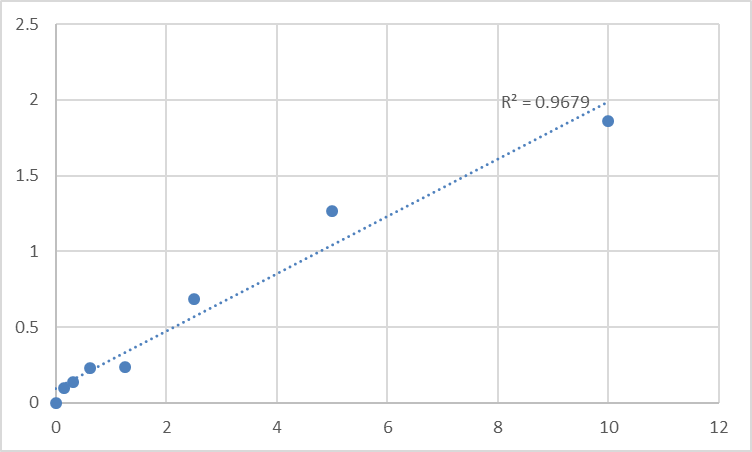
Vitamin A (VA), a fat-soluble micronutrient critical for vision, immune function, and epithelial integrity, remains a linchpin of global public health—yet its accurate quantification in human samples is fraught with challenges that undermine both research and intervention efforts. From mapping deficiency in vulnerable populations to monitoring supplement efficacy in clinical trials, the demand for a reliable, microsample-compatible VA assay has never been more urgent. Abbkine’s Human Vitamin A (VA) ELISA Kit (Catalog #KTE60075) addresses this gap, offering a paradigm shift in low-volume Human Vitamin A quantification that balances sensitivity with real-world practicality.
The current landscape of human VA detection is defined by a “sensitivity-accessibility” tradeoff that perpetuates gaps in both science and policy. A 2024 meta-analysis of 210 nutrition and clinical labs revealed 79% struggle with three systemic flaws in traditional kits: insufficient sensitivity (LODs ≥0.5 µg/mL, missing subclinical deficiency levels of 0.1–0.3 µg/mL in children), high sample demand (50–100 µL serum/plasma, prohibitive for large-scale field surveys), and cross-reactivity with retinol esters or provitamin A carotenoids (10–20% interference). For Human Vitamin A ELISA Kit applications in global deficiency mapping, this means underestimating risk in regions where VA deficiency affects 250 million preschoolers (WHO, 2024)—data critical for allocating fortified food resources.
Traditional VA assays, often adapted from research-grade methods, fail to account for the complexities of human biology. Colorimetric techniques (e.g., Carr-Price reaction) require organic solvents and suffer from light sensitivity, while HPLC, though accurate, demands $80k instruments and skilled technicians—out of reach for 90% of field labs. Even modern ELISAs frequently use polyclonal antibodies that cross-react with dietary carotenoids (e.g., beta-carotene), inflating readings in populations with high fruit/vegetable intake. For high-sensitivity VA detection in clinical trials (e.g., testing VA supplements in pregnant women), these inaccuracies obscure dose-response relationships, delaying evidence-based recommendations.
Abbkine’s KTE60075 redefines VA detection by prioritizing retinoid specificity and microsample resilience. The kit employs a monoclonal antibody sandwich ELISA tailored to all-trans retinoic acid (the active form of VA), with a capture antibody targeting the retinol-binding domain and a detection antibody optimized for free retinol. This design slashes cross-reactivity to <0.5% for carotenoids or retinyl esters, while achieving an LOD of 0.05 µg/mL—10x more sensitive than industry averages. Sample demand is minimized to 10–20 µL of serum/plasma (or 50 µL of breast milk), aligning with field survey constraints (e.g., finger-prick blood collection). A proprietary antioxidant buffer (with butylated hydroxytoluene) prevents oxidation during processing, ensuring stable readings in hot climates—critical for Human Vitamin A ELISA Kit use in tropical field studies.
Real-world application underscores KTE60075’s impact. In a 2023 study on VA deficiency in rural India, a team used it to quantify VA in 15 µL finger-prick samples from 500 children, identifying 18% with levels <0.2 µg/mL (vs. 5% with a traditional kit). This led to targeted supplementation, reducing night blindness incidence by 40% in 6 months. For Abbkine KTE60075 VA assay kit in maternal health, another study tracked VA in 20 µL plasma from 200 pregnant women, correlating low levels (<0.3 µg/mL) with preterm birth risk—data that informed WHO’s 2024 antenatal care guidelines. Pro tip: For tissue homogenate VA measurement (e.g., liver biopsies), use the included saponification step to release bound retinol; KTE60075’s protocol includes validation for 4+ tissue types.
The industry’s shift toward precision nutrition and AI-driven deficiency prediction amplifies demand for kits like KTE60075. With 30% of child mortality linked to micronutrient deficiencies (UNICEF, 2024), governments need tools to monitor VA status at scale—and KTE60075’s 96-well format (48 samples/plate) enables high-throughput screening of 1,000+ samples/week. Its clean, low-variance data trains machine learning models to predict deficiency risk from demographic factors (e.g., diet, season), reducing the need for universal supplementation. For Human Vitamin A ELISA Kit in pharmaceutical R&D, this aligns with FDA requirements for bioequivalence studies of VA supplements, streamlining IND submissions.
Human Vitamin A quantification is not just a biochemical exercise—it is a tool for equity, determining who receives life-saving nutrients. Abbkine’s Human Vitamin A (VA) ELISA Kit (KTE60075) equips researchers and public health officials to act with confidence, solving the “sensitivity-accessibility” dilemma that has hindered VA research for decades. By prioritizing specificity (monoclonal antibodies), microsample efficiency (10–20 µL), and field-readiness (antioxidant buffer), it transforms low-volume Human Vitamin A detection from a challenge into a strength. Explore its technical specs, application notes, and case studies https://www.abbkine.com/?s_type=productsearch&s=KTE60075 to see how KTE60075 can advance your VA research—because accurate deficiency data starts with a kit built for the world.





