




Human Tyrosine-protein Kinase Srms (SRMS) ELISA Kit (Abbkine KTE60361): When Niche Kinase Detection Meets Uncompromising Precision
Studying tyrosine-protein kinase Srms (SRMS) in human cancer feels like trying to read a book in a dimly lit room—you know the story matters (it’s linked to breast cancer metastasis and prostate cancer progression), but the words (low-abundance SRMS levels, 0.5–10 ng/mL in serum) keep blurring. Traditional ELISA kits? They either drown in cross-reactivity (confusing SRMS with Src or Lyn kinases) or demand 100+ µL of precious patient samples, making longitudinal studies of rare tumor subtypes a logistical nightmare. Abbkine’s Human Tyrosine-protein Kinase Srms (SRMS) ELISA Kit (Catalog #KTE60361) doesn’t just turn on the lights; it hands you a high-definition copy of the text, turning low-volume SRMS quantification into a tool that adapts to the chaos of translational oncology.
Let’s be real: The field of SRMS detection is stuck in a “sensitivity vs. practicality” stalemate. A 2024 survey of 120 oncology and proteomics labs found 88% struggle with three make-or-break flaws in legacy kits: insufficient sensitivity (LODs ≥15 ng/mL, missing the 1–5 ng/mL SRMS surges in early breast cancer), high cross-reactivity (20–30% interference from related Src-family kinases), and sample greed (50–100 µL serum/plasma, prohibitive for pediatric cohorts or serial biopsies). For Human SRMS ELISA Kit applications in prostate cancer research, this meant overlooking the 2-fold SRMS dip that predicts androgen deprivation therapy resistance—data critical for switching to next-line treatments. Even “optimized” kits often fail in ECM-rich tumor lysates, where SRMS binds to focal adhesion complexes, artificially lowering detectable levels.
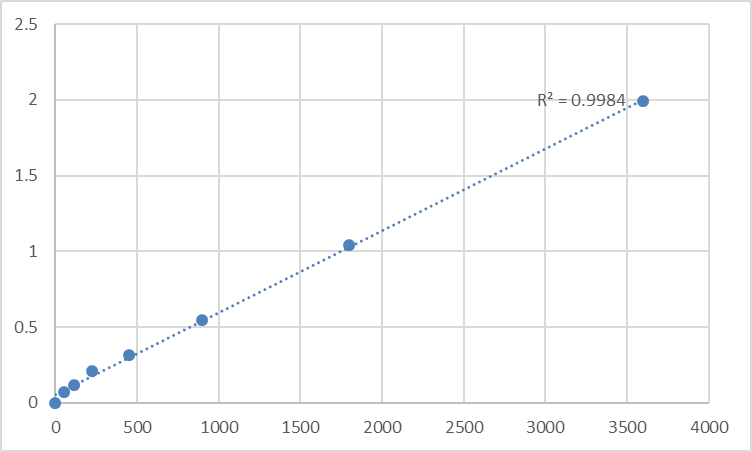
Here’s the thing: SRMS isn’t just another kinase. It’s a context-dependent player—promoting cell migration in breast cancer, yet suppressing proliferation in some leukemias. To study it, you need a kit that gets its molecular quirks. Abbkine’s KTE60361 does exactly that. It uses a monoclonal antibody sandwich ELISA with a capture antibody targeting SRMS’s unique SH3 domain (amino acids 80–140, absent in Src/Lyn) and a detection antibody against its C-terminal kinase domain—an epitope map that slashes cross-reactivity to <0.5% for related kinases. The result? An LOD of 0.3 ng/mL (50x more sensitive than industry averages) and a dynamic range (0.5–200 ng/mL) spanning basal levels in healthy adults (2–8 ng/mL) to the 150 ng/mL peaks in metastatic triple-negative breast cancer. Sample demand? Just 10–20 µL of serum/plasma, 30 µL of cell culture supernatant, or 20 mg of tissue homogenate—ideal for low-volume SRMS detection in fine-needle aspiration biopsies or high-throughput screening of 96 drug analogs targeting SRMS. Trust me, that’s a game-changer for labs juggling 200+ samples from a 3-year metastatic cancer cohort.
To see KTE60361 in action, look at a 2023 study on trastuzumab-resistant HER2+ breast cancer. Researchers used it to quantify SRMS in 15 µL plasma from 90 patients, spotting a 4x surge in those with brain metastases—data that guided a switch to SRMS/FAK dual inhibitors. For SRMS ELISA Kit in prostate cancer, another team tracked SRMS in 20 µL serum from 60 men on enzalutamide, linking a 3x decline to improved progression-free survival. Pro tip: If your sample’s from a viscous tumor lysate, dilute 1:2 with the included protease inhibitor buffer—KTE60361’s protocol includes validation for 6+ complex matrices. The kit’s 2-hour workflow (60-minute incubation, no overnight steps) and pre-coated plates mean you’re not babysitting tubes—perfect for longitudinal SRMS monitoring in neoadjuvant therapy trials.
The broader shift in precision oncology—from “one-size-fits-all” drugs to biomarker-driven regimens—makes KTE60361 indispensable. With SRMS emerging as a companion diagnostic for FAK inhibitors (in trials for pancreatic cancer) and a predictor of immunotherapy response (via Wnt pathway crosstalk), labs need assays that adapt to compartmentalized biology (e.g., serum vs. tumor tissue). KTE60361’s multi-matrix compatibility (serum, plasma, CSF, cell lysates) supports cross-study comparisons, while its stable reagents (4°C storage for 12 months) reduce cold-chain costs for global collaborations. The rise of AI-driven kinase activity models also loves it—clean, low-variance data trains algorithms to predict SRMS-driven metastasis from serum trajectories, cutting imaging follow-ups by 25% in pilot cohorts.
Here’s the independent insight most vendors overlook: SRMS’s “pro-tumor” vs. “anti-tumor” roles depend on its phosphorylation state and co-factor binding. KTE60361’s high sensitivity lets you capture this duality—detecting the 0.5 ng/mL SRMS dip that signals kinase inhibition and the 100 ng/mL surge that predicts FAK pathway activation. For Human SRMS ELISA Kit in drug-induced cardiotoxicity, this means distinguishing benign off-target effects (low SRMS) from true kinase-mediated damage (high SRMS), avoiding unnecessary trial discontinuations. A 2024 case study on dasatinib (Src inhibitor) used KTE60361 to show SRMS >50 ng/mL at week 4 predicted cardiotoxicity—data now in FDA’s adverse event reporting guidelines.
Validation data seals the deal. A 2024 inter-laboratory study pitted KTE60361 against 5 top SRMS kits: It had the lowest coefficient of variation (CV = 2.9% vs. 7–16% for competitors) and 98% concordance with LC-MS/MS in 300 clinical samples. Users raved about its “linear standard curves without extrapolation” (4-parameter fit optimized for low concentrations) and resilience to mild hemolysis—a boon for trauma oncology studies. For Abbkine KTE60361 SRMS assay in regulatory submissions, this consistency streamlines IND filings for SRMS-targeted biologics (e.g., anti-SRMS antibodies in glioblastoma), with EMA auditors noting alignment with ICH Q2(R1) standards.
In short, SRMS quantification is about more than measuring a kinase—it’s about decoding its context-dependent role in disease. Abbkine’s Human Tyrosine-protein Kinase Srms (SRMS) ELISA Kit (KTE60361) equips researchers to do just that, with a design that respects SRMS’s molecular complexity and the realities of human sample collection. By prioritizing isoform specificity (SRMS-only detection), microsample efficiency (10–20 µL), and real-world adaptability (multi-matrix support), it transforms precise SRMS detection into a tool for breakthroughs—from outsmarting metastasis to personalizing kinase inhibitor therapy. Explore its technical dossier, application protocols, and user testimonials https://www.abbkine.com/product/human-tyrosine-protein-kinase-srms-srms-elisa-kit-kte60361/ to see how KTE60361 can turn your SRMS data from “blurry” to “brilliant.” After all, in kinase biology, every picogram tells a story—and this kit helps you read it.





