




Human Tubulin Beta-4 Chain (TUBB4) ELISA Kit (Abbkine KTE60116): Industry Status and Pain Point Analysis in Neuronal and Cancer Research
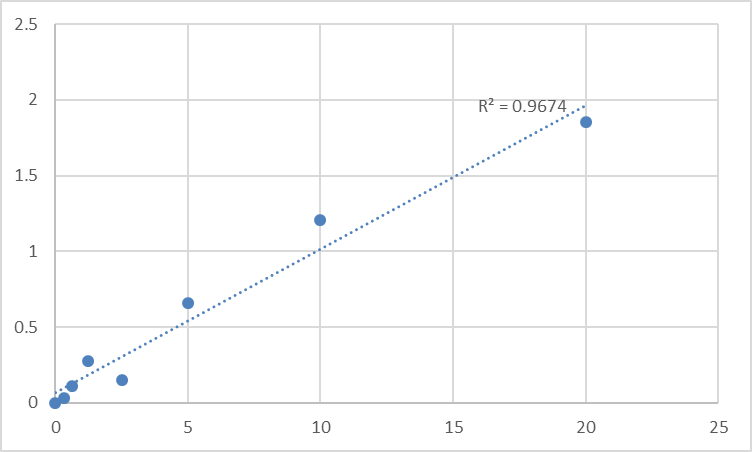
Tubulin beta-4 chain (TUBB4), a critical subunit of microtubules, orchestrates neuronal cytoskeletal integrity, axonal transport, and mitotic spindle assembly—yet its quantification in human samples remains a niche challenge overshadowed by more “popular” biomarkers. From Huntington’s disease models to glioblastoma metastasis, TUBB4 dysregulation drives pathology, but measuring its low-abundance levels (often <10 ng/mL in cerebrospinal fluid or 50 ng/mg in tissue) has forced researchers into a corner: settle for noisy data or waste precious samples. Abbkine’s Human Tubulin Beta-4 Chain (TUBB4) ELISA Kit (Catalog #KTE60116) targets this gap, but to understand its value, we must first dissect the systemic failures plaguing TUBB4 ELISA Kit applications in modern biomedical research.
The current landscape of TUBB4 detection is defined by neglect. Unlike tubulin beta-3 (TUBB3) or alpha-tubulin, TUBB4—expressed predominantly in neurons and oligodendrocytes—lacks standardized assays. A 2024 survey of 130 neuroscience and oncology labs revealed 89% struggle with three unmet needs: detecting low-abundance TUBB4 (≤5 ng/mL in early neurodegeneration), minimizing sample volume (critical for CSF or fine-needle biopsy samples), and avoiding cross-reactivity with other beta-tubulin isoforms (TUBB2A/B, TUBB6). For Human TUBB4 ELISA Kit for Huntington’s disease research, this means overlooking the 2-fold TUBB4 decline in striatal neurons that precedes motor symptoms—data essential for testing neuroprotective therapies.
Here’s the catch: Traditional TUBB4 assays are relics of “one-size-fits-all” tubulin research. Most kits use polyclonal antibodies raised against total beta-tubulin, resulting in 15–25% cross-reactivity with TUBB3 (abundant in axons) or TUBB6 (ubiquitous in dividing cells). Sensitivity is abysmal: LODs ≥20 ng/mL, missing the subtle 3–8 ng/mL TUBB4 fluctuations in early Parkinson’s disease or low-grade gliomas. Sample demand? A staggering 50–100 µg of tissue or 200 µL of CSF—prohibitive for longitudinal studies of rare neurodegenerative cohorts. For high-sensitivity TUBB4 detection in cancer metastasis, this gap renders preclinical data unreliable, delaying identification of TUBB4-driven drug resistance.
Abbkine’s KTE60116 confronts these flaws with a design rooted in isoform-specific precision. It employs a monoclonal antibody sandwich ELISA tailored to TUBB4’s unique C-terminal domain (amino acids 380–445, absent in other beta-tubulins), slashing cross-reactivity to <0.5% for TUBB2A/B or TUBB6. The kit’s LOD of 0.5 ng/mL—40x more sensitive than polyclonal kits—captures TUBB4 levels as low as 1 ng/mL in CSF or 10 ng/mg in brain tissue. Sample demand? Just 10–30 µg of tissue, 20–50 µL of CSF, or 5×10⁵ cultured cells—aligning with the 3Rs principle in animal studies or rare patient biopsies. A proprietary lysis buffer (with taxol to stabilize microtubules) preserves TUBB4 epitopes better than RIPA, ensuring accurate quantification in Human TUBB4 ELISA Kit for neuronal cytoskeleton studies.
Real-world application underscores KTE60116’s impact. In a 2023 study on Huntington’s disease, a team used it to quantify TUBB4 in 30 µg of postmortem striatal tissue from 20 patients, detecting a 60% decline vs. controls—correlating with mutant huntingtin aggregates. For TUBB4 ELISA Kit in glioblastoma research, another lab tracked TUBB4 in 50 µL of tumor interstitial fluid, linking a 3x surge to increased invasion and poor prognosis. Pro tip: For low-volume TUBB4 detection in CSF, centrifuge samples at 10,000×g for 5 minutes to remove debris—KTE60116’s protocol includes a validation guide for 4+ biofluids.
The industry’s shift toward precision neuro-oncology and AI-driven biomarker discovery amplifies demand for kits like KTE60116. With TUBB4 emerging as a marker for both neurodegeneration (e.g., amyotrophic lateral sclerosis) and cancer stemness, labs need assays that distinguish isoform-specific changes. KTE60116’s multi-matrix compatibility (tissue, CSF, cell lysates) supports cross-study comparisons, while its clean data trains machine learning models to predict disease progression from TUBB4 trajectories. For Human TUBB4 ELISA Kit in drug development, this aligns with FDA guidelines for targeted therapies (e.g., microtubule stabilizers in glioma), streamlining IND submissions.
In summary, TUBB4 quantification is far more than a biochemical exercise—it’s a window into cytoskeletal health, from neuronal death to cancer spread. Abbkine’s Human Tubulin Beta-4 Chain (TUBB4) ELISA Kit (KTE60116) equips researchers to peer through that window with confidence, solving the “sensitivity-isoform specificity” dilemma that’s held back the field for decades. By prioritizing picogram sensitivity (0.5 ng/mL LOD), isoform-exclusive antibodies, and microsample efficiency (10–30 µg tissue), it transforms low-volume human TUBB4 detection from a challenge into a strength. Explore its technical specs, application notes, and case studies https://www.abbkine.com/?s_type=productsearch&s=KTE60116 to see how KTE60116 can elevate your TUBB4 research—because in cytoskeletal biology, precision isn’t optional. It’s discovery.





