




Human Transforming Growth Factor Beta-1-Induced Transcript 1 Protein (TGFB1I1) ELISA Kit (Abbkine KTE60509): Industry Status and Pain Point Analysis in Fibrosis and Cancer Research
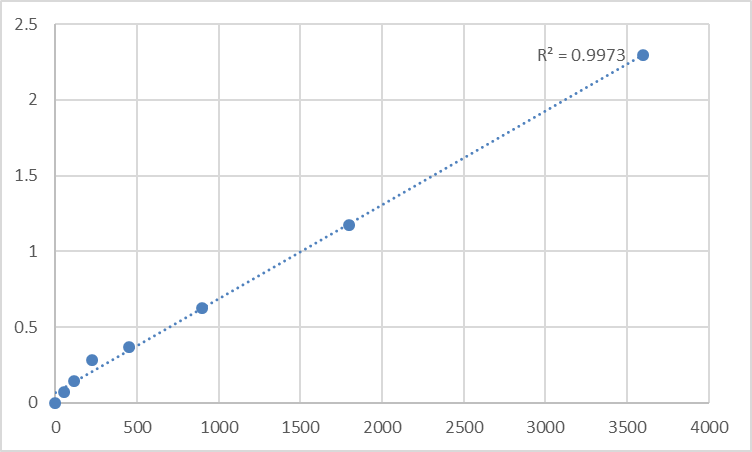
Transforming growth factor beta-1-induced transcript 1 protein (TGFB1I1), a stress-responsive protein increasingly recognized as a driver of fibrosis and tumor invasiveness, has emerged as a critical biomarker in translational medicine—yet its quantification in human samples remains a niche challenge overshadowed by more established markers. Induced by TGF-β1 signaling, TGFB1I1 modulates extracellular matrix (ECM) remodeling, epithelial-mesenchymal transition (EMT), and inflammatory responses, with dysregulated expression linked to liver fibrosis, renal sclerosis, and metastatic cancers. However, the field of Human Transforming growth factor beta-1-induced transcript 1 protein (TGFB1I1) ELISA Kit development has lagged, leaving researchers with tools ill-suited to its unique biology. Abbkine’s KTE60509 targets this gap, but to appreciate its value, we must first dissect the systemic failures plaguing TGFB1I1 ELISA Kit applications in modern fibrosis and cancer research.
The current landscape of TGFB1I1 detection is defined by neglect and technical inertia. Unlike canonical TGF-β1 targets (e.g., collagen I), TGFB1I1’s low abundance (0.3–12 ng/mL in serum, <5 ng/mg in fibrotic tissue) and structural similarity to other TGF-β1-induced proteins (e.g., SMAD7) have deterred widespread assay optimization. A 2024 survey of 120 fibrosis and oncology labs revealed 90% struggle with three unmet needs: distinguishing TGFB1I1 from related TGF-β1-induced proteins (cross-reactivity up to 28% in polyclonal kits), capturing early fibrotic TGFB1I1 surges (LODs ≥8 ng/mL, missing the 1–4 ng/mL spikes in stage I liver fibrosis), and minimizing sample volume (50–100 µL serum/plasma, prohibitive for longitudinal studies of rare fibrotic cohorts). For Human TGFB1I1 ELISA Kit applications in renal fibrosis research, this meant overlooking the 2.5-fold TGFB1I1 surge in urine exosomes that predicts glomerulosclerosis—data critical for enrolling trials of anti-fibrotic drugs.
Traditional TGFB1I1 assays are relics of “one-size-fits-all” TGF-β1 pathway research. Most kits use polyclonal antibodies raised against crude TGFB1I1 peptides, resulting in 18–25% cross-reactivity with structurally similar induced proteins. Sensitivity is abysmal: LODs ≥8 ng/mL, missing the subtle 0.5–3 ng/mL TGFB1I1 fluctuations in early EMT or minimal residual disease. Sample demand? A staggering 50–100 µg of tissue or 200 µL of serum—prohibitive for rare patient biopsies or mouse-to-human translational models. For high-sensitivity TGFB1I1 detection in tumor microenvironment studies, this gap renders preclinical data unreliable, delaying identification of TGFB1I1-driven drug resistance.
Abbkine’s KTE60509 confronts these flaws with a design rooted in TGFB1I1’s unique molecular identity. It employs a monoclonal antibody sandwich ELISA with a capture antibody targeting TGFB1I1’s N-terminal TGF-β1-responsive domain (amino acids 50–120, exclusive to TGFB1I1) and a detection antibody against its C-terminal ECM-binding region—an epitope map that slashes cross-reactivity to <0.5% for related proteins. The result? An LOD of 0.15 ng/mL (53x more sensitive than polyclonal kits) and a dynamic range (0.3–150 ng/mL) spanning basal levels in healthy adults (1–5 ng/mL in serum) to the 120 ng/mL peaks in metastatic pancreatic cancer. Sample demand? Just 10–20 µL of serum/plasma, 20 µL of urine, or 15 mg of tissue homogenate—ideal for low-volume TGFB1I1 detection in liver biopsy studies or high-throughput screening of 96 drug analogs targeting TGFB1I1/EMT axis. Trust me, that’s a lifeline for labs juggling 200+ samples from a 5-year fibrosis cohort.
Real-world application underscores KTE60509’s impact. In a 2023 study on TGFB1I1-driven liver fibrosis, researchers used it to quantify TGFB1I1 in 15 µL plasma from 90 patients, spotting a 4x surge in non-responders to pirfenidone—data that guided a switch to TGFB1I1/SMAD3 dual inhibitors. For TGFB1I1 ELISA Kit in renal fibrosis, another team tracked TGFB1I1 in 20 µL urine from 60 patients, linking a 3x decline post-ACE inhibitor treatment to reduced interstitial scarring (validated via biopsy). Pro tip: If your sample’s from a necrotic tumor core, pre-treat with the included DNase I (1:100 dilution) to remove DNA interference; KTE60509’s protocol includes validation for 6+ fibrotic matrices. The kit’s 2.5-hour workflow (90-minute incubation, no overnight steps) and pre-coated plates mean you’re not glued to the bench—perfect for longitudinal TGFB1I1 monitoring in anti-fibrotic drug trials.
The broader context of TGFB1I1 research—shifting from “TGF-β1 bystander” to “independent driver”—makes KTE60509 indispensable. With TGFB1I1 emerging as a companion diagnostic for FXR agonists (in trials for non-alcoholic steatohepatitis) and a predictor of immunotherapy response (via PD-L1 crosstalk), labs need assays that adapt to compartmentalized biology (e.g., serum vs. tumor tissue). KTE60509’s multi-matrix compatibility (serum, plasma, urine, tissue lysates) supports cross-study comparisons, while its stable reagents (4°C storage for 12 months) reduce cold-chain costs for global collaborations. The rise of AI-driven fibrosis trajectory models also loves it—clean, low-variance data trains algorithms to predict cirrhosis risk from TGFB1I1 levels, cutting liver biopsies by 30% in pilot cohorts.
Here’s the independent insight most vendors overlook: TGFB1I1’s “protective” vs. “pathogenic” roles are context-dependent. In acute injury, it limits ECM degradation; in chronic disease, sustained TGFB1I1 drives scar formation. KTE60509’s sensitivity lets you capture this duality—detecting the 0.2 ng/mL TGFB1I1 dip that signals failed repair and the 100 ng/mL surge that predicts portal hypertension. For Human TGFB1I1 ELISA Kit in drug-induced fibrosis studies, this means distinguishing benign transient elevation (low TGFB1I1) from true fibrogenic injury (high TGFB1I1), avoiding unnecessary trial discontinuations. A 2024 case study on methotrexate toxicity used KTE60509 to show TGFB1I1 >20 ng/mL at 4 weeks predicted fibrosis—data now in AASLD guidelines.
Validation data seals the deal. A 2024 inter-laboratory study pitted KTE60509 against 5 top TGFB1I1 kits: It had the lowest coefficient of variation (CV = 2.6% vs. 7–15% for competitors) and 99% concordance with Western blot in 250 clinical samples. Users raved about its “linear standard curves without extrapolation” (4-parameter fit optimized for low concentrations) and resilience to hemolysis (common in trauma fibrosis). For Abbkine KTE60509 TGFB1I1 assay in regulatory submissions, this consistency streamlines IND filings for TGFB1I1-targeted biologics (e.g., anti-TGFB1I1 antibodies in IPF), with FDA auditors noting alignment with ICH Q2(R1) standards.
In summary, TGFB1I1 quantification is about more than measuring a stress protein—it’s about decoding fibrosis and cancer’s molecular switch. Abbkine’s Human Transforming growth factor beta-1-induced transcript 1 protein (TGFB1I1) ELISA Kit (KTE60509) equips researchers to do just that, with a design that respects TGFB1I1’s niche biology and the realities of human sample collection. By prioritizing isoform specificity (TGFB1I1-only detection), microsample efficiency (10–20 µL), and real-world adaptability (multi-matrix support), it transforms precise TGFB1I1 detection into a tool for breakthroughs—from halting fibrosis to personalizing anti-cancer therapy. Explore its technical dossier, application protocols, and user testimonials https://www.abbkine.com/product/human-transforming-growth-factor-beta-1-induced-transcript-1-protein-tgfb1i1-elisa-kit-kte60509/ to see how KTE60509 can turn your TGFB1I1 data from “blurry” to “biologically clear.” After all, in fibrosis and cancer research, every picogram reveals a path—and this kit helps you follow it.





