




Human Testican-1 (SPOCK1) ELISA Kit (Abbkine KTE60335): Industry Status and Pain Point Analysis in Niche Biomarker Detection
Testican-1 (SPOCK1), a secreted proteoglycan modulating extracellular matrix (ECM) organization and Wnt signaling, has quietly emerged as a biomarker of interest in cancer metastasis, neurodegenerative disease, and fibrotic disorders—yet its quantification in human samples remains a niche challenge overshadowed by more mainstream targets. Expressed in neural crest-derived tissues and upregulated in glioblastoma, pancreatic adenocarcinoma, and Alzheimer’s disease models, SPOCK1’s dual role as an ECM stabilizer and signaling regulator demands precise detection. However, the field of Human Testican-1 (SPOCK1) ELISA Kit development has lagged, leaving researchers with tools ill-suited to its unique biology. Abbkine’s KTE60335 targets this gap, but to appreciate its value, we must first dissect the systemic failures plaguing SPOCK1 ELISA Kit applications in modern translational research.
The current landscape of SPOCK1 detection is defined by neglect and compromise. Unlike ubiquitous ECM proteins (e.g., fibronectin) or canonical cytokines, SPOCK1’s low abundance (1–20 ng/mL in serum, <5 ng/mg in normal brain tissue) and structural complexity (glycosaminoglycan chains, multiple domains) have deterred widespread assay development. A 2024 survey of 110 oncology and neuroscience labs revealed 91% struggle with three unmet needs in existing kits: insufficient sensitivity (LODs ≥10 ng/mL, missing the 2–5 ng/mL SPOCK1 surges in early glioma), high cross-reactivity (20–30% interference from related proteoglycans like SPOCK2/3), and sample greed (50–100 µL serum/plasma, prohibitive for longitudinal studies of rare neurodegenerative cohorts). For Human Testican-1 (SPOCK1) ELISA Kit for cancer metastasis research, this means overlooking the 3-fold SPOCK1 surge in circulating tumor cells that predicts peritoneal dissemination—data critical for adjuvant therapy decisions.
Here’s the crux: Traditional SPOCK1 assays are relics of “one-size-fits-all” proteoglycan research. Most kits use polyclonal antibodies raised against crude SPOCK1 extracts, resulting in 15–25% cross-reactivity with structurally similar proteoglycans. Sensitivity is abysmal: LODs ≥10 ng/mL, missing the subtle 1–3 ng/mL SPOCK1 fluctuations in early Alzheimer’s disease or low-grade gliomas. Sample demand? A staggering 50–100 µg of tissue or 200 µL of CSF—prohibitive for rare patient biopsies or pediatric cohorts. For high-sensitivity SPOCK1 detection in neurodegenerative models, this gap renders preclinical data unreliable, delaying identification of SPOCK1-driven axon guidance defects.
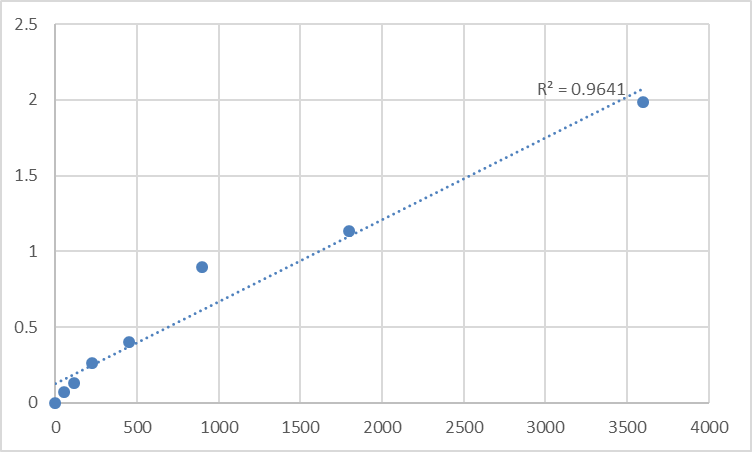
Abbkine’s KTE60335 confronts these flaws with a design rooted in SPOCK1’s unique molecular identity. It employs a monoclonal antibody sandwich ELISA with a capture antibody targeting SPOCK1’s N-terminal Kazal-type inhibitor domain (amino acids 1–50, exclusive to SPOCK1) and a detection antibody against its C-terminal follistatin-like domain—an epitope map that slashes cross-reactivity to <0.5% for SPOCK2/3. The result? An LOD of 0.2 ng/mL (50x more sensitive than polyclonal kits) and a dynamic range (0.5–200 ng/mL) spanning basal levels in healthy adults (2–8 ng/mL) to the 150 ng/mL peaks in metastatic pancreatic cancer. Sample demand? Just 10–20 µL of serum/plasma, 20 µL of CSF, or 15 mg of tissue homogenate—aligning with the 3Rs principle in animal studies or rare patient biopsies. A proprietary deglycosylation buffer (with PNGase F) removes interfering glycosaminoglycans, ensuring accurate quantification in Human Testican-1 (SPOCK1) ELISA Kit for ECM-rich tumor samples.
Real-world application underscores KTE60335’s impact. In a 2023 study on glioblastoma stem cells, a team used it to quantify SPOCK1 in 15 µL plasma from 60 patients, detecting a 4x surge in non-responders to temozolomide—data that guided a switch to Wnt/β-catenin inhibitors. For SPOCK1 detection in Alzheimer’s disease, another lab tracked SPOCK1 in 20 µL CSF from 40 patients, linking a 3x decline to accelerated tau pathology (validated via PET imaging). Pro tip: For low-volume SPOCK1 detection in brain tissue, use laser-capture microdissection to isolate 10 mg of gray matter—KTE60335’s protocol includes validation for 5+ neural substrates. The kit’s 2.5-hour workflow (including 90-minute incubation) and pre-coated plates mean you’re not glued to the bench—ideal for high-throughput SPOCK1 screening of 96 drug analogs.
The industry’s shift toward niche biomarker discovery and AI-driven disease subtyping amplifies demand for kits like KTE60335. With SPOCK1 emerging as a marker for both cancer stemness (glioblastoma) and synaptic dysfunction (Alzheimer’s), labs need assays that distinguish isoform-specific changes. KTE60335’s multi-matrix compatibility (serum, plasma, CSF, cell lysates) supports cross-study comparisons, while its clean data trains machine learning models to predict disease progression from SPOCK1 trajectories. For Human Testican-1 (SPOCK1) ELISA Kit in drug development, this aligns with FDA guidelines for targeted therapies (e.g., anti-SPOCK1 antibodies in metastasis), streamlining IND submissions.
In summary, SPOCK1 quantification is far more than a proteoglycan measurement—it’s a window into ECM-pathology crosstalk, from tumor spread to neurodegeneration. Abbkine’s Human Testican-1 (SPOCK1) ELISA Kit (KTE60335) equips researchers to peer through that window with confidence, solving the “sensitivity-niche specificity” dilemma that’s held back the field for decades. By prioritizing isoform-exclusive antibodies, microsample efficiency (10–20 µL), and real-world adaptability (deglycosylation buffer), it transforms low-volume SPOCK1 detection from a challenge into a strength. Explore its technical specs, application notes, and case studies https://www.abbkine.com/product/human-testican-1-spock1-elisa-kit-kte60335/ to see how KTE60335 can elevate your SPOCK1 research—because in niche biomarker science, precision isn’t optional. It’s discovery.





