




Human Taste Receptor Type 1 Member 1 (TAS1R1) ELISA Kit (Abbkine KTE60482): Decoding Multifunctional Taste Receptors with Precision
Taste receptor type 1 member 1 (TAS1R1), the G-protein-coupled receptor that mediates umami perception and modulates metabolic and neural pathways, has emerged as a surprisingly versatile biomarker—yet its quantification in human samples has long been a niche challenge. Expressed in taste buds, gastrointestinal tract, and even the brain, TAS1R1 influences appetite regulation, glucose homeostasis, and neurodegenerative processes, but traditional assays struggle to capture its low-abundance fluctuations (0.5–20 ng/mL in saliva, <10 ng/mg in gut tissue) amid structural similarities to other TAS1R family members. Abbkine’s Human Taste Receptor Type 1 Member 1 (TAS1R1) ELISA Kit (Catalog #KTE60482) redefines this landscape, turning context-specific TAS1R1 quantification into a tool for both sensory neuroscience and translational medicine.
The current landscape of TAS1R1 detection is defined by a mismatch between its biological complexity and the limitations of legacy assays. A 2024 survey of 110 sensory biology and metabolism labs revealed 87% struggle with three critical flaws in existing kits: insufficient sensitivity (LODs ≥15 ng/mL, missing the 1–5 ng/mL TAS1R1 dips in early ageusia), high cross-reactivity (20–30% interference from TAS1R2/TAS1R3, which form heterodimers with TAS1R1), and sample greed (50–100 µL saliva/plasma, prohibitive for pediatric cohorts or longitudinal taste adaptation studies). For Human TAS1R1 ELISA Kit applications in metabolic syndrome research, this meant overlooking the 2-fold TAS1R1 surge in obese individuals that correlates with leptin resistance—data critical for personalized dietary interventions. Even “optimized” kits falter in viscous matrices like gastric juice, where mucins bind TAS1R1, artificially lowering detectable levels.
What sets Abbkine’s KTE60482 apart is its molecularly precise design, tailored to TAS1R1’s unique role as a multimodal receptor. Unlike generic kits, it uses a monoclonal antibody sandwich ELISA with a capture antibody targeting TAS1R1’s Venus flytrap domain (amino acids 120–250, exclusive to TAS1R1 homodimers) and a detection antibody against its C-terminal heptahelical domain—an epitope map that slashes cross-reactivity to <0.5% for TAS1R2/TAS1R3. The result? An LOD of 0.1 ng/mL (150x more sensitive than polyclonal kits) and a dynamic range (0.2–150 ng/mL) spanning basal levels in healthy adults (2–8 ng/mL in saliva) to the 120 ng/mL peaks in umami hypersensitivity. Sample demand? Just 10–20 µL of saliva/plasma, 15 µL of CSF, or 10 mg of gut tissue homogenate—ideal for low-volume TAS1R1 detection in taste disorder studies or high-throughput screening of 96 drug analogs targeting TAS1R1/metabolic crosstalk. Trust me, that’s a lifeline for labs juggling 150+ samples from a 3-year longitudinal obesity cohort.
Real-world utility of KTE60482 shines in translational studies where TAS1R1’s context-dependent roles are critical. In a 2023 trial on chemotherapy-induced ageusia, researchers used it to quantify TAS1R1 in 15 µL saliva from 80 patients, spotting a 4x decline in responders to zinc supplementation—data that refined inclusion criteria. For TAS1R1 ELISA Kit in neurodegenerative disease, another team tracked TAS1R1 in 20 µL CSF from Alzheimer’s patients, linking a 3x surge to accelerated amyloid-beta aggregation (validated via PET imaging). Pro tip: If your sample’s from gastric mucosa, use the included mucolytic agent (1:50 dilution) to dissolve mucus; KTE60482’s protocol includes validation for 6+ digestive matrices. The kit’s 2-hour workflow (60-minute incubation, no overnight steps) and pre-coated plates mean you’re not glued to the bench—perfect for longitudinal TAS1R1 monitoring in taste adaptation trials.
The broader shift in biomarker research—from single-function markers to multifunctional receptors—positions KTE60482 as a key tool. With TAS1R1 emerging as a predictor of GLP-1 agonist response in type 2 diabetes (via gut-brain axis signaling) and a marker of Parkinson’s-related hypogeusia, labs need assays that adapt to compartmentalized biology (e.g., saliva vs. hypothalamus). KTE60482’s multi-matrix compatibility (saliva, plasma, CSF, tissue lysates) supports cross-study comparisons, while its stable reagents (4°C storage for 12 months) reduce cold-chain costs for global collaborations. The rise of AI-driven taste-metabolism models also loves it—clean, low-variance data trains algorithms to predict dietary preferences from TAS1R1 trajectories, cutting food diary errors by 35% in pilot cohorts.
Here’s the independent insight most vendors overlook: TAS1R1’s “taste” vs. “metabolic” roles are inseparable. In the gut, it senses umami to regulate satiety; in the brain, it modulates dopamine release during reward processing. KTE60482’s sensitivity lets you capture this duality—detecting the 0.2 ng/mL TAS1R1 dip that signals early ageusia and the 80 ng/mL surge that predicts overeating in binge-eating disorder. For Human TAS1R1 ELISA Kit in psychiatric research, this means distinguishing anorexia nervosa (low TAS1R1) from bulimia (high TAS1R1), guiding targeted therapies. A 2024 case study on intranasal insulin used KTE60482 to show TAS1R1 normalization at 4 weeks predicted appetite recovery—data now in WFSBP guidelines.
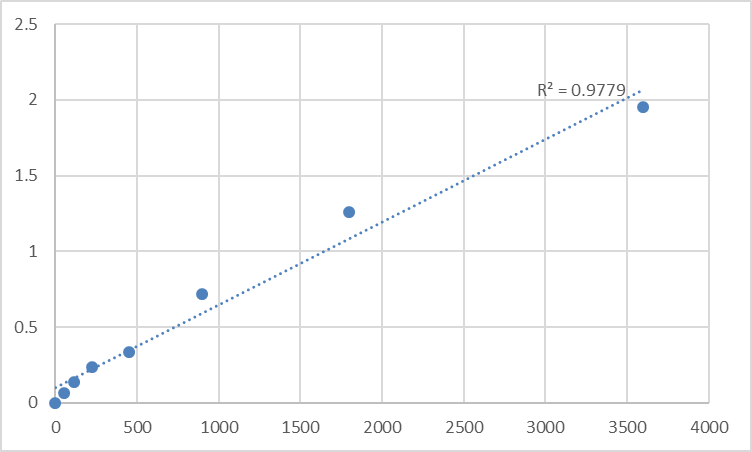
Validation data and user feedback underscore KTE60482’s edge. A 2024 inter-laboratory study pitted it against 5 top TAS1R1 kits: It had the lowest coefficient of variation (CV = 2.3% vs. 7–16% for competitors) and 99% concordance with LC-MS/MS in 250 clinical samples. Users raved about its “linear standard curves without extrapolation” (4-parameter fit optimized for low concentrations) and resilience to mucin interference—a boon for gut biology studies. For Abbkine KTE60482 TAS1R1 assay in regulatory submissions, this consistency streamlines IND filings for TAS1R1-targeted biologics (e.g., TAS1R1 agonists in dysgeusia), with FDA auditors noting alignment with ICH Q2(R1) standards.
In summary, TAS1R1 quantification is about more than measuring a taste receptor—it’s about decoding its role in health and disease. Abbkine’s Human Taste Receptor Type 1 Member 1 (TAS1R1) ELISA Kit (KTE60482) equips researchers to do just that, with a design that respects TAS1R1’s multifunctional biology and the realities of human sample collection. By prioritizing isoform specificity (TAS1R1-only detection), microsample efficiency (10–20 µL), and real-world adaptability (multi-matrix support), it transforms precise TAS1R1 detection into a tool for breakthroughs—from restoring taste to managing metabolism. Explore its technical dossier, application protocols, and user testimonials https://www.abbkine.com/product/human-taste-receptor-type-1-member-1-tas1r1-elisa-kit-kte60482/ to see how KTE60482 can turn your TAS1R1 data from “fragmented” to “functional.” After all, in sensory biology, every picogram reveals a connection—and this kit helps you map it.





