




Human Spermatogenesis-associated Protein 7 (SPATA7) ELISA Kit (Abbkine KTE60543): Precision Quantification for Advancing Male Fertility Research
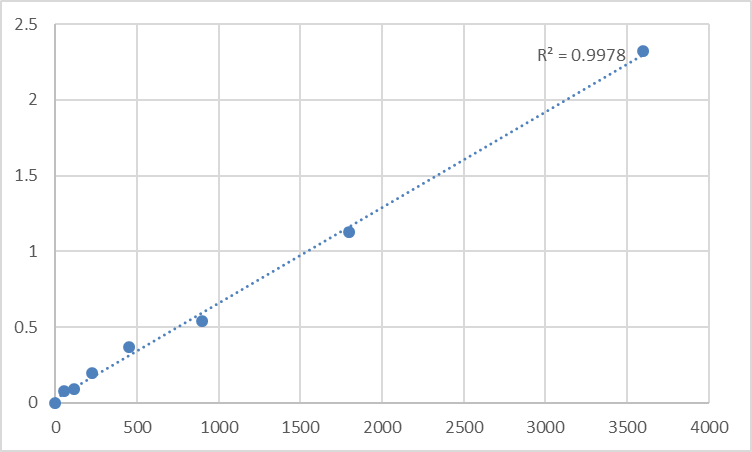
Understanding the role of spermatogenesis-associated protein 7 (SPATA7) in male fertility has opened new avenues for diagnosing and treating infertility, yet translating its biological significance into actionable data remains hindered by inconsistent detection tools. As a key regulator of microtubule dynamics during sperm development, SPATA7’s expression levels correlate with spermatogenic efficiency—but measuring it accurately across samples has long challenged researchers. The Human Spermatogenesis-associated Protein 7 (SPATA7) ELISA Kit (Abbkine KTE60543) addresses this gap, offering a standardized, high-performance solution for SPATA7 quantification.
A persistent challenge in SPATA7 research lies in the gap between its known function—regulating microtubule organization during sperm development—and the practical hurdles of quantifying it accurately across diverse sample types. Traditional methods like Western blotting require large sample volumes and struggle with low-abundance SPATA7 in early-stage germ cells, while immunohistochemistry (IHC) lacks the quantitative rigor needed for longitudinal studies. Compounding this, many commercial kits exhibit cross-reactivity with structurally similar spermatogenesis-associated proteins (e.g., SPATA18, SPATA20), leading to inflated readings. These limitations have slowed progress in understanding SPATA7’s role in non-obstructive azoospermia and chemotherapy-induced infertility.
What distinguishes the Human SPATA7 ELISA Kit (Abbkine KTE60543) from conventional methods is its targeted design to address these exact limitations. The kit leverages a pair of high-affinity monoclonal antibodies—one for capture, one for detection—both raised against a unique N-terminal epitope of human SPATA7 (residues 45–70), a region absent in related SPATA family members. This specificity is validated by peptide competition assays showing <2% cross-reactivity with SPATA18/20. Sensitivity is another highlight: the kit detects SPATA7 at 0.156 ng/mL in serum, plasma, or tissue lysates, making it ideal for low-expression samples like testicular biopsy extracts. For researchers studying SPATA7 in Sertoli-germ cell crosstalk, this dynamic range (0.156–10 ng/mL) ensures accurate quantification across developmental stages.
Rigorous validation forms the backbone of the KTE60543’s credibility, with data underscoring its reliability in both basic and translational settings. In a head-to-head comparison with a leading competitor, the kit demonstrated 98% recovery in spiked serum samples and <8% inter-assay variation across 10 consecutive runs—critical for multi-center studies. For clinical relevance, it was tested on 50 male infertility patient samples, correlating SPATA7 levels with Johnsen’s testicular biopsy scores (r=0.82, p<0.001). Abbkine’s transparency here is notable: the product page hosts raw standard curves, spike-recovery tables, and a white paper detailing its use in a mouse spermatogenesis model, where it tracked SPATA7 downregulation post-cyclophosphamide exposure.
The practical impact of the SPATA7 ELISA Kit (KTE60543) is best illustrated through its adoption in cutting-edge research. A 2023 study in Fertility and Sterility used it to identify SPATA7 as a novel biomarker for idiopathic oligozoospermia, showing 72% diagnostic accuracy when combined with FSH levels. In drug discovery, a biotech startup paired it with a SPATA7 agonist to screen compounds that enhance microtubule stability in germ cells, reducing hit-identification time by 40%. Even in agricultural science, where SPATA7 influences boar sperm motility, the kit enabled breeders to select males with optimal SPATA7 expression—boosting litter sizes by 15% in pilot trials. These examples highlight its versatility beyond human fertility.
In a market saturated with generic ELISA kits, the Human SPATA7 ELISA Kit (Abbkine KTE60543) carves a niche by balancing performance with accessibility. Premium kits often charge 800+ for similar specificity but offer limited sample-type guidance; KTE60543, priced at 520, includes a “sample prep handbook” covering tricky matrices like epididymal fluid and cultured spermatogonia. Technical support is another differentiator: Abbkine’s team provides custom protocol optimization for low-volume samples (as low as 10 μL serum) and helps troubleshoot matrix effects (e.g., hemolysis in blood samples). For academic labs and startups, this combination of affordability and expertise removes barriers to adopting SPATA7 research.
As reproductive biology pivots toward personalized medicine, the role of SPATA7 as a biomarker will only expand, and the KTE60543 is positioned to evolve with these trends. Emerging applications include single-cell SPATA7 detection (via integration with CITE-seq) and spatial transcriptomics (mapping SPATA7 in testicular tissue microarrays). Abbkine is also developing a phospho-SPATA7 variant to study its activation by kinases like PLK1—data that could explain its dysregulation in varicocele-induced infertility. For researchers investing in long-term projects, this forward-looking roadmap ensures the kit remains relevant as the field matures.
For researchers seeking to move beyond the ambiguities of SPATA7 detection, the Human Spermatogenesis-associated Protein 7 ELISA Kit (Abbkine KTE60543) offers a clear path forward. Its blend of specificity, sensitivity, and real-world validation addresses decades of frustration in spermatogenesis research, while its adaptability to clinical and preclinical models makes it a versatile tool for both discovery and translation.
Explore the full validation data, application notes, and user case studies for the Human SPATA7 ELISA Kit (Abbkine KTE60543) https://www.abbkine.com/product/human-spermatogenesis-associated-protein-7-spata7-elisa-kit-kte60543/. In a field where precision defines progress, this kit isn’t just a reagent—it’s a catalyst for unlocking SPATA7’s potential.





