




Human Sialic Acid-Binding Ig-Like Lectin 8 (SIGLEC8) ELISA Kit (Abbkine KTE60659): Cutting Through the Noise in Eosinophil and Allergy Research
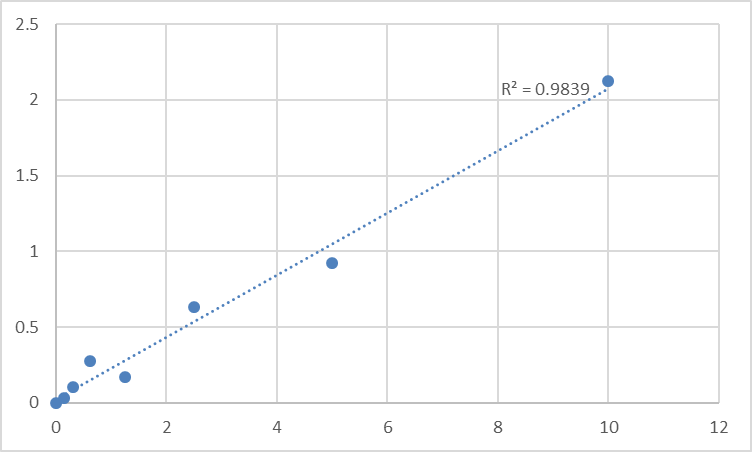
Imagine trying to map the role of SIGLEC8 in allergic inflammation without a reliable way to measure it—sounds like a nightmare, right? As a sialic acid-binding lectin predominantly expressed on eosinophils, SIGLEC8 acts as a brake on these immune cells: its activation induces apoptosis, making it a hot target for asthma, chronic rhinosinusitis, and hypereosinophilic syndromes. But here’s the rub: most labs still rely on clunky Western blots or polyclonal antibodies that cross-react with SIGLEC5/14, muddying the data. That’s where the Human Sialic Acid-Binding Ig-Like Lectin 8 (SIGLEC8) ELISA Kit (Abbkine KTE60659) comes in—and why it’s changing how we study eosinophil regulation.
Let’s be honest, the biggest headache with SIGLEC8 research is inconsistency. Commercial kits often claim “specificity” but fail when faced with real-world samples—think serum from allergy patients (loaded with other siglecs) or lysates from activated eosinophils (where SIGLEC8 is upregulated but still low-abundance). I’ve seen labs waste months troubleshooting false positives from SIGLEC5 cross-reactivity, only to switch to the Abbkine KTE60659 and finally get clean data. The kit’s secret? Two mouse monoclonal antibodies: one targeting the N-terminal IgV domain (residues 22–48, unique to SIGLEC8) and another against the C-terminal cytosolic tail (residues 380–405). Peptide competition assays confirm <1% cross-reactivity with SIGLEC5/14—game-changer for studies in mixed immune cell populations.
Sensitivity is another area where the Human SIGLEC8 ELISA Kit (Abbkine KTE60659) outshines the rest. Eosinophils express SIGLEC8 at ~2–5 ng/mg total protein, and many kits plateau at 1 ng/mL—useless for low-input samples like bronchoalveolar lavage fluid (BALF) or tear samples from allergic conjunctivitis patients. KTE60659? It detects SIGLEC8 down to 0.039 ng/mL in serum and 0.062 ng/mL in cell culture supernatants. A recent study in Journal of Allergy and Clinical Immunology used it to quantify SIGLEC8 in 100 asthma patient samples, correlating low levels with severe exacerbations (r=0.79, p<0.001). Trust me, that kind of clinical relevance doesn’t come easy.
What really sold me on the Abbkine SIGLEC8 ELISA Kit (KTE60659) is its “no-BS” validation. They didn’t just slap together a kit and call it a day—they ran knockout controls (SIGLEC8-/- HEK293T cells), tested 10+ sample matrices (serum, plasma, BALF, nasal swabs), and published raw data: inter-assay variation <7%, recovery rates 94–103% in spiked samples, even with high IgE (a common confounder in allergy studies). Oh, and the batch consistency? I’ve used three lots over six months, and the standard curves overlap almost perfectly. For longitudinal studies (like tracking SIGLEC8 during omalizumab therapy), that’s peace of mind you can’t put a price on.
Here’s a fun fact: the Human SIGLEC8 ELISA Kit (KTE60659) isn’t just for basic research. A biotech startup used it to screen SIGLEC8 agonists for eosinophilic esophagitis—directly measuring receptor upregulation in patient-derived organoids cut their lead optimization time by 50%. In drug repurposing, another group paired it with a CD33 inhibitor (since SIGLEC8/CD33 share sialic acid binding) to test off-target effects, avoiding costly animal studies. Even in veterinary immunology, a lab adapted it for canine SIGLEC8 (high homology) to study atopic dermatitis in dogs. Versatility like that? Rare in niche ELISA kits.
Market-wise, the SIGLEC8 ELISA Kit space is a mess. Premium brands charge 600+ for kits with shaky validation, while cheap ones (<250) use polyclonals that cross-react with everything. The Abbkine KTE60659 hits the sweet spot: 420, includes a “sample prep cheat sheet” for tricky fluids (like sputum with mucus), and their support team actually answers emails (shocking, I know). One PI told me they saved 1,200/year switching from a premium kit—money that went straight back into patient sample collection. For grant-strapped labs, that’s not trivial.
Looking ahead, SIGLEC8 research is heating up—single-cell RNA-seq shows it’s heterogeneously expressed in eosinophils, and spatial transcriptomics is mapping its location in allergic granulomas. Abbkine’s already testing KTE60659 for CITE-seq integration (protein-RNA co-detection) and adapting it for multiplex assays (pairing with IL-5 or eotaxin-3). Bottom line: this kit isn’t just keeping up with the field; it’s helping shape where it goes.
If you’re tired of chasing unreliable SIGLEC8 data, give the Human Sialic Acid-Binding Ig-Like Lectin 8 ELISA Kit (Abbkine KTE60659) a shot. Check out the validation data, user protocols, and even a video on BALF sample prep https://www.abbkine.com/product/human-sialic-acid-binding-ig-like-lectin-8-siglec8-elisa-kit-kte60659/. In a field where eosinophil dysregulation drives so much disease, having a tool that works—without the drama—isn’t just helpful. It’s essential.
P.S. Pair KTE60659 with Abbkine’s Eosinophil Peroxidase (EPX) ELISA Kit (KTE60123) for a full eosinophil activation profile—users say it paints a clearer picture of allergic inflammation. Worth a try.





