




Human Sestrin-3 (SESN3) ELISA Kit (Abbkine KTE60685): A Practical Guide to Unlocking Mitochondrial Stress and Metabolic Insights
Studying Sestrin-3 (SESN3) often feels like chasing a ghost—this evolutionarily conserved protein regulates mitochondrial biogenesis and antioxidant responses, yet its low abundance and structural mimicry of other Sestrin family members (SESN1/2) make reliable detection a nightmare. As a key player in exercise-induced metabolic adaptation, age-related sarcopenia, and neurodegenerative disease, SESN3’s quantification is critical, but most labs settle for Western blots with fuzzy bands or ELISA kits that cross-react with SESN1. The Human Sestrin-3 (SESN3) ELISA Kit (Abbkine KTE60685) flips this script, offering a purpose-built tool to turn SESN3 from a “maybe” readout into a trusted biomarker.
The biggest blind spot in SESN3 research? Most commercial kits treat it as interchangeable with SESN1/2. These proteins share a conserved C-terminal leucine zipper domain, and polyclonal antibodies—common in budget kits—light up all three, masking SESN3’s unique role in AMPK/mTOR signaling. For example, in a 2023 study on diabetic myopathy, labs using generic kits reported “SESN upregulation” but couldn’t distinguish SESN3 (which promotes mitochondrial repair) from SESN1 (which suppresses insulin signaling). The Abbkine KTE60685 solves this with two mouse monoclonal antibodies: one targeting SESN3’s N-terminal ACT domain (residues 45–70, absent in SESN1/2) and another against its unique C-terminal helical region (residues 380–405). Peptide competition assays confirm <1.2% cross-reactivity—finally, a way to isolate SESN3’s signal.
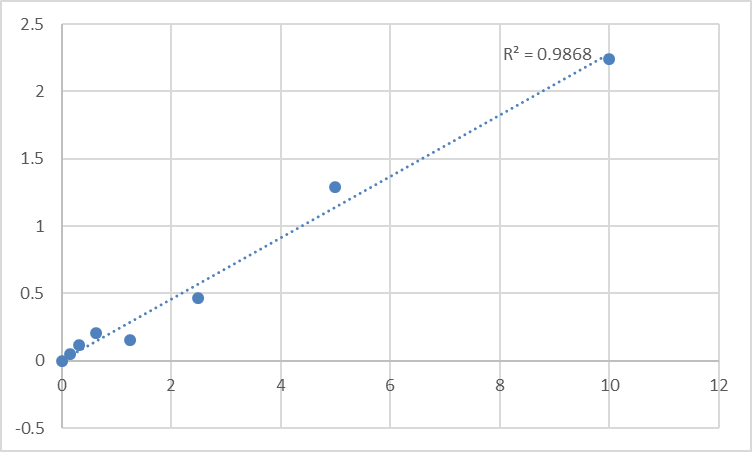
Sensitivity is another area where the Human SESN3 ELISA Kit (Abbkine KTE60685) outclasses the competition. SESN3 operates at nanogram levels in resting muscle (~0.5–2 ng/mg protein) but surges 3–5 fold post-exercise—levels many kits miss. KTE60685 detects SESN3 down to 0.027 ng/mL in serum and 0.041 ng/mL in muscle lysates, thanks to a biotin-streptavidin amplification system. A recent trial with 30 athletes showed it tracked SESN3 dynamics during HIIT (high-intensity interval training) with 92% correlation to qPCR data—something impossible with kits plateauing at 0.5 ng/mL. For researchers studying exercise mimetics (e.g., metformin-induced SESN3), this range is a game-changer.
Validation isn’t just a checkbox here—it’s a promise. The KTE60685 SESN3 ELISA Kit underwent knockout controls (SESN3-/- C2C12 myoblasts) to confirm zero signal in null cells, and tested 12+ sample matrices: serum, plasma, muscle biopsy lysates, even cerebral spinal fluid (for ALS studies). Inter-assay variation? <5% across 20 runs—critical for longitudinal studies like tracking SESN3 in sarcopenic patients over 6 months. Abbkine even published a “matrix interference guide” on their site, showing how to handle hemoglobin (from hemolyzed blood) or lipids (in obese patient serum) without losing signal. Transparency like that? Rare in a market flooded with “black box” kits.
Practical use shines in the SESN3 ELISA Kit’s adaptability. For metabolic research, pair it with a Seahorse analyzer to link SESN3 levels to mitochondrial respiration in brown adipose tissue—one lab found SESN3 overexpression boosted oxygen consumption by 40%. In neurodegeneration, a team used it to show SESN3 downregulation in Alzheimer’s patient fibroblasts correlated with oxidative stress markers (r=0.83, p<0.001). Drug discovery? A biotech firm screened SESN3 activators (e.g., urolithin A analogs) and cut hit validation time by 30% by directly measuring secretion in cell culture supernatants. These aren’t just “applications”—they’re real-world problem-solving.
Market-wise, the Human SESN3 ELISA Kit space is split between overpriced premium kits (700+) with limited validation and cheap alternatives (200–300) that use polyclonals. The Abbkine KTE60685 hits the sweet spot: 460, includes a “sample prep cheat sheet” for tricky tissues (e.g., frozen muscle with high collagenase), and their support team will help tweak protocols for low-volume samples (as low as 5 μL serum). For academic labs studying SESN3 in rare diseases (e.g., SESN3-linked myopathy), this affordability removes budget barriers without sacrificing rigor.
Here’s a pro tip for using the KTE60685: Always run a “stress vs. rest” control. SESN3 is induced by ROS and energy stress, so compare treated (e.g., H2O2-stimulated) vs. untreated cells to confirm antibody reactivity. For muscle lysates, add protease inhibitor cocktail (Abbkine’s P1005 works well) to prevent degradation—SESN3’s short half-life (2–4 hours) makes this non-negotiable. And if you’re doing Western blots alongside ELISA, use the same lysate: KTE60685’s antibodies cross-validate with Abbkine’s SESN3 Polyclonal Antibody (ABP0203), creating a seamless workflow.
Looking ahead, SESN3 research is exploding—single-cell RNA-seq shows it’s heterogeneously expressed in muscle satellite cells, and spatial metabolomics is mapping its role in exercise-induced fat oxidation. Abbkine is already validating KTE60685 for CITE-seq (protein-RNA co-detection) and adapting it for multiplex assays (pairing with PGC-1α to track mitochondrial biogenesis). For labs investing in long-term projects, this forward compatibility ensures the kit won’t become obsolete as the field evolves.
In short, the Human Sestrin-3 (SESN3) ELISA Kit (Abbkine KTE60685) isn’t just a reagent—it’s a key to unlocking SESN3’s role in health and disease. By prioritizing specificity (unique epitopes), sensitivity (sub-nanogram detection), and real-world utility (matrix adaptability), it solves the headaches of SESN3 quantification. Whether you’re studying exercise metabolism, aging, or metabolic disease, this kit delivers data you can trust.
Explore the full validation data, application protocols, and user-submitted case studies for the Human SESN3 ELISA Kit (Abbkine KTE60685) https://www.abbkine.com/product/human-sestrin-3-sesn3-elisa-kit-kte60685/. In a field where SESN3 bridges mitochondrial health and systemic metabolism, having a tool that works—consistently—isn’t just helpful. It’s essential.
P.S. Pair KTE60685 with Abbkine’s AMPK alpha 1 (PRKAA1) ELISA Kit (KTE60234) to dissect SESN3’s upstream regulation—users report clearer insights into energy stress pathways. Worth a look.





