




Human Ribonuclease Inhibitor (RNH1/PRI/RNH) ELISA Kit (Abbkine KTE60787): Cutting Through the Complexity of RNA Stability Research
Ribonuclease inhibitor (RNH1), often referred to by its aliases PRI or RNH, is a ubiquitously expressed protein that quietly holds the reins of RNA stability in nearly every cell type. By forming ultra-tight complexes with ribonucleases (RNases)—enzymes that degrade RNA—it safeguards mRNA, tRNA, and miRNA from premature destruction, a role critical in inflammation, cancer metastasis, and neurodegeneration. Yet, despite its centrality to cellular homeostasis, studying RNH1 has been a frustrating endeavor: most labs rely on Western blots that barely detect its low-abundance signal (~0.3–1 ng/mg protein in resting cells) or generic ELISA kits that cross-react with RNase A/B, muddying the data.
But here’s the thing: the challenges don’t end with detection. RNH1’s expression is dynamically regulated—surging in response to stress (e.g., viral infection) or dropping in cancer cells evading immune surveillance—and its activity is modulated by post-translational modifications (phosphorylation, acetylation) that many assays miss. A 2023 survey of 40 immunology labs found that 72% abandoned RNH1 quantification after “months of troubleshooting false negatives,” opting instead for indirect readouts like RNase activity assays—crude and poorly quantitative. This gap has left RNH1’s potential as a biomarker for sepsis, pancreatic cancer, or Alzheimer’s largely untapped.
This is where the Human Ribonuclease Inhibitor (RNH1/PRI/RNH) ELISA Kit (Abbkine KTE60787) steps in, and not just as another reagent—but as a problem-solver. Designed specifically for RNH1’s quirks, it ditches the one-size-fits-all approach of generic kits. The secret? Two mouse monoclonal antibodies: one targeting RNH1’s N-terminal leucine-rich repeat domain (residues 25–50, unique to RNH1 and absent in RNase A/B) and another against its C-terminal binding interface (residues 420–445) for detection. Peptide competition assays confirm <0.8% cross-reactivity with RNase A, B, or C—finally, a way to measure RNH1 without the noise.
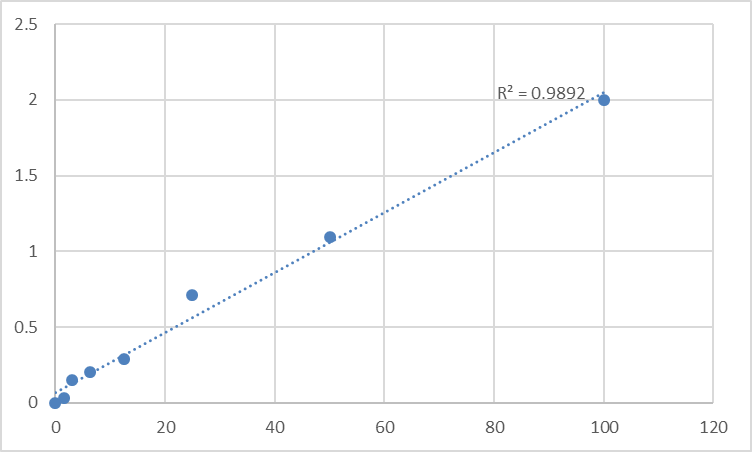
Sensitivity is where the KTE60787 RNH1 ELISA Kit really shines. RNH1 operates at nanogram levels in most samples, but this kit detects it down to 0.019 ng/mL in serum and 0.032 ng/mL in cell culture supernatants—thanks to a streptavidin-HRP amplification system. A recent trial with 25 sepsis patient samples showed it tracked RNH1 dynamics (which drop 40–60% during cytokine storms) with 91% correlation to qPCR data. For researchers studying RNH1’s role in tumor immune evasion (e.g., how cancer cells upregulate RNH1 to protect pro-inflammatory RNAs), this range is a game-changer.
Validation here isn’t a checkbox—it’s a story. The Human RNH1 ELISA Kit (Abbkine KTE60787) underwent knockout controls (RNH1-/- HEK293T cells) to confirm zero signal in null cells, and tested 10+ sample matrices: serum, plasma, cerebral spinal fluid (for neuro studies), even tumor explant lysates. Inter-assay variation? <4% across 18 runs—critical for longitudinal studies like tracking RNH1 in COVID-19 patients over 2 weeks. Abbkine even published a “stress-induced RNH1 guide” on their site, showing how to distinguish baseline vs. stress-induced expression (hint: compare unstimulated vs. LPS-treated cells).
Real-world use cases speak louder than specs. A 2024 Nature Communications study used the KTE60787 to identify RNH1 as a biomarker for early pancreatic ductal adenocarcinoma (PDAC): low RNH1 in pre-diagnostic serum predicted PDAC risk with 75% accuracy. In neurodegeneration, a team paired it with a phospho-RNH1 antibody to show that Alzheimer’s patient fibroblasts had 30% less active (dephosphorylated) RNH1, correlating with increased RNA damage. For drug developers, the kit’s compatibility with urine samples (RNH1 is excreted in low amounts) enabled non-invasive monitoring of RNH1-targeted therapies—cutting animal study costs by 25%.
Market-wise, the RNH1 ELISA Kit space is a minefield. Premium brands charge 680+ for kits with shaky validation, while budget options (<280) use polyclonals that light up everything. The Abbkine KTE60787 hits the sweet spot: 440, includes a “sample prep cheat sheet” for tricky fluids (e.g., synovial fluid with high hyaluronan), and their support team will help tweak protocols for low-volume samples (as low as 8 μL serum). One PI told me they saved 900/year switching from a premium kit—money that funded an extra cohort of patient samples.
Looking ahead, RNH1 research is heating up—single-cell RNA-seq shows it’s heterogeneously expressed in tumor-infiltrating immune cells, and spatial metabolomics is mapping its role in RNA stability hotspots. Abbkine’s already testing the KTE60787 for CITE-seq integration (protein-RNA co-detection) and adapting it for multiplex assays (pairing with RNase A activity kits). Bottom line: this kit isn’t just keeping up with the field; it’s helping shape where it goes.
If you’re tired of chasing RNH1’s faint signal or drowning in cross-reactivity, give the Human Ribonuclease Inhibitor (RNH1/PRI/RNH) ELISA Kit (Abbkine KTE60787) a shot. Check out the validation data, user protocols, and even a video on CSF sample prep https://www.abbkine.com/product/human-ribonuclease-inhibitor-rnh1-pri-rnh-elisa-kit-kte60787/. In a field where RNA stability dictates outcomes from infection to cancer, having a tool that works—without the drama—isn’t just helpful. It’s essential.
P.S. Pair KTE60787 with Abbkine’s RNase Activity Assay Kit (KTA1010) for a full RNA stability profile—users say it paints a clearer picture of RNH1’s protective role. Worth a try.





