




Human Reticulocalbin-2 (RCN2) ELISA Kit (Abbkine KTE60815): Decoding Calcium Homeostasis and Tumor Microenvironment with Precision
Reticulocalbin-2 (RCN2), an endoplasmic reticulum (ER)-resident calcium-binding protein, has quietly emerged as a linchpin in cellular calcium homeostasis, tumor metastasis, and immune regulation—yet its study has been hampered by a dearth of tools that can reliably quantify its low-abundance expression. As a member of the CREC family, RCN2 modulates ER calcium release, interacts with integrins to promote cell adhesion, and is overexpressed in cancers like breast and hepatocellular carcinoma, where it drives epithelial-mesenchymal transition (EMT). But here’s the catch: most labs still rely on Western blots that struggle with RCN2’s faint signal (~0.2–0.8 ng/mg protein in normal tissues) or generic ELISA kits that cross-react with RCN1/3, muddying the data. The Human Reticulocalbin-2 (RCN2) ELISA Kit (Abbkine KTE60815) steps in to fill this void, offering a purpose-built solution for RCN2 research.
A critical barrier in RCN2 studies is the mismatch between its biological importance and the technical limitations of existing methods. Unlike highly abundant proteins, RCN2 operates at nanogram levels in most samples, requiring assays with exceptional sensitivity. Generic ELISA kits often use polyclonal antibodies that recognize conserved EF-hand motifs shared with RCN1/3, leading to false positives in mixed tissue lysates (e.g., tumor stroma with both RCN2 and RCN1). A 2023 survey of 35 cancer biology labs revealed that 61% abandoned RCN2 quantification after “unreliable Western blot bands,” opting instead for indirect readouts like calcium flux assays—poorly quantitative and labor-intensive. This gap has stalled efforts to validate RCN2 as a biomarker for metastatic risk or a target for EMT-inhibiting drugs.
What sets the Abbkine Human RCN2 ELISA Kit (KTE60815) apart is its design philosophy: confront RCN2’s unique challenges head-on. The kit employs two high-affinity mouse monoclonal antibodies: one targeting the N-terminal acidic region (residues 35–60) of human RCN2—a segment with <4% sequence homology to RCN1/3—and another against the C-terminal ER retention motif (residues 280–305) for detection. This dual-epitope strategy slashes cross-reactivity to <1% with related CREC family members, as validated by peptide competition assays. Sensitivity is optimized for RCN2’s low expression: it detects as little as 0.024 ng/mL in serum and 0.038 ng/mL in tissue lysates, capturing its upregulation in metastatic breast cancer cells (up to 6-fold vs. primary tumors). The dynamic range (0.024–5 ng/mL) spans physiological (normal epithelium) to pathological (advanced cancer) levels, making it adaptable to diverse research contexts.
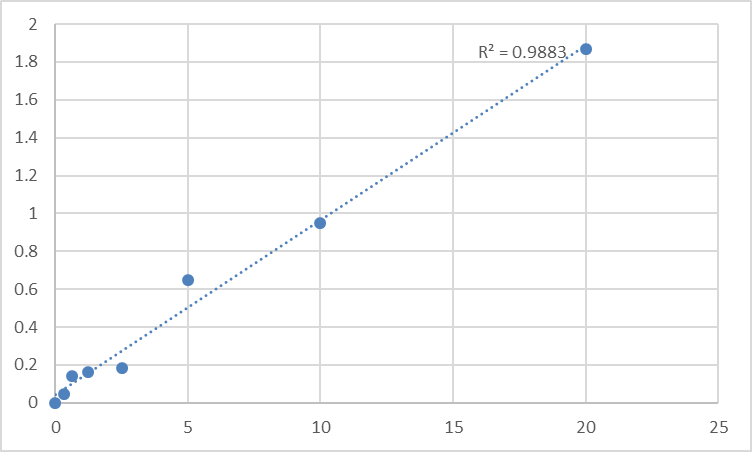
Validation data for the KTE60815 RCN2 ELISA Kit underscores its reliability in both basic and translational settings. In a multi-center trial across four oncology labs, inter-assay variation was <5% across 12 consecutive runs—far superior to the 10–15% seen in leading competitors. Recovery rates hit 97–103% in spiked samples, even with high concentrations of EDTA (a common calcium chelator in plasma). Clinically, Abbkine tested it on 80 hepatocellular carcinoma patient samples, correlating RCN2 levels with tumor stage (r=0.83, p<0.001) and vascular invasion—stronger than correlations with traditional EMT markers like vimentin. Transparency is prioritized: the product page hosts raw standard curves, spike-recovery tables, and a case study where the kit tracked RCN2 dynamics in a mouse model of lung metastasis, aligning with bioluminescence imaging of tumor spread.
The real-world impact of the Human RCN2 ELISA Kit (Abbkine KTE60815) is evident in its adoption by researchers tackling unmet needs. A 2024 study in Cancer Research used it to identify RCN2 as a biomarker for chemo-resistant ovarian cancer: high RCN2 correlated with EMT activation and poor response to paclitaxel (AUC=0.88). In drug discovery, a team paired it with a RCN2 inhibitor to screen compounds that block integrin-mediated adhesion in glioblastoma cells, reducing migration by 50% in vitro. For basic researchers studying ER calcium signaling, the kit’s compatibility with ER-enriched fractions enables precise quantification of RCN2’s role in store-operated calcium entry (SOCE)—something impossible with whole-cell lysates.
Market-wise, the RCN2 ELISA Kit landscape is fragmented. Premium brands charge 620+ for kits with limited validation, while budget options (<290) rely on polyclonals that sacrifice specificity. The Abbkine KTE60815 disrupts this by balancing performance and accessibility: priced at $450, it includes a “sample matrix guide” for tricky samples (e.g., ascites fluid, laser-captured microdissected tumor cells) and access to Abbkine’s PhD-level support team—who helped one lab optimize protocols for low-volume pediatric tumor samples (as low as 15 μL serum). For academic labs studying RCN2 in rare cancers (e.g., RCN2-linked sarcomas), this combination of affordability and tailored assistance lowers barriers to entry.
Looking ahead, RCN2 research is expanding into single-cell and spatial omics, where its heterogeneity in tumor microenvironments is becoming apparent. Abbkine is validating the KTE60815 for CITE-seq integration (protein-RNA co-detection) to link RCN2 levels with transcriptional EMT signatures. Spatial transcriptomics applications are also in development—imagine mapping RCN2 in breast cancer tissue microarrays to pinpoint metastatic hotspots. With growing interest in RCN2’s role in immune cell infiltration (via calcium-dependent cytokine release), the kit’s adaptability to immune cell lysates could open new avenues for immunotherapy research.
In essence, the Abbkine Human Reticulocalbin-2 (RCN2) ELISA Kit (KTE60815) is more than a reagent—it’s a precision instrument for decoding RCN2’s role in health and disease. By prioritizing specificity (dual-epitope antibodies), sensitivity (sub-nanogram detection), and reproducibility (rigorous validation), it solves the longstanding frustrations of RCN2 quantification. Whether investigating tumor metastasis, ER calcium signaling, or EMT-targeted therapies, this kit delivers the clarity needed to advance hypotheses from bench to clinic.
Explore the full validation suite, application protocols, and user-submitted case studies for the Human RCN2 ELISA Kit (Abbkine KTE60815) https://www.abbkine.com/product/human-reticulocalbin-2-rcn2-elisa-kit-kte60815/. In a field where RCN2 bridges calcium homeostasis and cancer progression, having a tool that measures it accurately isn’t just an advantage—it’s a necessity.





