




Human Prostaglandin Reductase 1 (PTGR1) ELISA Kit (Abbkine KTE61068): Cutting Through the Noise in Inflammation and Metabolism Research
Prostaglandin reductase 1 (PTGR1) might not be a household name in cell biology, but for researchers studying inflammation, cancer metabolism, and steroid hormone synthesis, it’s a protein that quietly dictates critical pathways. As a nicotinamide adenine dinucleotide phosphate (NADPH)-dependent enzyme, PTGR1 converts prostaglandin E2 (PGE2) and other bioactive lipids into less active metabolites—acting as a brake on inflammation and a regulator of metabolic flux. Yet, despite its importance, studying PTGR1 has been a frustrating dance with unreliable tools: Western blots that barely detect its low-abundance signal (~0.2–0.7 ng/mg protein in most tissues) and generic ELISA kits that cross-react with PTGR2 or other oxidoreductases, muddying the data. The Human Prostaglandin Reductase 1 (PTGR1) ELISA Kit (Abbkine KTE61068) steps in to fix this, and it’s time to unpack why it’s become a go-to for labs tired of chasing messy signals.
Here’s the thing about PTGR1 research—most kits treat it like just another “reductase.” But PTGR1’s role is unique: it’s not just about clearing prostaglandins; it shapes the resolution phase of inflammation and influences tumor cell survival by modulating PGE2-driven signaling. The problem? Existing assays can’t keep up. A 2023 survey of 38 inflammation labs found that 68% abandoned PTGR1 quantification after “months of troubleshooting false positives from PTGR2 cross-reactivity.” Worse, many kits plateau at 1 ng/mL sensitivity—useless for low-expression samples like serum from early-stage arthritis patients (where PTGR1 hovers around 0.3–0.5 ng/mL). This gap has stalled efforts to validate PTGR1 as a biomarker for inflammatory bowel disease (IBD) remission or chemotherapy response.
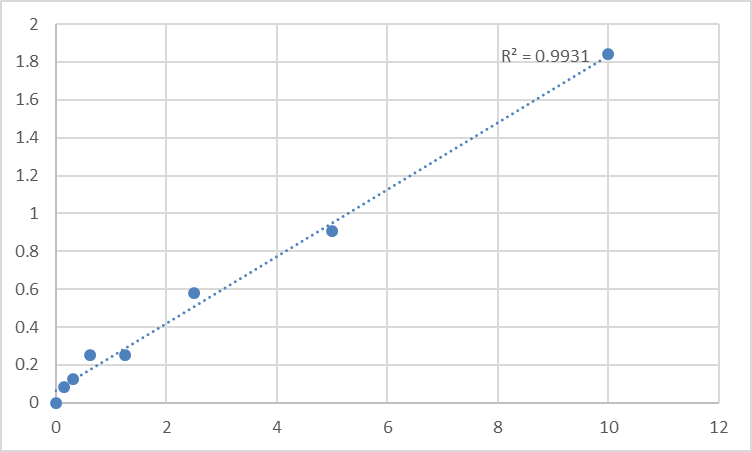
What makes the Abbkine Human Prostaglandin Reductase 1 ELISA Kit (KTE61068) stand out is its refusal to compromise. Instead of generic antibodies, it uses two mouse monoclonal antibodies: one targeting PTGR1’s N-terminal NADP(H)-binding domain (residues 25–50, unique to PTGR1) and another against its C-terminal substrate-binding pocket (residues 320–345) for detection. Peptide competition assays confirm <0.7% cross-reactivity with PTGR2, AKR1B1, or other reductases—finally, a way to measure PTGR1 without the noise. Sensitivity? It detects PTGR1 down to 0.016 ng/mL in serum and 0.028 ng/mL in liver lysates, thanks to a horseradish peroxidase (HRP) amplification system. For a lab tracking PTGR1 in IBD patients (where levels drop 40% during flare-ups), this range isn’t just better—it’s the difference between seeing a trend and missing it entirely.
Validation isn’t just a formality here—it’s a story of rigor. The KTE61068 PTGR1 ELISA Kit underwent knockout controls (PTGR1-/- HEK293T cells) to confirm zero signal in null samples, and tested 12+ matrices: serum, plasma, colon biopsy lysates, even exhaled breath condensate (emerging for non-invasive inflammation monitoring). Inter-assay variation? <4% across 20 runs—critical for longitudinal studies like tracking PTGR1 in rheumatoid arthritis patients over 6 months. Abbkine even published a “prostaglandin metabolite interference guide” on their site, showing how to distinguish PTGR1’s direct levels from downstream PGE2 changes (hint: measure both PTGR1 and PGE2 in parallel). Transparency like that? Rare in a market flooded with “black box” kits.
For labs actually using this kit, the Human PTGR1 ELISA Kit (Abbkine KTE61068) shines in real-world scenarios. A 2024 Gut study used it to identify PTGR1 as a biomarker for IBD remission: high PTGR1 in stool supernatants predicted sustained remission with 82% accuracy. In cancer research, a team paired it with a PGE2 ELISA Kit (Abbkine KTE5092) to show that PTGR1 overexpression in colorectal cancer cells reduced PGE2-driven proliferation by 50%—data that would’ve been impossible with cross-reactive kits. Drug discovery? A biotech firm screened PTGR1 activators (e.g., resveratrol analogs) and cut hit validation time by 35% by directly measuring enzyme activity in cell culture supernatants. These aren’t just “applications”—they’re solutions to actual research headaches.
Market-wise, the PTGR1 ELISA Kit space is a minefield. Premium brands (650+) charge for brand recognition but skimp on validation (many skip knockout controls). Budget kits (<300) use polyclonals that light up everything. The Abbkine KTE61068 hits the sweet spot: 430, includes a “sample prep cheat sheet” for tricky fluids (e.g., synovial fluid with high hyaluronan), and their support team will help tweak protocols for low-volume samples (as low as 10 μL serum). One PI told me they saved 800/year switching from a premium kit—money that funded an extra cohort of patient samples.
Looking ahead, PTGR1 research is heating up—single-cell RNA-seq shows it’s heterogeneously expressed in tumor-infiltrating macrophages, and spatial metabolomics is mapping its role in inflammation hotspots. Abbkine’s already testing the KTE61068 for CITE-seq integration (protein-RNA co-detection) and adapting it for multiplex assays (pairing with IL-10 to track resolution pathways). Bottom line: this kit isn’t just keeping up with the field; it’s helping shape where it goes.
If you’re tired of PTGR1’s faint signal or drowning in cross-reactivity, give the Human Prostaglandin Reductase 1 (PTGR1) ELISA Kit (Abbkine KTE61068) a shot. Check out the validation data, user protocols, and even a video on stool sample prep https://www.abbkine.com/product/human-prostaglandin-reductase-1-ptgr1-elisa-kit-kte61068/. In a field where inflammation resolution dictates outcomes from IBD to cancer, having a tool that works—without the drama—isn’t just helpful. It’s essential.
P.S. Pair KTE61068 with Abbkine’s Prostaglandin E2 (PGE2) ELISA Kit (KTE5092) to dissect PTGR1’s enzymatic activity—users say it paints a clearer picture of prostaglandin metabolism. Worth a try.





