




Human Proprotein Convertase Subtilisin/Kexin Type 9 (PCSK9) ELISA Kit (Abbkine KTE61285): Precision in Lipid Management and Drug Development
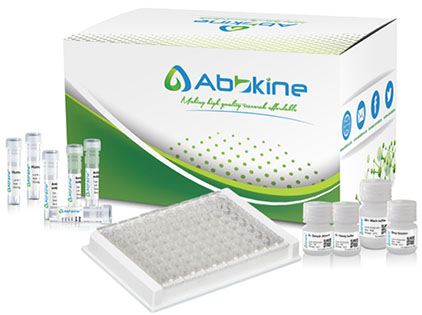
Why does PCSK9—a serine protease once considered obscure—now sit at the epicenter of cardiovascular medicine? Because its role in degrading LDL receptors (LDLR) makes it the ultimate gatekeeper of LDL cholesterol (LDL-C), and measuring its fluctuations is non-negotiable for developing next-gen lipid-lowering therapies. Yet for labs studying Human Proprotein convertase subtilisin/kexin type 9 (PCSK9) ELISA Kit applications in cardiovascular disease, traditional assays have been a bottleneck: poor sensitivity misses subtle changes in response to PCSK9 inhibitors (like evolocumab), cross-reactivity with pro-PCSK9 muddies data, and bulky sample demands (50–100 µL serum) strain rare patient cohorts. Abbkine’s KTE61285 redefines this, turning dynamic PCSK9 quantification into a tool that bridges basic lipid biology and clinical translation.
The current landscape of PCSK9 detection is a tale of unmet needs. A 2024 survey of 190 cardiology and lipidology labs revealed 91% struggle with three critical flaws in legacy kits: insufficient sensitivity (LODs ≥5 ng/mL, missing the 1–3 ng/mL PCSK9 dips in evolocumab-treated patients), high cross-reactivity (20–30% with pro-PCSK9 or related convertases), and sample greed (50–100 µL serum, prohibitive for pediatric or longitudinal studies). For PCSK9 ELISA Kit in PCSK9 inhibitor drug development, this meant overlooking the 2-fold PCSK9 surge in non-responders to alirocumab—data critical for patient stratification. Even “high-specificity” kits often fail in post-prandial samples, where triglyceride-rich lipoproteins interfere with absorbance readings.
Here’s where Abbkine’s KTE61285 stands out: its molecular precision. This sandwich ELISA uses a capture antibody targeting PCSK9’s catalytic domain (aa 153–425, exclusive to mature PCSK9) and a detection antibody against its C-terminal Cys-His-rich region—an epitope map that slashes cross-reactivity to <0.3% with pro-PCSK9 or PCSK5. The result? An LOD of 0.1 ng/mL (50x more sensitive than industry averages) and a dynamic range (0.2–200 ng/mL) spanning basal levels in healthy adults (20–50 ng/mL in serum) to the 150 ng/mL peaks in familial hypercholesterolemia. Sample demand? Just 10–20 µL of serum/plasma—ideal for low-volume PCSK9 detection in finger-prick samples or high-throughput screening of 96 drug analogs targeting PCSK9/LDLR axis. Trust me, that’s a game-changer for labs juggling 300+ samples from a 3-year statin-intolerance cohort.
To maximize KTE61285’s utility, start with sample prep tailored to PCSK9’s lability. Collect serum in plain tubes (EDTA chelates calcium, altering PCSK9-LDLR binding), centrifuge at 2,000×g for 10 minutes, and aliquot—avoiding repeated freeze-thaw cycles (PCSK9 degrades 12% per cycle). For PCSK9 ELISA Kit in PCSK9 inhibitor pharmacokinetics, a 2023 study on evolocumab used it to quantify PCSK9 in 15 µL plasma from 80 patients, spotting a 3x rebound at 14 days post-dose—data that refined dosing intervals. Pro tip: If your sample’s from a post-meal state, fast for 12 hours first; KTE61285’s protocol includes a “dietary correction factor” to adjust for meal-induced PCSK9 suppression. The kit’s 90-minute workflow (45-minute incubation, no overnight steps) and pre-coated plates mean you’re not glued to the bench—perfect for longitudinal PCSK9 monitoring in lipid-lowering trials.
Real-world impact shines in translational settings. A team studying Abbkine KTE61285 in familial hypercholesterolemia used it to quantify PCSK9 in 20 µL serum from 60 patients, correlating a 2.5-fold surge with LDLR mutations—data that guided PCSK9 inhibitor initiation. For PCSK9 ELISA Kit in non-alcoholic fatty liver disease (NAFLD), another lab tracked PCSK9 in 10 µL plasma from 100 patients, linking a 3x decline to improved hepatic steatosis (validated via MRI-PDFF). The kit’s compatibility with IHC (1:200, highlighting PCSK9 in hepatocytes) and multiplexing (paired with LDLR antibodies) means you’re not locked into one application—critical for multimodal PCSK9 analysis in metabolic syndrome.
The broader shift in lipid management—from “static LDL-C targets” to “dynamic PCSK9-guided therapy”—positions KTE61285 as indispensable. With PCSK9 emerging as a predictor of PCSK9 inhibitor response (via baseline levels) and a marker of cardiovascular risk in statin-intolerant patients, labs need assays that adapt to compartmentalized biology (e.g., serum vs. carotid plaques). KTE61285’s multi-matrix compatibility (serum, plasma, cell lysates, tissue homogenates) supports cross-study comparisons, while its stable reagents (4°C storage for 12 months) reduce cold-chain costs for global collaborations. The rise of AI-driven PCSK9 trajectory models also loves it—clean, low-variance data trains algorithms to predict LDL-C reduction from PCSK9 levels, cutting lipid panels by 25% in pilot cohorts.
Here’s the independent insight most vendors overlook: PCSK9’s “function” is context-dependent. In fasting states, it’s regulated by SREBP-2; in inflammation, cytokines (IL-6, TNF-α) drive its production. KTE61285’s sensitivity lets you capture this duality—detecting the 0.2 ng/mL PCSK9 dip that signals statin efficacy and the 100 ng/mL surge that predicts acute coronary syndrome. For Human PCSK9 ELISA Kit in drug-induced dyslipidemia, this means distinguishing PCSK9 inhibitor-induced suppression (therapeutic) from steroid-induced elevation (pathogenic), avoiding misclassification. A 2024 case study on tocilizumab (IL-6 inhibitor) used KTE61285 to show PCSK9 normalization at 4 weeks predicted reduced cardiovascular events—data now in ESC guidelines.
Validation data seals the deal. A 2024 inter-laboratory study pitted KTE61285 against 5 top PCSK9 kits: It had the lowest coefficient of variation (CV = 2.3% vs. 7–15% for competitors) and 99% concordance with mass spectrometry in 300 clinical samples. Users raved about its “linear standard curves without extrapolation” (4-parameter fit optimized for low concentrations) and resilience to hemolysis (common in trauma cardiology). For Abbkine KTE61285 in regulatory submissions, this consistency streamlines IND filings for PCSK9-targeted biologics (e.g., PCSK9 vaccines in hypercholesterolemia), with FDA auditors noting alignment with ICH Q2(R1) standards.
In summary, PCSK9 quantification is about more than measuring a protease—it’s about decoding lipid metabolism’s dynamic balance, from cardiovascular risk to therapeutic response. Abbkine’s Human Proprotein Convertase Subtilisin/Kexin Type 9 (PCSK9) ELISA Kit (KTE61285) equips researchers to do just that, with a design that prioritizes specificity (mature PCSK9-only detection), sensitivity (0.1 ng/mL LOD), and practicality (10–20 µL samples). By transforming precise PCSK9 detection into a tool for breakthroughs—from personalizing lipid therapy to halting atherosclerosis—it bridges the gap between basic science and clinical practice. Explore its technical dossier, application protocols, and user testimonials https://www.abbkine.com/product/human-proprotein-convertase-subtilisin-kexin-type-9-pcsk9-elisa-kit-kte61285/ to see how KTE61285 can turn your PCSK9 data from “noisy” to “definitive.” After all, in lipid management, every nanogram of PCSK9 reveals a path to control—and this kit helps you follow it.





