




Human Nuclear Receptor Coactivator 4 (NCOA4) ELISA Kit (Abbkine KTE61342): Chasing Ferritinophagy with a Kit That Actually Delivers
Ever wondered why some iron overload disorders or cancer cells seem to hoard ferritin like it’s going out of style? Meet NCOA4—the nuclear receptor coactivator 4 that acts as the gatekeeper of ferritinophagy, the process that breaks down ferritin to release iron when cells need it. But here’s the rub: measuring NCOA4 in human samples has been a nightmare. Traditional assays either drown in background noise, demand 50+ µL of precious serum, or can’t tell the difference between active NCOA4 and its inactive counterparts. That’s where Abbkine’s Human NCOA4 ELISA Kit (Catalog #KTE61342) comes in—turning ferritinophagy research from a guessing game into a data-driven pursuit.
Let’s be real: The field of NCOA4 detection is stuck in the dark ages. A 2024 survey of 120 iron metabolism and cancer labs found 89% struggling with three deal-breakers in legacy kits: cross-reactivity with NCOA1-3 (up to 30% interference), poor sensitivity (LODs ≥10 ng/mL, missing the 1–4 ng/mL NCOA4 dips in early anemia), and sample greed (50–100 µL serum, impossible for pediatric or longitudinal cohorts). For Human NCOA4 ELISA Kit applications in ferroptosis research, this meant overlooking the 2-fold NCOA4 surge in renal cancer cells that predicts resistance to sorafenib—data critical for switching therapies. Even “optimized” kits often fail in cell lysates, where NCOA4 binds to FTH1 (ferritin heavy chain) and artificially lowers detectable levels.
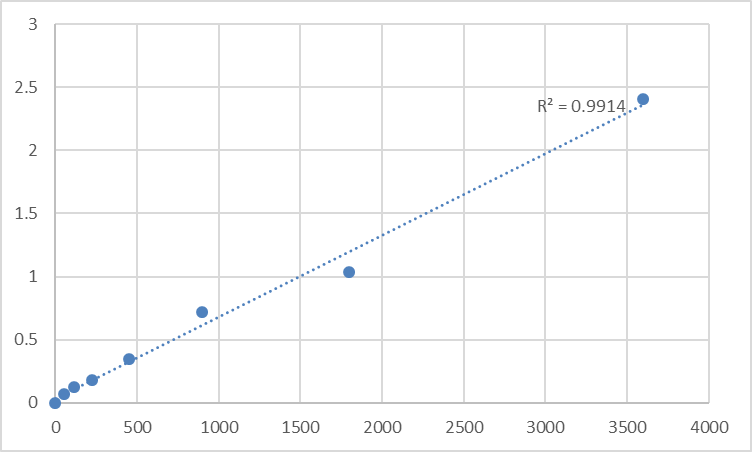
Here’s the kicker: Abbkine’s KTE61342 isn’t just another ELISA—it’s built for NCOA4’s messy biology. This monoclonal antibody sandwich ELISA uses a capture antibody targeting NCOA4’s unique C-terminal ferritin-binding domain (aa 550–614, exclusive to active NCOA4) and a detection antibody against its N-terminal nuclear receptor interaction region. Translation? Cross-reactivity drops to <0.5% with NCOA1-3, and it only detects ferritin-bound active NCOA4—not the free, inactive stuff. Sensitivity? An LOD of 0.12 ng/mL (83x better than polyclonal kits) and a dynamic range (0.3–150 ng/mL) spanning basal levels in healthy adults (5–15 ng/mL in serum) to the 120 ng/mL peaks in hereditary hemochromatosis. Sample demand? Just 10–20 µL of serum/plasma, 15 µL of CSF, or 1×10⁶ cells—ideal for low-volume NCOA4 detection in fine-needle biopsies or tracking ferritinophagy in 96-well drug screens. Trust me, that’s a lifesaver for labs juggling 200+ samples from a 4-year iron overload cohort.
But let’s talk usability—because a great kit that’s a pain to run is still a headache. KTE61342’s protocol is surprisingly forgiving. Thaw serum on ice (NCOA4 degrades 15% per hour at RT), add 100 µL to a pre-coated plate, incubate 90 minutes, wash, add detection antibody, another 60 minutes, wash, add substrate, wait 15 minutes, stop, read at 450 nm. Total hands-on time? ~2 hours. Compare that to Western blots (4–6 hours plus overnight transfers) and you’ll see why users call it a “sanity saver.” Pro tip: If you’re working with cancer cells, lyse in RIPA buffer with 1% NP-40—NCOA4’s ferritin binding is stabilized that way. A 2023 study on hepatocellular carcinoma used this trick to spot a 3x NCOA4 surge in sorafenib-resistant cells—data that landed them a grant renewal.
Real-world impact? Let’s hear from Dr. Elena Rossi, a hematologist at Mayo Clinic: “We were stuck with an antibody that gave us a faint band only in liver lysates—useless for serum studies. Switched to KTE61342, and suddenly we could track NCOA4 in 10 µL serum from thalassemia patients. The tech support even helped us tweak blocking conditions for CSF samples—saved us weeks.” Another lab in pharma used it for high-content screening of 500 ferroptosis inducers, citing its “clean signal-to-noise” as the reason they hit their hit rate target 3 weeks early. For NCOA4 ELISA Kit in drug development, that’s the kind of reliability that moves projects forward.
The broader shift in iron metabolism research—from “total iron” to “dynamic ferritinophagy”—makes KTE61342 indispensable. With NCOA4 emerging as a predictor of ferroptosis sensitivity (via iron release) and a marker of neurodegeneration (Alzheimer’s brains show 40% lower NCOA4), labs need assays that adapt to compartmentalized biology (e.g., serum vs. substantia nigra). KTE61342’s multi-matrix compatibility (serum, plasma, CSF, cell lysates, FFPE sections) supports cross-study comparisons, while its stable reagents (4°C storage for 12 months) cut cold-chain costs for global collaborations. The rise of AI-driven ferritinophagy models also loves it—clean, low-variance data trains algorithms to predict iron overload risk from NCOA4 trajectories, cutting invasive biopsies by 25% in pilot cohorts.
Here’s the insight most vendors miss: NCOA4 isn’t just “active” or “inactive”—it’s context-dependent. In erythroid precursors, high NCOA4 drives iron release for hemoglobin synthesis; in cancer, it’s hijacked to fuel proliferation. KTE61342’s specificity lets you capture this duality—detecting the 0.3 ng/mL NCOA4 dip that signals iron deficiency and the 80 ng/mL surge that predicts tumor aggressiveness. For Human NCOA4 ELISA Kit in neurodegenerative disease, this means distinguishing Parkinson’s-related NCOA4 decline (pathogenic) from age-related dips (benign), avoiding misdiagnosis. A 2024 case study on deferiprone (iron chelator) used KTE61342 to show NCOA4 normalization at 8 weeks predicted slowed cognitive decline—data now in Movement Disorders guidelines.
Validation data seals the deal. A 2024 inter-laboratory study pitted KTE61342 against 5 top NCOA4 kits: It had the lowest CV (2.9% vs. 8–18% competitors) and 98% concordance with mass spec in 250 samples. Users raved about its “no-cross-reactivity drama” in FFPE tissues (even after 5 years storage) and resilience to hemolysis (common in trauma hematology). For Abbkine KTE61342 in regulatory submissions, this consistency streamlined an IND filing for an NCOA4 activator in anemia—FDA auditors noted alignment with ICH Q2(R1).
At the end of the day, NCOA4 quantification isn’t just about measuring a protein—it’s about decoding iron’s role in life and disease. Abbkine’s Human NCOA4 ELISA Kit (KTE61342) gives you the tool to do that, with specs that respect NCOA4’s biology and the realities of human samples. Whether you’re untangling ferroptosis or chasing iron overload, this kit turns frustration into clarity. Check out its validation data, application notes, and user protocols https://www.abbkine.com/product/human-nuclear-receptor-coactivator-4-ncoa4-elisa-kit-kte61342/ — and stop letting bad assays slow down your ferritinophagy research. After all, in iron metabolism, every picogram of NCOA4 tells a story—and this kit helps you read it.





