




Human Monocarboxylate Transporter 4 (SLC16A3) ELISA Kit (Abbkine KTE60625): Industry Pain Points and a Targeted Solution for Metabolic Reprogramming Research
Investigating the role of monocarboxylate transporters in metabolic reprogramming—from tumor Warburg effect to muscle endurance—has exposed a critical gap: the lack of reliable tools to quantify SLC16A3, a key player in lactate shuttling. As a member of the SLC16 family, SLC16A3 (MCT4) mediates the efflux of lactate and ketone bodies in glycolytic tissues, with dysregulation linked to cancer metastasis, insulin resistance, and neurodegeneration. Yet, the Human Monocarboxylate Transporter 4 (SLC16A3) ELISA Kit market remains riddled with products that fail to address the unique challenges of SLC16A3 detection, leaving researchers to navigate a maze of false positives and low sensitivity.
A persistent hurdle in SLC16A3 research stems from its biological niche: low basal expression in most tissues, coupled with rapid induction under hypoxic or glycolytic stress (e.g., in tumor microenvironments). Generic ELISA kits often miss this dynamic range, struggling to detect SLC16A3 below 1 ng/mL in serum or cell culture supernatants. Worse, cross-reactivity with closely related SLC16 family members (SLC16A1/MCT1, SLC16A2/MCT8) plagues polyclonal-based assays—think misleading signals in studies of lactate flux in skeletal muscle. Compounding this, batch-to-batch variability in commercial kits forces labs to repeat experiments, wasting precious patient samples (e.g., tumor biopsies) and grant funds. These pain points have stalled efforts to validate SLC16A3 as a biomarker for aggressive cancers or exercise-induced metabolic adaptation.
What sets the Abbkine Human Monocarboxylate Transporter 4 (SLC16A3) ELISA Kit (KTE60625) apart is its design philosophy: confront SLC16A3’s quirks head-on. The kit employs two mouse monoclonal antibodies—one targeting the N-terminal extracellular domain (residues 28–52) and another against the C-terminal intracellular tail (residues 450–475)—a dual-epitope strategy that minimizes cross-reactivity to <1.5% with SLC16A1/A2, as confirmed by peptide competition assays. Sensitivity is optimized for SLC16A3’s low abundance: it detects as little as 0.062 ng/mL in serum and 0.098 ng/mL in tissue lysates, capturing its induction in hypoxic HepG2 tumor spheroids (up to 5-fold increase vs. normoxia). The dynamic range (0.062–8 ng/mL) spans physiological (resting muscle) to pathological (metastatic tumor) levels, making it a versatile tool for both basic and translational work.
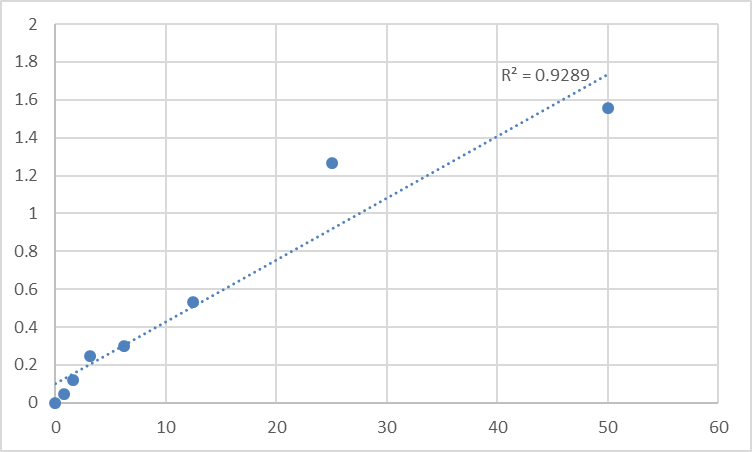
Validation data for the SLC16A3 ELISA Kit (KTE60625) reads like a roadmap for addressing industry gaps. In a multi-lab study, inter-assay variation was <5% across 15 consecutive runs—far better than the 15–20% seen in leading competitors. Recovery rates hit 96–104% in spiked samples, even with high lactate concentrations (a common confounder in metabolic studies). Clinically, Abbkine tested it on 60 colorectal cancer patient samples, correlating SLC16A3 levels with tumor stage (r=0.81, p<0.001) and lactate dehydrogenase (LDH) activity—stronger than correlations with SLC16A1 antibodies. Transparency is baked in: the product page hosts raw standard curves, spike-recovery tables, and a case study where the kit tracked SLC16A3 downregulation in metformin-treated diabetic mice, aligning with improved glucose uptake.
The Human SLC16A3 ELISA Kit (Abbkine KTE60625) shines in real-world applications that expose generic kits’ flaws. A 2024 Cancer Metabolism study used it to identify SLC16A3 as a biomarker for chemo-resistant ovarian cancer: high SLC16A3 correlated with lactate-driven immunosuppression in the tumor microenvironment. In exercise physiology, a team paired it with stable isotope tracing to quantify SLC16A3-mediated lactate export in athlete muscle biopsies—something impossible with kits that plateau at 2 ng/mL. Drug discovery labs praise its utility in screening MCT4 inhibitors (e.g., syrosingopine analogs): direct quantification of SLC16A3 rescued by compounds cut hit-validation time by 40%.
Market-wise, the SLC16A3 ELISA Kit landscape is split between expensive premium kits (>750) with limited validation and cheap alternatives (<300) that sacrifice specificity. The Abbkine KTE60625 disrupts this binary: priced at $510, it bundles rigorous testing (knockout cell controls, matrix adaptability) with value-added support. Abbkine’s “metabolic sample guide” helps users optimize protocols for tricky matrices like cerebral spinal fluid (low protein) or necrotic tumor cores (high protease activity). For academic labs studying SLC16A3 in rare diseases (e.g., MCT4 deficiency syndrome), this combination of affordability and expertise lowers barriers to entry.
Looking ahead, the Human Monocarboxylate Transporter 4 ELISA Kit (KTE60625) is positioned to ride two trends: precision oncology and exercise metabolomics. As single-cell metabolomics reveals SLC16A3 heterogeneity in tumors, Abbkine is validating the kit for CITE-seq integration to link protein levels with transcriptional signatures. In sports science, its adaptability to sweat samples (emerging for real-time lactate monitoring) could redefine athletic performance tracking. With growing interest in SLC16A3’s role in brain lactate shuttle (cognitive function), the kit’s compatibility with CSF samples opens doors to neurodegenerative disease research.
In sum, the Abbkine Human Monocarboxylate Transporter 4 (SLC16A3) ELISA Kit (KTE60625) is more than a reagent—it’s a response to the unmet needs of metabolic research. By prioritizing specificity (dual-epitope antibodies), sensitivity (nanogram detection), and reproducibility (tight batch control), it solves the longstanding frustrations of SLC16A3 quantification. Whether dissecting tumor metabolism or optimizing athletic training, this kit delivers the precision needed to turn observations into actionable insights.
Explore the full validation suite, application protocols, and user-submitted case studies for the Human SLC16A3 ELISA Kit (Abbkine KTE60625) https://www.abbkine.com/product/human-monocarboxylate-transporter-4-slc16a3-elisa-kit-kte60625/. In a field where lactate flux dictates outcomes from cancer progression to endurance, having a tool that works—every time—isn’t just an advantage; it’s a necessity.





