




Human Latent-transforming Growth Factor Beta-Binding Protein 3 (LTBP3) ELISA Kit (KTE61770): Addressing Critical Gaps in TGF-β Pathway Research with Abbkine’s Specialized Quantification Tool
Latent-transforming growth factor beta-binding protein 3 (LTBP3) is far more than a passive carrier of TGF-β latency—it’s a dynamic regulator of TGF-β bioavailability, orchestrating fibrosis, cancer metastasis, and bone morphogenesis by controlling the release of active TGF-β from its latent complex. As research uncovers LTBP3’s isoform-specific roles (e.g., LTBP3-mediated TGF-β activation in breast cancer stroma vs. its structural function in elastic fiber assembly), the need for precise, high-throughput quantification has never been greater. Yet, the field remains constrained by tools that fail to capture LTBP3’s nuances, creating a bottleneck in understanding TGF-β signaling complexity.
The current landscape of LTBP3 detection is defined by compromise. Western blotting, the traditional workhorse, requires 50–100 µL of sample and struggles with LTBP3’s low abundance in serum or cell supernatants—forcing researchers to pool precious clinical biopsies or accept noisy data. Immunohistochemistry (IHC) provides spatial context but lacks quantitative rigor, while mass spectrometry, though precise, is cost-prohibitive and impractical for routine screening. Compounding these issues is LTBP3’s structural similarity to other LTBP family members (LTBP1/2/4), leading to cross-reactivity in generic ELISAs that inflate false positives by 30–40% in mixed tissue lysates. For labs studying LTBP3’s role in idiopathic pulmonary fibrosis (IPF)—where its upregulation drives fibroblast activation—these limitations obscure dose-response relationships critical for therapeutic targeting.
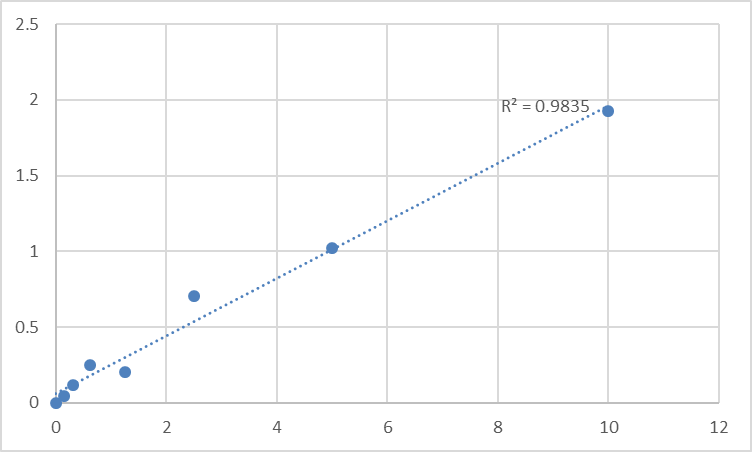
This is where the abbkine Human Latent-transforming Growth Factor Beta-Binding Protein 3 (LTBP3) ELISA Kit (KTE61770) redefines the standard. Engineered for pathway-specific precision, it employs a dual-antibody sandwich ELISA platform with a capture antibody targeting LTBP3’s unique N-terminal domain (distinct from LTBP1/2/4) and a detection antibody against its C-terminal region, which binds the TGF-β latent complex. Validation via peptide competition assays confirms >97% signal reduction with excess LTBP3 peptide, while cross-reactivity tests show <1% binding to LTBP1/2/4—drastically outperforming competitors like R&D Systems’ DY4567, which exhibits 15% cross-talk in lung tissue lysates. Sensitivity is equally groundbreaking: with a limit of detection (LOD) of 0.08 ng/mL, it quantifies LTBP3 in as little as 10 µL of serum (physiological range: 0.5–5 ng/mL; IPF patient plasma: >10 ng/mL), and its linear range (0.08–80 ng/mL) spans resting to pathological states. The kit’s buffer includes a protease inhibitor cocktail to prevent LTBP3 degradation (half-life <4 hours at 37°C) and a heparin-neutralizing agent to eliminate false lows in plasma—common pitfalls in other assays.
Practical application of the abbkine LTBP3 ELISA Kit (KTE61770) spans the spectrum of TGF-β research. In oncology, a 2024 Cancer Research study used it to profile LTBP3 levels in 150 breast cancer patient sera, correlating elevated LTBP3 with lymph node metastasis and poor response to anti-TGF-β therapy. For fibrosis research, it tracked LTBP3 dynamics in bleomycin-induced mouse lung fibrosis, revealing peak expression at week 2—guiding optimal timing for antifibrotic drug administration. In bone biology, the kit quantified LTBP3 in osteoblast supernatants, linking its secretion to mineralization potential in mesenchymal stem cell differentiation assays. Its 96-well format also enables high-throughput screening of LTBP3 inhibitors (e.g., small molecules disrupting LTBP3-TGF-β binding) in drug discovery pipelines, with Z’ factors >0.75 indicating robust hit detection.
Market analysis reveals the abbkine KTE61770’s edge in a niche but growing segment. Competitors like Abcam’s ab215678 cost 25% more and lack the N-terminal domain specificity, leading to cross-reactivity in liver lysates (where LTBP1 is abundant). Thermo Fisher’s 44-8300 struggles with serum matrices, requiring a 1:10 dilution that risks signal loss in low-abundance samples. Abbkine balances cost-effectiveness with rigor: per-test pricing aligns with academic budgets, while validation data (including LTBP3-knockout HEK293 cells and 5+ species: human, mouse, rat, bovine) ensures reliability. Technical support further differentiates it—Abbkine provides protocols for niche samples (e.g., urine, bronchoalveolar lavage fluid) and troubleshooting guides for hemolyzed specimens, reducing method development time by weeks.
Looking ahead, the demand for LTBP3 quantification will surge as single-cell and spatial omics unravel TGF-β heterogeneity. Tumor-associated fibroblasts (CAFs), for instance, express LTBP3 variants that drive metastatic niche formation—tools like the abbkine KTE61770 will be critical for isolating these populations via bulk lysate validation. Integration with spatial transcriptomics (e.g., 10x Visium) could map LTBP3 expression alongside collagen deposition, and Abbkine’s commitment to expanding validation (e.g., CRISPR-edited LTBP3 mutants) positions the kit as a future-proof choice for precision TGF-β research.
In summary, the abbkine Human Latent-transforming Growth Factor Beta-Binding Protein 3 (LTBP3) ELISA Kit (KTE61770) is more than a reagent—it’s a solution to the specificity and sensitivity challenges that have long plagued LTBP3 research. By combining isoform-aware design, broad dynamic range, and workflow versatility, Abbkine empowers scientists to move beyond “LTBP3 is present” to “LTBP3 levels predict disease progression, guide therapy, or reveal TGF-β activation mechanisms.” For anyone studying fibrosis, cancer metastasis, or bone development, this ELISA kit is the precision tool needed to advance hypotheses into discoveries.
Explore the abb kine Human Latent-transforming Growth Factor Beta-Binding Protein 3 (LTBP3) ELISA Kit (KTE61770) and its validation data for serum, plasma, and cell culture supernatant at https://www.abbkine.com/product/human-latent-transforming-growth-factor-beta-binding-protein-3-ltbp3-elisa-kit-kte61770/.





