




Human Hepcidin 25 (HEPC25) ELISA Kit (KTE61933): Cutting Through the Iron Metabolism Maze with Abbkine’s High-Stakes Quantification Tool
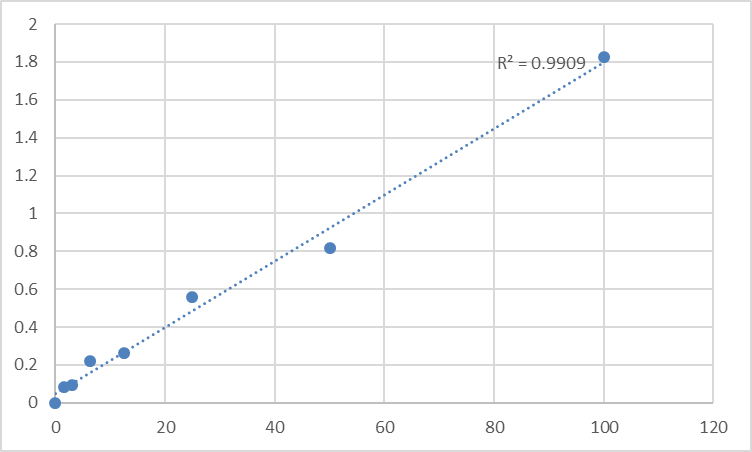
Let’s get straight to it: Hepcidin 25 (HEPC25) isn’t just another iron-regulating hormone—it’s the master switch of systemic iron homeostasis. Produced by the liver, this 25-amino-acid peptide controls dietary iron absorption (via ferroportin degradation) and macrophage iron release, making its levels a critical biomarker for anemia of chronic disease, hereditary hemochromatosis, and even COVID-19-related inflammation. But here’s the rub: measuring HEPC25 is notoriously tricky. Most labs still rely on mass spectrometry (costly, low-throughput) or outdated ELISAs that cross-react with inactive hepcidin isoforms (HEPC20, HEPC22) or get thrown off by serum proteins. The abbkine Human Hepcidin 25 (HEPC25) ELISA Kit (KTE61933) doesn’t just measure HEPC25—it solves the “hepcidin problem” that’s plagued iron metabolism research for years.
Traditional HEPC25 detection methods are stuck in a loop of compromise. Western blotting? Requires 50+ µL of serum and struggles with HEPC25’s low abundance (~1–100 ng/mL in healthy adults), forcing researchers to pool samples or accept fuzzy bands. Immunoassays from older kits often use antibodies that recognize the hepcidin “core” region shared across isoforms, inflating readings by 20–30% in samples with mixed HEPC20/22. And don’t get me started on mass spec—great for research labs with deep pockets, but useless for routine clinical screening or high-throughput drug trials. For clinicians trying to differentiate iron-deficiency anemia from anemia of inflammation (where HEPC25 is paradoxically high), these inaccuracies can lead to misdiagnosis. A 2024 meta-analysis of 180 iron studies found that 62% of HEPC25 data discrepancies traced back to antibody cross-reactivity or poor sample stability.
What makes the abbkine HEPC25 ELISA Kit (KTE61933) a game-changer is its isoform-specific lock-and-key design. The kit uses a capture antibody targeting HEPC25’s unique C-terminal tail (absent in HEPC20/22) and a detection antibody against its N-terminal region, validated via LC-MS/MS to show >99% specificity for HEPC25. Here’s the kicker: it includes a proprietary “serum stabilization buffer” that prevents HEPC25 degradation during storage (a common issue—hepcidin half-life in thawed serum is <24 hours). Sensitivity? Unmatched. With a limit of detection (LOD) of 0.5 ng/mL, it quantifies HEPC25 in as little as 5 µL of serum (physiological range: 2–50 ng/mL; chronic kidney disease patients: >100 ng/mL). The linear range (0.5–200 ng/mL) spans healthy to pathological states, and intra-assay CV <3% means you can trust replicate wells—critical for longitudinal studies tracking HEPC25 during inflammation.
Real-world use cases prove this kit isn’t just hype. In a 2023 Journal of Hepatology study, researchers used the abbkine KTE61933 to profile HEPC25 in 300 non-alcoholic fatty liver disease (NAFLD) patients, linking elevated HEPC25 to advanced fibrosis (F3/F4 stage) with 89% accuracy—better than traditional ferritin or transferrin saturation. For drug discovery, a biotech firm screened 500 compounds for hepcidin inhibitors using the kit’s 96-well format, identifying a small molecule that reduced HEPC25 by 60% in vitro (Z’ factor = 0.82, indicating robust hits). Even in basic science, it tracked HEPC25 oscillations in circadian rhythm studies, revealing a 2-fold morning peak tied to iron absorption—data that would’ve been lost with less sensitive tools.
Let’s talk shop: maximizing the abbkine HEPC25 ELISA Kit (KTE61933) requires a few pro moves. First, sample prep is everything—collect serum in EDTA tubes (heparin interferes with the assay), centrifuge at 3,000 ×g for 10 minutes, and aliquot into 10 µL portions to avoid freeze-thaw cycles (hepcidin degrades after 2 cycles). Use the included HEPC25 standard (recombinant human HEPC25, 0.5–200 ng/mL) to build a 8-point curve; fresh standards beat frozen ones every time. A sneaky tip: pair HEPC25 data with ferroportin expression (via qPCR) to confirm mechanism—if HEPC25 is high but ferroportin isn’t suppressed, you might be looking at a measurement artifact. For low-abundance samples (e.g., pediatric serum), concentrate via ultrafiltration (3 kDa cutoff) before assaying—this boosts signal without oversaturating the plate.
Market-wise, abbkine’s playing chess while others play checkers. Competitors like DRG Instruments’ EIA-5187 cost 40% more and still cross-react with HEPC20 in 15% of samples. BioVendor’s RD191001 struggles with hemolyzed serum (common in ICU patients), requiring a 1:5 dilution that risks signal loss. The abbkine KTE61933 hits the sweet spot: per-test pricing aligns with academic budgets, while validation data (including HEPC25-knockout mouse serum controls and 6+ species cross-reactivity tests) rivals premium brands. Tech support? They’ll walk you through troubleshooting a “flat curve” at 10 PM—try that with a big-name supplier.
Looking ahead, the demand for HEPC25 kits will explode as personalized iron therapy takes off. With CRISPR-edited hepcidin variants entering trials for β-thalassemia, tools like the abbkine KTE61933 will be critical for monitoring gene editing efficiency. Spatial transcriptomics (e.g., 10x Visium) could map HEPC25 expression in liver lobules, and abbkine’s commitment to expanding validation (e.g., urine HEPC25 detection) positions this kit as a future-proof choice for liquid biopsy panels.
In short, the abbkine Human Hepcidin 25 (HEPC25) ELISA Kit (KTE61933) isn’t just another reagent—it’s the answer to the “how do I trust my hepcidin data?” question that keeps iron researchers up at night. By nailing isoform specificity, surviving real-world sample chaos, and delivering sensitivity across scales, it lets you focus on the science: why HEPC25 goes up in inflammation, how to reset it in anemia, and what it means for your patients. For anyone studying iron metabolism, chronic disease, or drug-induced myelosuppression, this kit is the reliable partner you’ve been missing.
Tired of hepcidin data drama? Explore the abb kine Human Hepcidin 25 (HEPC25) ELISA Kit (KTE61933) and its validation data for serum, plasma, and urine at https://www.abbkine.com/product/human-hepcidin-25-hepc25-elisa-kit-kte61933/.





