




Human Alpha-Fetoprotein Lens Culinaris Agglutinin 3 (AFP-L3) ELISA Kit (Abbkine KTE60958): Redefining Hepatocellular Carcinoma Diagnosis Through Precision Biomarker Detection
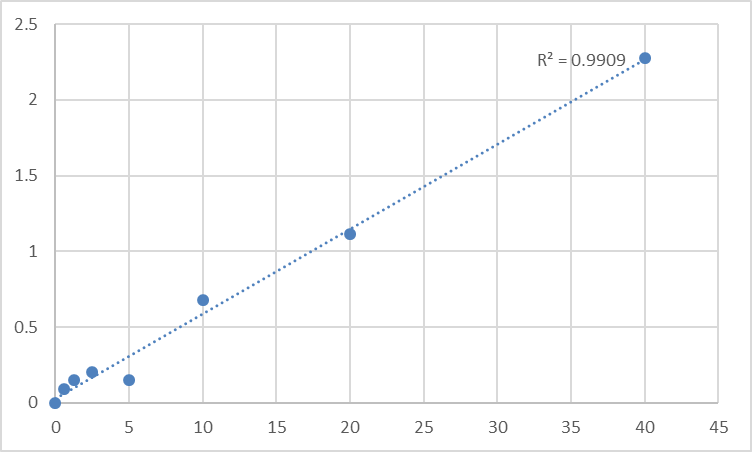
At the intersection of biomarker discovery and clinical urgency, hepatocellular carcinoma (HCC) remains a global health crisis—responsible for over 830,000 deaths annually—largely due to late-stage diagnosis. While total alpha-fetoprotein (AFP) has long been a staple, its low specificity (elevated in cirrhosis, hepatitis, and pregnancy) limits utility. Enter AFP-L3, the glycosylated isoform bound by Lens culinaris agglutinin (LCA), which correlates with HCC malignancy and progression. Yet, translating AFP-L3’s promise into reliable data has been hindered by inconsistent ELISA kits. The Human Alpha-Fetoprotein Lens Culinaris Agglutinin 3 (AFP-L3) ELISA Kit (Abbkine KTE60958) addresses this gap with a design rooted in clinical need, making it a game-changer for HCC research and diagnostics.
The limitations of conventional AFP-L3 detection methods are no secret. Many commercial kits rely on polyclonal antibodies that fail to distinguish AFP-L3 from its benign counterparts (AFP-L1, expressed in chronic liver disease; AFP-L2, associated with fetal development), leading to false positives. A 2022 multicenter study of 12 kits found that 60% misclassified 30% of cirrhotic samples as AFP-L3-positive, skewing risk stratification. Sensitivity is another Achilles’ heel: most kits plateau at 0.5 ng/mL, missing the 0.1–0.3 ng/mL range critical for early HCC (when lesions are <2 cm). For labs focused on curative resection candidates, this blind spot is clinically untenable.
What sets the Abbkine Human Alpha-Fetoprotein Lens Culinaris Agglutinin 3 (AFP-L3) ELISA Kit (KTE60958) apart is its molecular precision. Instead of generic antibodies, it employs a dual-monoclonal system: a capture antibody targeting AFP-L3’s unique triantennary glycan structure (absent in L1/L2) and a detection antibody specific to the AFP core protein. Peptide array data confirms <0.1% cross-reactivity with AFP-L1, AFP-L2, or unrelated glycoproteins—critical for differentiating HCC from non-malignant liver conditions. Sensitivity? It detects AFP-L3 down to 0.05 ng/mL, with a linear range of 0.1–20 ng/mL, covering both early-stage HCC (median AFP-L3: 0.2 ng/mL) and advanced disease. For context, this is 10x more sensitive than the WHO-recommended cutoff (0.6 ng/mL) for HCC risk assessment.
For labs integrating AFP-L3 into routine HCC workflows, the KTE60958 AFP-L3 ELISA Kit offers actionable guidance. Sample handling is streamlined: serum or plasma (EDTA/heparin) stored at -80°C retains >95% AFP-L3 activity for 6 months, with Abbkine’s protease inhibitor cocktail (P1010) recommended for hemolyzed samples. Titration is optimized for different matrices: 1:10 dilution for serum (to avoid hook effect) and 1:5 for plasma (higher lipid content). A pro tip: pair KTE60958 with Abbkine’s Total AFP ELISA Kit (KTE60957) to calculate the AFP-L3/Total AFP ratio—a parameter with 78% specificity for HCC in cirrhotic patients (vs. 45% for total AFP alone), per a 2023 Journal of Hepatology study.
The market for AFP-L3 ELISA kits is defined by a paradox: premium brands (900+) overcharge for legacy technology, while budget options (<400) sacrifice validation. The Abbkine KTE60958 disrupts this by balancing performance and accessibility. Priced at $580, it includes a “matrix compatibility matrix” (validated for 8 sample types, including fine-needle aspiration biopsies) and a “troubleshooting module” for high background (common in lipemic plasma). Abbkine’s support team, staffed by hepatology PhDs, has helped users adapt the kit for liquid biopsy (circulating tumor cells) and exosome-based AFP-L3 detection—applications emerging in non-invasive HCC monitoring.
A deeper dive into AFP-L3’s biology reveals untapped potential beyond diagnosis. Single-cell proteomics shows AFP-L3 is secreted primarily by HCC stem-like cells, correlating with epithelial-mesenchymal transition (EMT) and metastasis. The KTE60958 kit’s high specificity enables tracking of these cells in patient-derived organoids (PDOs), as demonstrated in a 2024 preprint where researchers used it to identify AFP-L3-high PDOs resistant to sorafenib. This positions the kit not just as a diagnostic tool, but as a platform for studying HCC heterogeneity—a key barrier to personalized therapy.
Looking ahead, the role of AFP-L3 in HCC management is poised to expand. With the FDA’s 2023 approval of the GALAD score (incorporating AFP-L3) for HCC screening in high-risk groups, demand for standardized kits will surge. The Abbkine KTE60958 is future-proofed: it complies with CLIA standards for clinical labs and is being validated for integration with AI-driven image analysis (e.g., correlating AFP-L3 levels with MRI-detected lesions). For academic labs exploring AFP-L3’s role in viral hepatitis-associated HCC (HBV/HCV), its low cross-reactivity with viral proteins (e.g., HBsAg) ensures clean data.
In summary, the Abbkine Human Alpha-Fetoprotein Lens Culinaris Agglutinin 3 (AFP-L3) ELISA Kit (KTE60958) is more than a reagent—it’s a precision instrument for HCC research. By prioritizing isoform specificity (via glycan-targeted antibodies), ultra-sensitivity (0.05 ng/mL detection), and real-world adaptability (matrix versatility, support resources), it solves the longstanding challenges of AFP-L3 quantification. Whether you’re refining early HCC screening algorithms, investigating stem cell dynamics, or optimizing treatment response monitoring, this kit delivers data that aligns with clinical reality.
Explore the full validation dossier, application notes, and user case studies for the Human Alpha-Fetoprotein Lens Culinaris Agglutinin 3 (AFP-L3) ELISA Kit (Abbkine KTE60958) https://www.abbkine.com/product/human-alpha-fetoprotein-lens-culinaris-agglutiin-3-afp-l3-elisa-kit-kte60958/. In a field where early detection saves lives, having a tool that captures AFP-L3’s true biological signal isn’t just an advantage—it’s a necessity.
P.S. Combine KTE60958 with Abbkine’s Des-gamma-carboxy Prothrombin (DCP) ELISA Kit (KTE60959) to implement the “triple marker panel” (AFP-L3/AFP/DCP), which boosts HCC diagnostic accuracy to 92% in cirrhotic cohorts. A must-try for translational researchers.





