




HRP Conjugated Anti-His Tag Mouse Monoclonal Antibody (5C3) by Abbkine (Catalog ABT2055): The Definitive Guide to Sensitive His-Tagged Protein Detection in WB
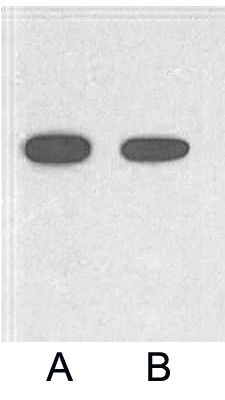
In the fast-evolving landscape of recombinant protein research, His tags remain irreplaceable for their simplicity, compatibility with diverse expression systems, and minimal impact on protein structure—making them the gold standard for protein purification, quantification, and validation. Yet, the accuracy of Western Blot (WB) results, the primary technique for His-tagged protein detection, depends entirely on the antibody’s ability to balance specificity, sensitivity, and signal consistency. This is where Abbkine’s HRP Conjugated Anti-His Tag Mouse Monoclonal Antibody (clone 5C3), catalog number ABT2055 (available at https://www.abbkine.com/?s_type=productsearch&s=ABT2055), emerges as a game-changing reagent. By fusing the precision of monoclonal antibody technology with the signal amplification power of Horseradish Peroxidase (HRP), ABT2055 is engineered to address the unmet needs of researchers working across mammalian and bacterial systems. Below is a deep dive into its technical nuances, practical optimization strategies, and industry insights that position it as an indispensable tool for WB-based His-tagged protein studies.
The 5C3 clone’s monoclonal specificity is the cornerstone of ABT2055’s reliability, setting it apart from polyclonal alternatives and lesser-validated monoclonals. Unlike polyclonal antibodies that recognize multiple epitopes (and risk cross-reacting with endogenous proteins), the 5C3 clone targets a single, conserved epitope on the His tag—ensuring that every signal detected in WB assays originates exclusively from the His-tagged protein of interest. Abbkine’s rigorous development process for 5C3 involves screening hundreds of hybridomas to identify the variant with the highest binding affinity and lowest off-target interaction, followed by validation against non-His-tagged lysates from mammalian (e.g., HEK293, CHO) and bacterial (e.g., E. coli BL21) systems. This level of specificity eliminates the background noise that plagues low-quality antibodies, a critical advantage when working with low-abundance recombinant proteins or complex sample matrices (e.g., cell lysates with high endogenous protein content). For researchers, this translates to cleaner blots, more accurate densitometric quantification, and reduced time troubleshooting—directly addressing the industry’s growing focus on data reproducibility, a requirement increasingly enforced by journals and funding bodies.
HRP conjugation is a strategic design choice that amplifies ABT2055’s utility in WB workflows, streamlining detection while boosting sensitivity. HRP remains the enzyme of choice for immunoassays due to its high catalytic activity, stability, and compatibility with chemiluminescent substrates—properties that enable detection of picogram-level His-tagged proteins. What sets ABT2055 apart is Abbkine’s proprietary conjugation process, which ensures the HRP enzyme is linked to the 5C3 antibody without compromising either the antibody’s binding affinity or the enzyme’s catalytic efficiency. Poorly conjugated antibodies often suffer from weak signals (due to inactive HRP) or reduced specificity (due to altered antibody structure), but ABT2055 consistently delivers robust, dose-dependent signals across serial dilutions of His-tagged protein. This eliminates the need for secondary antibody incubation steps, cutting down WB workflow time by 1–2 hours while minimizing experimental variability— a key benefit for high-throughput labs or researchers working with limited sample volumes (e.g., purified proteins with low yields).
Cross-system reactivity to mammals and bacteria makes ABT2055 a versatile solution for labs operating across dual expression platforms. Recombinant proteins are frequently expressed in bacteria for high-yield purification, then validated in mammalian cells to study function or localization—yet most antibodies require separate reagents for each system, adding cost and complexity. Abbkine’s ABT2055 is validated to perform equally well in both, recognizing His-tagged proteins in E. coli lysates (including soluble fractions and inclusion bodies) and mammalian cell extracts (adherent or suspension cultures). This compatibility ensures consistent results when scaling experiments from bench to pilot, as researchers can use the same antibody to confirm expression in bacteria and validate it in mammalian cells. For example, a team developing a recombinant therapeutic protein can use ABT2055 to verify expression in E. coli via WB, then use the same reagent to quantify protein levels in HEK293-derived cell culture—reducing protocol optimization time and ensuring data comparability. This cross-system utility aligns with a key industry trend: reagents that adapt to diverse research needs are becoming increasingly valuable as labs seek to optimize resources and accelerate project timelines.
Practical WB optimization with HRP Conjugated Anti-His Tag Mouse Monoclonal Antibody (5C3) requires attention to protocol details that maximize specificity and signal-to-noise ratio. Start with sample preparation: ensure equal protein concentration (quantified via BCA or Bradford assay) and denature in Laemmli buffer at 95°C for 5–10 minutes—avoid overheating, as this can degrade the His tag epitope. For gel electrophoresis, resolve samples on a 10–12% SDS-PAGE gel (His-tagged proteins typically migrate at their expected molecular weight plus ~1–2 kDa for the tag) and transfer to a PVDF membrane (preferred for chemiluminescent detection) at 100V for 60 minutes. Block the membrane with 5% non-fat milk in TBST for 1 hour at room temperature—avoid BSA for blocking, as it can increase background with His-tagged proteins. Dilute ABT2055 at 1:1000–1:5000 in blocking buffer (start with 1:2000 for initial optimization) and incubate overnight at 4°C with gentle shaking—this balances signal intensity and background reduction. After 3×10 minute washes in TBST, incubate with chemiluminescent substrate for 1–5 minutes (per manufacturer instructions) and expose to X-ray film or a digital imager. For low-abundance proteins, extend substrate incubation time or use a more sensitive substrate—ABT2055’s high HRP activity ensures signals remain linear even with extended exposure.
From an industry perspective, ABT2055 reflects the growing demand for application-specific, validated reagents in recombinant protein research. As biotech and pharmaceutical sectors expand their focus on protein-based therapeutics, the need for reliable His-tag detection tools that meet GMP-compliant standards has never been greater. Abbkine’s ABT2055 addresses this by undergoing rigorous batch-to-batch testing for specificity, sensitivity, and consistency—ensuring it meets the quality requirements of both academic and industrial labs. Additionally, the 5C3 clone’s well-characterized epitope recognition aligns with the industry’s shift toward transparent, reproducible reagents—researchers can reference the clone in publications, enabling other labs to replicate results accurately. This transparency is critical in an era where “reproducibility crises” in life sciences have led journals to require detailed reagent information. By prioritizing clone-specific validation and application-focused design, ABT2055 sets a benchmark for His tag detection antibodies, catering to the needs of a market that increasingly values quality over cost alone.
Balancing performance and value, ABT2055 offers exceptional long-term utility at a competitive price point of $109 for 50μl. While cheaper antibodies may seem appealing upfront, they often require higher working concentrations (increasing reagent consumption) or result in failed experiments (wasting time and samples). ABT2055’s high affinity allows for dilute working concentrations (1:1000–1:5000), meaning one 50μl vial can support 50–250 WB assays—delivering a lower cost per experiment than many competitors. For academic labs with tight budgets or industrial teams running high-throughput screens, this translates to significant savings without sacrificing data quality. Moreover, Abbkine’s commitment to quality control ensures that each vial of ABT2055 performs as reliably as the first, reducing the risk of batch-to-batch variability that can derail long-term projects. This balance of performance, value, and consistency makes ABT2055 a smart investment for any lab working with His-tagged proteins.
In conclusion, Abbkine’s HRP Conjugated Anti-His Tag Mouse Monoclonal Antibody (5C3) (catalog ABT2055) is more than a detection reagent—it’s a precision-engineered tool that elevates the reliability and efficiency of WB-based His-tagged protein research. Its monoclonal specificity eliminates background noise, HRP conjugation boosts sensitivity and streamlines workflows, cross-system reactivity spans key expression platforms, and its practical optimization guidelines ensure accessibility for researchers of all experience levels. As the industry continues to prioritize reproducibility, efficiency, and transparency, ABT2055 aligns perfectly with these goals—empowering researchers to generate consistent, publishable data while optimizing resources. Whether you’re validating recombinant protein expression in bacteria, quantifying His-tagged proteins in mammalian cells, or running high-throughput WB assays, this antibody delivers the performance and reliability that modern research demands. To integrate ABT2055 into your lab toolkit, visit its product page at https://www.abbkine.com/?s_type=productsearch&s=ABT2055—and take the first step toward more robust, efficient His-tag detection.
For researchers seeking a trustworthy, sensitive, and versatile solution for His tag detection in WB, ABT2055 stands out as a leader in its class. Its technical strengths, industry-aligned design, and practical utility make it an essential asset for any lab working with recombinant proteins—proving that precision and purpose are the hallmarks of a truly exceptional research tool.





