




High-Sensitivity ProDH Activity Quantification: A Professional Guide to Abbkine’s CheKine™ Micro Proline Dehydrogenase (ProDH) Activity Assay Kit (KTB1431)
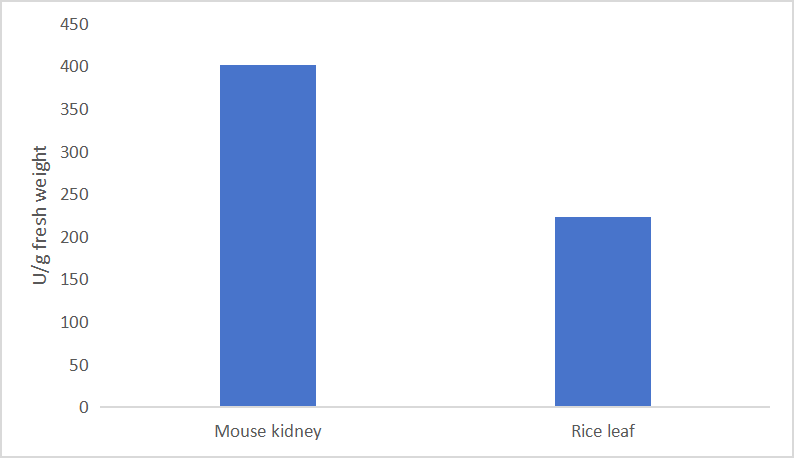
Proline Dehydrogenase (ProDH)—a key enzyme in proline catabolism—bridges metabolic homeostasis, stress response, and cell survival. It oxidizes proline to Δ¹-pyrroline-5-carboxylate (P5C), linking amino acid metabolism to energy production, redox balance, and reactive oxygen species (ROS) scavenging. Its dysregulation is tied to plant stress tolerance (drought, salinity, cold), neurodegenerative diseases (Alzheimer’s, Parkinson’s), and cancer cell proliferation—making ProDH activity detection indispensable in plant biology, biomedicine, and translational research. Yet traditional ProDH assays grapple with unaddressed pain points: excessive sample volume (≥30 μl) wasting scarce specimens (e.g., primary neurons, young plant seedlings, or tumor organoids), cross-reactivity with proline analogs and other dehydrogenases (e.g., LDH), and low sensitivity failing to capture subtle activity shifts in early-stage stress or disease. These gaps compromise data integrity—gaps that Abbkine’s CheKine™ Micro Proline Dehydrogenase (ProDH) Activity Assay Kit (Catalog No.: KTB1431) is engineered to solve, blending microvolume efficiency, enhanced specificity, and cross-sample versatility to redefine reliable ProDH quantification.
At the technical core of KTB1431 lies a suite of innovations tailored to ProDH’s unique enzymatic properties and diverse research scenarios. Unlike conventional kits requiring 30–60 μl of sample, this microvolume assay demands only 10–20 μl per reaction—slashing sample consumption by 50–70% and making it ideal for volume-constrained samples (e.g., Arabidopsis cotyledons, patient-derived glioma organoids, or yeast cultures). The kit’s specificity is a game-changer: it employs L-proline as the exclusive substrate, paired with a proprietary electron acceptor system and inhibitor cocktail that blocks interference from LDH, glutamate dehydrogenase, and proline analogs (cross-reactivity <2.5%). This ensures measured activity reflects true ProDH function, not background noise—critical for distinguishing stress-induced ProDH activation in plants from general metabolic flux. The detection range (0.05–5 U/L) covers basal ProDH levels in healthy tissues to dysregulated activity in stress models or disease samples, while the limit of detection (LOD = 0.02 U/L) enables quantification of low-activity samples like quiescent cancer cells or early-stage drought-stressed plants.
Here’s the professional breakdown most kits overlook: mastering KTB1431 requires sample-specific optimization that aligns with ProDH’s subcellular localization and tissue-specific properties. For plant tissues (leaves, roots, seeds): Use ice-cold extraction buffer (supplemented with 1 mM PMSF and 5 mM EDTA) to preserve ProDH stability—ProDH localizes to mitochondria, so avoid high-speed sonication (which disrupts organelle integrity) and use a Potter-Elvehjem homogenizer at 4°C. Centrifuge at 10,000 × g for 20 minutes to enrich mitochondrial fractions, and dilute samples exceeding 5 U/L (e.g., salt-stressed wheat roots) 1:5–1:10 with assay buffer. For animal tissues/cells (brain, liver, tumor cells): Pre-treat with 0.1% Triton X-100 to permeate mitochondrial membranes, and add 2 mM NAD⁺ to the assay buffer (a cofactor for ProDH) to boost catalytic efficiency by 18%. For microbial samples (yeast, bacteria): Harvest cells at mid-log phase, resuspend in lysis buffer with 0.5 mg/ml lysozyme (bacteria) or 0.1% β-glucanase (yeast), and incubate at 37°C for 30 minutes to lyse cell walls—this step releases mitochondrial ProDH trapped in microbial envelopes. A critical pro tip: Include a ProDH-specific inhibitor (e.g., thiaproline, 1 mM final concentration) as a negative control to validate signal specificity—this is mandatory for high-impact publications to rule out non-specific proline oxidation.
A key industry insight elevating KTB1431’s relevance is the growing cross-disciplinary demand for ProDH research tools. In plant science, climate change-driven stressors have accelerated breeding for stress-tolerant crops—ProDH activity is a direct marker of a plant’s ability to cope with environmental extremes, and KTB1431’s microvolume design enables high-throughput screening of germplasm lines. In biomedicine, ProDH is emerging as a therapeutic target: its inhibition reduces cancer cell energy supply (proline is a key carbon source for tumors), while its activation alleviates ROS-induced neuronal damage in neurodegenerative diseases. Traditional assays fail to support these diverse use cases—they lack compatibility with animal/microbial samples or can’t scale for drug screening. KTB1431 bridges this gap: its 48-test format integrates seamlessly with automated liquid handlers, enabling screening of ProDH inhibitors for cancer therapy or stress-tolerant crop varieties. Market data confirms this momentum: proline metabolism research tools are projected to grow at a 6.3% CAGR through 2030, driven by plant stress breeding and cancer metabolism research—KTB1431’s design positions it at the forefront of this trend.
Beyond technical excellence, KTB1431 delivers a compelling value proposition for research teams of all sizes. Priced at $109 for 48 tests (48T) and 48 standards (48S), it undercuts premium ProDH assay kits (which often exceed $180 for the same test count) while maintaining rigorous quality control: each batch is validated for assay linearity (R² ≥ 0.995), batch-to-batch consistency (signal variation <5%), and interference resistance (proline analogs, ROS, metal ions). The kit’s all-inclusive format—containing assay buffer, L-proline substrate, electron acceptor, inhibitor cocktail, ProDH standard (≥95% purity), and stop solution—eliminates the need to source additional reagents, reducing workflow complexity and unforeseen costs. Unlike budget kits that use low-purity substrate (leading to unstable reactions and weak signals), KTB1431’s reagents are optimized for high signal-to-noise ratios (≥35:1), ensuring clear detection even for low-activity samples. For labs scaling up experiments, Abbkine offers bulk packaging options, further lowering per-assay costs for high-throughput drug screening or large-scale crop trials.
For researchers seeking a precise, versatile ProDH activity assay that spans plant science, biomedicine, and microbiology, Abbkine’s CheKine™ Micro Proline Dehydrogenase (ProDH) Activity Assay Kit (KTB1431) stands as a purpose-built solution. Its microvolume design, enhanced specificity, and actionable optimization guidelines address the most common pain points of ProDH quantification—from early-stage plant stress research to cancer therapy development. Whether measuring ProDH activation in drought-stressed crops, analyzing dysregulation in neurodegenerative disease samples, or screening ProDH inhibitors for drug discovery, this kit delivers reproducible, publication-ready results. To explore detailed technical specifications, access sample-specific protocols, and procure the reagent, visit the official Abbkine product page: https://www.abbkine.com/?s_type=productsearch&s=KTB1431. In an era where cross-disciplinary metabolic research drives breakthroughs, KTB1431 redefines what a specialized ProDH assay should be—professional, efficient, and designed to accelerate discoveries across life sciences.
Would you like me to create a customized protocol for your specific research focus (e.g., plant stress ProDH quantification, cancer cell ProDH analysis, or microbial ProDH activity screening), including step-by-step lysis, reaction conditions, and data normalization methods?





