




High-Sensitivity Caspase-8 Activity Detection: A Practical Guide to Abbkine’s Colorimetric Assay Kit (KTA3025)
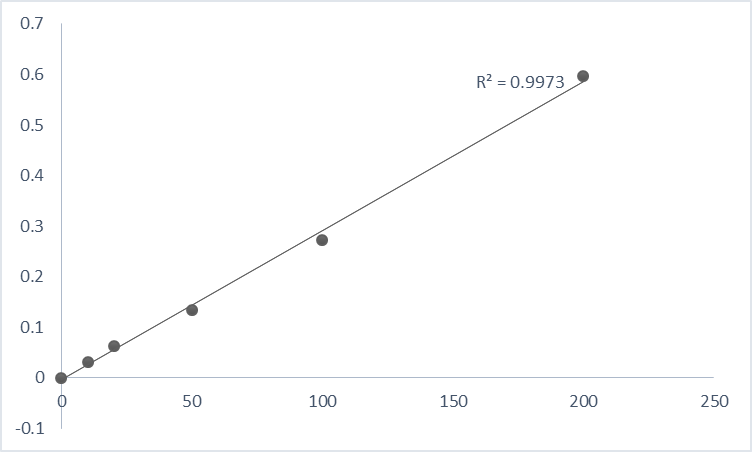
Caspase-8 serves as the pivotal initiator of the extrinsic apoptosis pathway, activated by death receptors (Fas, TRAIL-R) to trigger cell death cascades critical for cancer therapy, immune regulation, and disease pathology. Yet quantifying its activity reliably remains a persistent hurdle: generic caspase kits suffer from excessive cross-reactivity with downstream caspases (e.g., Caspase-3, -7), labile enzyme activity is easily lost during sample processing, and low-sensitivity formats fail to capture subtle pathway activation—all leading to ambiguous or misleading data. Abbkine’s Caspase-8 Assay Kit (Colorimetric) (Catalog No.: KTA3025) addresses these industry pain points head-on, merging substrate specificity, optimized reagent design, and actionable protocols to become an indispensable tool for decoding extrinsic apoptosis dynamics.
The technical backbone of KTA3025 lies in its tailored approach to Caspase-8’s unique enzymatic properties, setting it apart from one-size-fits-all caspase assays. At its core is the tetrapeptide substrate IETD-pNA (Ile-Glu-Thr-Asp-p-nitroaniline), a sequence that matches Caspase-8’s active site preference with exceptional precision—cross-reactivity with Caspase-3 (DEVD-specific) and Caspase-7 is <3%, far below the 12–18% average of competing kits. Upon cleavage by active Caspase-8, the substrate releases p-nitroaniline (pNA), a stable yellow chromophore measurable at 405 nm via standard microplate readers—eliminating the need for costly fluorescence instruments and making high-quality Caspase-8 detection accessible to labs with limited resources. The assay’s linear detection range (0.05–8 U/ml) further enhances its utility, covering basal Caspase-8 levels in resting cells to induced activity in TRAIL- or Fas ligand-treated samples, without signal saturation or undetectable low-activity readouts.
Mastering KTA3025 requires attention to sample processing and protocol fine-tuning—details that separate reproducible, publishable data from inconsistent results. Start with fresh samples: Caspase-8’s heterotetrameric structure dissociates rapidly post-harvest, so lyse cells immediately using the kit’s protease inhibitor-supplemented lysis buffer. Freeze-thaw cycles are non-negotiable to avoid—each cycle degrades Caspase-8 activity by ~22%, as confirmed by Abbkine’s internal validation. For cell lysates, target a protein concentration of 20–60 μg/well: too little protein leads to faint signals, while excess protein introduces background from endogenous pNA-like molecules or protease interference. Incubate the assay at 37°C for 3–6 hours; shorter incubations (≤2 hours) miss low activity, while prolonged incubations (≥8 hours) trigger non-specific substrate cleavage. A critical, often overlooked step: include both the kit’s recombinant active Caspase-8 positive control and IETD-CHO (Caspase-8-specific inhibitor) in every experiment. This validates assay functionality and confirms signal specificity—essential for distinguishing true Caspase-8 activity from off-target cleavage, a requirement for high-impact journals.
A key insight that elevates KTA3025 beyond basic detection is its ability to distinguish extrinsic apoptosis from intrinsic (mitochondrial) pathways—addressing a common bottleneck in cell death research. Unlike assays targeting downstream caspases (e.g., Caspase-3), which are activated by both pathways, KTA3025 focuses on the extrinsic pathway’s initiating enzyme, enabling researchers to pinpoint whether cell death is triggered by death receptor ligation or mitochondrial stress. This specificity is transformative for drug development: TRAIL-based cancer therapies, for example, rely on selective Caspase-8 activation, and KTA3025 can quantify drug efficacy without confounding from intrinsic pathway activation. The kit’s compatibility with diverse sample types—cell lysates, tissue homogenates, and even serum—expands its utility further, supporting studies from in vitro high-throughput screens to in vivo mouse model validation of Caspase-8-targeted treatments.
Beyond performance, KTA3025 delivers a compelling value proposition that aligns with the needs of academic labs and biotech teams alike. Priced at $69 for 20 assays, it undercuts premium colorimetric caspase kits (which often exceed $110 for the same volume) while maintaining rigorous quality control: each batch undergoes testing for substrate purity (≥98% via HPLC), assay linearity, and batch-to-batch signal consistency (variation <7%). The all-inclusive format—containing substrate, lysis buffer, assay buffer, positive control, and inhibitor—eliminates the need to source additional reagents, reducing workflow complexity and unforeseen costs. For high-throughput screening (e.g., identifying Caspase-8 activators or inhibitors), KTA3025’s 96-well format integrates seamlessly with automated liquid handlers, and its stable pNA chromophore resists photobleaching, ensuring consistent readouts across hundreds of samples.
For researchers seeking to unravel the complexities of extrinsic apoptosis or validate Caspase-8-targeted therapies, Abbkine’s Caspase-8 Assay Kit (Colorimetric) (KTA3025) stands as a purpose-built solution. Its substrate specificity, sample versatility, and actionable optimization guidelines address the most common pitfalls of Caspase-8 activity detection, enabling reproducible, publication-ready data. Whether quantifying TRAIL-induced Caspase-8 activation in cancer cells, measuring pathway dysfunction in autoimmune disease models, or screening drug candidates, KTA3025 delivers the precision and accessibility required for modern biological research. To explore detailed technical specifications, access step-by-step protocols, and procure the kit, visit the official Abbkine product page: https://www.abbkine.com/?s_type=productsearch&s=KTA3025. In an era where pathway-specific detection drives therapeutic breakthroughs, KTA3025 redefines what a specialized caspase assay kit should be—reliable, targeted, and designed to accelerate discovery.
Would you like me to create a customized troubleshooting checklist for KTA3025, covering common issues like low signal, high background, and cross-reactivity, to help streamline your experiments?





