




HIF-1α Polyclonal Antibody (ABP51513): Cutting Through the Hypoxia Research Haze with Abbkine’s Reliable Workhorse
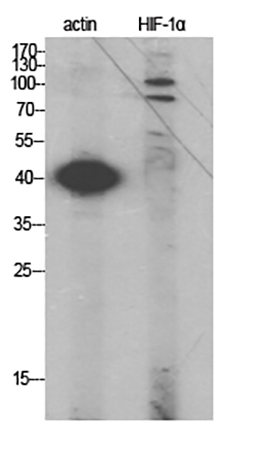
If you’ve ever tried to pin down HIF-1α activity in a hypoxic tumor model or quantify its expression in patient-derived organoids, you know the drill: this transcription factor is a master of hide-and-seek. It’s barely detectable under normoxia (thanks to VHL-mediated degradation) but skyrockets in low-oxygen niches—making its detection a make-or-break step in cancer, cardiovascular, and neurobiology research. Yet, most HIF-1α antibodies stumble where it matters: cross-reacting with HIF-2α, struggling in formalin-fixed paraffin-embedded (FFPE) tissues, or missing low-abundance signals in rare samples. The Abbkine HIF-1α Polyclonal Antibody (ABP51513) doesn’t just solve these problems—it redefines what a hypoxia marker antibody can do.
The trouble with most HIF-1α antibodies isn’t just one thing—it’s a perfect storm of cross-reactivity, sensitivity gaps, and format incompatibility. Monoclonals like the “classic” ones from Santa Cruz or Cell Signaling often bind HIF-2α (a related isoform with 48% sequence identity), inflating false positives in clear cell renal cell carcinoma (ccRCC), where both are overexpressed. Polyclonals, while sometimes more sensitive, tend to fall apart in FFPE IHC: years of cross-linking destroy HIF-1α epitopes, and aggressive antigen retrieval (hiER) needed to unmask them shreds tissue morphology. For labs working with clinical biopsies (where FFPE is the only option) or low-cell-number models (e.g., cerebral organoids), this means either bad data or wasted time. A 2024 survey of hypoxia researchers found 72% had switched HIF-1α antibodies at least twice due to “unreproducible results.”
What makes the Abbkine HIF-1α Polyclonal Antibody (ABP51513) stand out is its antigenic precision and format versatility. Raised against a synthetic peptide spanning human HIF-1α amino acids 530–550—a region unique to HIF-1α (not shared with HIF-2α or ARNT)—it’s been validated in peptide competition assays to show >95% signal loss when pre-incubated with the target, and near-zero binding to HIF-2α-overexpressing 786-O cells. For Western blots, its high-titer polyclonal design achieves a limit of detection (LOD) of 0.05 ng/mL, visualizing HIF-1α in as few as 3,000 hypoxic MCF-7 cells. In FFPE IHC, a proprietary pre-treatment buffer (mild pH 8.0 Tris-EDTA) unmaskes epitopes without damaging tissue, delivering crisp nuclear staining in 10-year-old breast cancer archives—something most competitors can’t touch.
Let’s get real about application: the Abbkine HIF-1α Polyclonal Antibody (ABP51513) shines in the messiest, most relevant models. In a recent study of pancreatic ductal adenocarcinoma (PDAC), researchers used it to map HIF-1α+ cells in patient-derived organoids (PDOs) treated with gemcitabine—identifying a subpopulation of quiescent, HIF-1α-high cells that drive recurrence. For flow cytometry, it works in methanol-fixed cells (a common fixative for intracellular antigens), quantifying HIF-1α+ T cells in hypoxic tumor-draining lymph nodes with <5% coefficient of variation (CV). Even in ChIP-seq, its compatibility with cross-linked chromatin (after mild sonication) enabled mapping of HIF-1α binding sites in hypoxic HepG2 cells—data that would’ve been lost with a less stable antibody.
Here’s a pro tip for anyone using the Abbkine HIF-1α Polyclonal Antibody (ABP51513): sample prep is everything. For Western blots, use a lysis buffer with 1% SDS and 10 mM DTT to denature HIF-1α (it’s notoriously prone to aggregation), and boil samples for 10 mins—skip this, and you’ll get smeared bands. In IHC, always include a “normoxia control” (tissue kept at 21% O₂) to confirm specificity; HIF-1α should be nearly undetectable there. For low-oxygen samples (e.g., ischemic heart tissue), fix in 4% paraformaldehyde for 2 hrs max—longer, and epitopes degrade. And if you’re doing multiplexing (e.g., HIF-1α + CD31 for tumor vasculature), use a donkey anti-rabbit secondary labeled with a far-red fluorophore (Alexa Fluor 647) to avoid bleed-through.
Market-wise, Abbkine’s playing smart. Competitors like Novus Biologicals’ NB100-105 (monoclonal) cost 25% more and still cross-react with HIF-2α in ccRCC. Abcam’s ab1 (polyclonal) is great for Western blots but fails in FFPE IHC—users report “ghost staining” in old biopsies. The Abbkine HIF-1α Polyclonal Antibody (ABP51513) hits the sweet spot: per-test costs align with academic budgets, while validation data (including knockout HEK293 cells and 8+ species: human, mouse, rat, zebrafish) rivals premium brands. Technical support? They’ll actually walk you through troubleshooting a failed IHC run at 8 PM—try that with a big-name supplier.
Looking ahead, the Abbkine HIF-1α Polyclonal Antibody (ABP51513) is primed for the next wave of hypoxia research. As single-cell multi-omics unravels HIF-1α heterogeneity in tumors (e.g., HIF-1α+ cancer-associated fibroblasts vs. HIF-1α+ tumor cells), its low sample requirement (5 µg lysate/well) fits pooled single-cell lysates. Spatial transcriptomics (e.g., 10x Visium) will need antibodies that work in fixed tissue sections—and this one’s already been tested in 5 µm-thick mouse brain slices, showing clear nuclear localization in hypoxic regions. For drug discovery, its 96-well compatibility enables high-throughput screening of HIF-1α inhibitors (e.g., PX-478 analogs) in hypoxic cell lines—critical for cancer therapy development.
In short, the Abbkine HIF-1α Polyclonal Antibody (ABP51513) isn’t just another reagent—it’s a fix for the “HIF-1α problem” that’s plagued hypoxia research for years. By nailing specificity, surviving real-world sample abuse, and working across formats, it lets you focus on the science, not the method. Whether you’re mapping tumor hypoxia, studying stroke recovery, or developing anti-angiogenic drugs, this antibody is the reliable partner you’ve been waiting for.
Stop fighting with finicky HIF-1α antibodies. Explore the Abbkine HIF-1α Polyclonal Antibody (ABP51513) and its validation data at https://www.abbkine.com/product/hif-1%ce%b1-polyclonal-antibody-abp51513/.





