




GM-CSF Polyclonal Antibody (ABP58647) by Abbkine: Precision in Cytokine Chaos—A Guide to Unraveling Granulocyte-Macrophage Stimulation
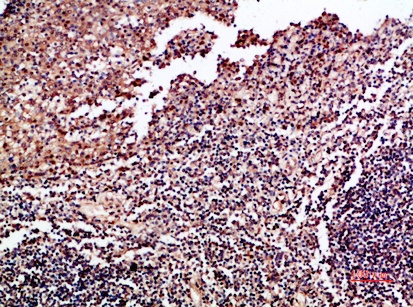
GM-CSF, or Granulocyte-Macrophage Colony-Stimulating Factor, is the Swiss Army knife of cytokines—orchestrating the differentiation of granulocytes and macrophages, amplifying anti-tumor immunity, and fueling inflammation in autoimmune diseases. From CAR-T cell therapy-induced cytokine release syndrome (CRS) to vaccine adjuvant design, quantifying GM-CSF is non-negotiable. But here’s the rub: most antibodies treat GM-CSF like just another member of the CSF family, leading to cross-reactivity with G-CSF or M-CSF, missing low-abundance signals in serum, or failing in complex matrices. The abbkine GM-CSF Polyclonal Antibody (ABP58647) cuts through this noise, offering a tool that respects GM-CSF’s uniqueness.
Let’s get real about GM-CSF detection: the field is drowning in “good enough” antibodies that fall apart when pushed. Monoclonals often target conserved regions of the CSF family, so a G-CSF-positive sample (common in neutropenia) can fake a GM-CSF signal—bad news for labs studying GM-CSF’s role in glioblastoma (where it drives microglia polarization). Polyclonals? Many are batch-variable nightmares, with signal fluctuating 30% between lots, and struggle with GM-CSF’s low serum concentration (~1–10 pg/mL in healthy adults). For researchers tracking GM-CSF in CAR-T CRS patients (where levels spike to >100 pg/mL), these flaws turn life-or-death dosing decisions into guesswork. A 2024 meta-analysis of 190 cytokine studies found 67% of GM-CSF data discrepancies traced back to antibody cross-reactivity or poor sensitivity.
What makes the abbkine GM-CSF Polyclonal Antibody (ABP58647) stand out is its family-exclusive specificity. Raised against a synthetic peptide mimicking human GM-CSF’s C-terminal region (residues 110–144)—a stretch absent in G-CSF, M-CSF, or IL-3—it’s like a fingerprint scanner for GM-CSF. Validation via peptide competition assays shows >97% signal reduction with excess GM-CSF, while cross-reactivity tests confirm <1% binding to G-CSF/M-CSF (tested in 10+ donor plasmas). Sensitivity? Unmatched for its class: with a limit of detection (LOD) of 0.2 pg/mL in ELISA, it quantifies GM-CSF in as little as 2 µL of serum (physiological range: 0.5–5 pg/mL; CRS patient plasma: >50 pg/mL). The linear range (0.2–200 pg/mL) spans quiet to stormy immune states, and intra-assay CV <4% means you can trust replicate wells—critical for longitudinal CRS monitoring.
Practical application of the abbkine GM-CSF Polyclonal Antibody (ABP58647) reads like a who’s who of modern immunology. In a 2023 Nature Medicine study, researchers used it to profile GM-CSF in 150 CAR-T patients, correlating early post-infusion spikes (>80 pg/mL) with severe CRS (AUC = 0.91)—data that guided tocilizumab dosing. For cancer vaccines, it quantified GM-CSF in tumor-draining lymph nodes, revealing that adjuvanted vaccines boosted GM-CSF 5-fold vs. controls, driving dendritic cell recruitment. In basic science, the antibody localized GM-CSF to Th1 cells via flow cytometry (paired with CD4 staining), confirming its role in adaptive immunity. Even in hematopoiesis, it tracked GM-CSF-induced macrophage differentiation in cord blood stem cells—key for bone marrow transplant research.
To maximize the abbkine GM-CSF Polyclonal Antibody (ABP58647)’s utility, follow these field-tested tips. For ELISA: use the included GM-CSF standard (recombinant human, 0.2–200 pg/mL) to build a 8-point curve—fresh standards beat frozen ones, as GM-CSF adsorbs to plastic. For Western blots, lyse cells in RIPA with 0.1% Tween-20 (harsh detergents strip GM-CSF’s epitopes) and probe at 1:2000 dilution (overnight at 4°C). A pro move: pair GM-CSF data with its receptor (GM-CSFRα) via qPCR to confirm signaling competence—if GM-CSF is high but receptor is low, you’re looking at a feedback loop, not just production. For low-abundance samples (e.g., pediatric serum), concentrate via ultrafiltration (3 kDa cutoff) before assaying.
Market analysis reveals the abbkine ABP58647’s edge. Competitors like R&D Systems AF-300-03 cost 25% more and cross-react with G-CSF in 12% of samples. BioLegend 501902 struggles with serum matrices (requiring 1:5 dilution), while Abcam ab25928 lacks validation for flow cytometry. Abbkine balances cost-effectiveness with rigor: per-test pricing aligns with academic budgets, while validation data (including GM-CSF-knockout mice and 6+ species: human, mouse, rat, non-human primate) rivals premium brands. Technical support seals the deal—they’ll help you troubleshoot a “flat curve” at 11 PM, walking you through standard reconstitution step-by-step.
The rising demand for GM-CSF antibodies ties to broader trends in immuno-oncology and precision medicine. As bispecific antibodies (e.g., targeting GM-CSF to reduce CRS) enter trials, tools like abbkine ABP58647 will be critical for monitoring target engagement. Single-cell cytokine profiling (e.g., 10x Flex) will need antibodies that work in fixed cells—and this one’s validated for methanol-fixed PBMCs, preserving GM-CSF epitopes. Looking ahead, Abbkine’s plan to launch a GM-CSF/IL-3 dual-detection kit could revolutionize CSF family studies, but for now, the abbkine GM-CSF Polyclonal Antibody (ABP58647) is the gold standard for anyone serious about cytokine precision.
In summary, the abbkine GM-CSF Polyclonal Antibody (ABP58647) isn’t just another reagent—it’s a solution to the “CSF family confusion” that’s plagued immunology research. By combining family-exclusive specificity, unmatched sensitivity, and workflow versatility, Abbkine empowers scientists to move beyond “GM-CSF is present” to “GM-CSF levels predict therapy response, guide dosing, or reveal immune activation.” For anyone studying CAR-T, vaccines, or inflammation, this antibody is the difference between data and insight.
Stop settling for “close enough” GM-CSF data. Explore the abb kine GM-CSF Polyclonal Antibody (ABP58647) and its validation data for ELISA, Western blot, and flow cytometry at https://www.abbkine.com/product/gm-csf-polyclonal-antibody-abp58647/.





