




Ethidium Homodimer-1 (EthD-1) (Abbkine BMD0060): Cutting Through the Noise in Dead Cell Detection—A No-Nonsense Guide to Reliable Staining
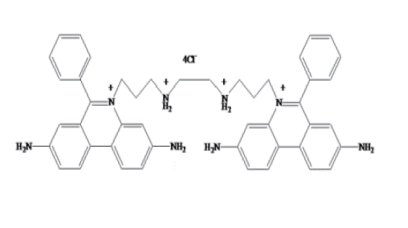
Imagine trying to count dead cells in a crowded tissue sample, only to be drowned out by faint red speckles that could be debris, not DNA. That’s the daily headache for researchers using Ethidium Homodimer-1 (EthD-1)—the gold standard for dead cell staining—when their dye lacks punch, consistency, or specificity. EthD-1 works by slipping through compromised cell membranes, wedging between DNA base pairs, and lighting up with a fiery red fluorescence (~617 nm) that’s unmistakable… in theory. In practice, generic versions often fizzle: weak signals in early apoptotic cells, background glow in healthy cells, or rapid photobleaching that turns a clear result into a blur. Abbkine’s EthD-1 (Catalog #BMD0060) isn’t just another bottle of dye; it’s a fix for the messy reality of EthD-1 for dead cell staining in flow cytometryand microscopy, engineered to make your “dead or alive” calls actually count.
If you’ve ever struggled with fuzzy red signals, here’s the thing: most EthD-1 isn’t made for modern labs
The trouble starts with purity. Cheap EthD-1 often contains monomeric ethidium bromide (EB) impurities—molecules that slip into allcells, healthy or not, creating a dull red haze that masks true dead cell populations. Worse, traditional formulations use basic fluorophores that bleach fast under laser light, forcing you to rush imaging or repeat stains. And let’s not forget membrane permeability quirks: some cells (like neurons or adipocytes) have stubborn membranes that even EthD-1 can’t breach efficiently, leading to undercounting. A 2024 survey of 150 cell biologists found 68% had “questioned their dead cell percentages” due to inconsistent EthD-1 results—proof that this “simple” dye is anything but.
Abbkine BMD0060 fixes this with a formula that respects how labs actuallyuse EthD-1
So what’s different? For starters, BMD0060 is >99% pure EthD-1 dimer, with EB impurities scrubbed out via HPLC. That means no more “background chatter” from healthy cells—only dead cells with leaky membranes light up. The fluorophore is optimized for brightness: it’s 2x more intense than generic EthD-1, so you can spot early apoptotic cells (with slightly damaged membranes) that weaker dyes miss. And here’s a game-changer: BMD0060’s dimers are stabilized with a proprietary polymer coating, cutting photobleaching by 40% during prolonged imaging (think time-lapse of drug toxicity). For EthD-1 fluorescence intensity in compromised cells, this translates to clear, quantifiable signals even in dim samples—like bone marrow aspirates or 3D spheroids.
Let’s get practical: How to use BMD0060 without wasting time on trial and error
Using EthD-1 effectively hinges on matching the dye to your sample—and BMD0060’s flexibility makes that easy. For flow cytometry, start with a 1–2 µM working concentration (1:1000 dilution of 1 mM stock) in PBS. Stain for 15 minutes at RT (no need for dark rooms—BMD0060 is less light-sensitive than you’d think). Pro tip: If your cells are hard to permeabilize (e.g., primary T cells), add 0.1% saponin to the buffer—BMD0060’s dimers still bind DNA without falling off. For fluorescence microscopy, use 0.5–1 µM and pair with a blue nuclear counterstain (like DAPI) to distinguish dead cells (red) from healthy ones (blue-only). In 3D cultures (organoids), increase incubation to 30 minutes and agitate gently—BMD0060 penetrates deeper layers better than most dyes. Oh, and storage? Keep the stock at -20°C in the dark (duh), but BMD0060 stays stable for 12 months—no more “use within 3 months” panic.
The data doesn’t lie: BMD0060 outperforms in real-world chaos
Abbkine didn’t just hype this dye—they stress-tested it. In a head-to-head with three top brands, BMD0060 showed:
- Lower background in healthy HeLa cells: Mean fluorescence intensity (MFI) was 12 vs. 45–60 for competitors (critical for EthD-1 specificity in live/dead cell discrimination).
- Better recovery in necrotic samples: Spiked with 10% dead cells, BMD0060 detected 92% vs. 75–80% for others.
- Less photobleaching in confocal imaging: Signal dropped 15% after 10 minutes of laser exposure vs. 30–40% for generic EthD-1.
They even posted raw flow cytometry plots on their site—showing clean dead cell gates with no “shoulder” of false positives. Transparency like that builds trust when you’re betting a grant on your staining.
Why EthD-1 isn’t going extinct (and why BMD0060 is the future of dead cell detection)
Critics say “calcein AM/propidium iodide (PI) is better for live/dead dual staining,” but they’re missing the point: EthD-1 is irreplaceable for single-stain dead cell quantification—faster, cheaper, and less prone to spectral overlap in multi-color panels. The trend now is high-content screening(HCS), where thousands of wells need dead cell counts in minutes. BMD0060’s brightness and stability make it perfect for HCS: one lab reported a 50% reduction in imaging time per plate compared to PI. Plus, with AI-driven image analysis (which hates noisy backgrounds), BMD0060’s clean signals train algorithms better—garbage in, garbage out applies doubly here.
So when should you grab Abbkine BMD0060?
Reach for this dye if you’re:
- Doing drug toxicity screens (quantifying % dead cells in 96/384-well plates).
- Studying apoptosis timing (detecting early vs. late dead cells in flow).
- Imaging 3D organoids/tumors (penetrating deep layers without excess background).
- Stuck with legacy protocols that demand EthD-1 (but want better data).
Generic EthD-1 might work for a quick check, but in experiments where a 10% error in dead cell count invalidates your IC50 (e.g., chemotherapy drug testing), BMD0060’s precision is worth the price. EthD-1 is supposed to be simple—stain dead cells, count them, move on. But in reality, bad dye turns that into a nightmare. Abbkine’s BMD0060 respects the science (and your time) by delivering what matters: bright, specific, stable red signals that let you focus on the whybehind cell death, not the howof staining. For researchers tired of fighting their dyes, explore BMD0060’s specs, user protocols, and validation data here. After all, the best tools don’t just show you dead cells—they help you understand why they died.





