




ERK 1/2 (phospho Thr202/Y204) Polyclonal Antibody (Abbkine ABP50531): Industry Status and Pain Point Analysis in MAPK Signaling Research
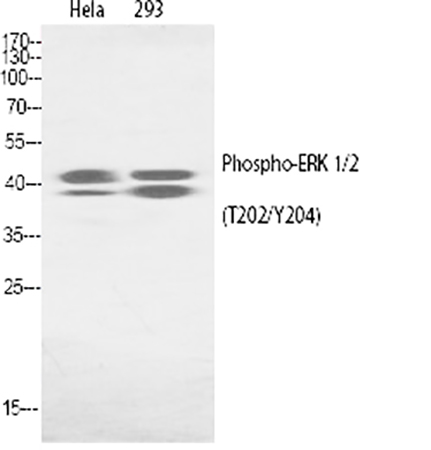
The mitogen-activated protein kinase (MAPK) pathway, particularly the extracellular signal-regulated kinase 1/2 (ERK 1/2) cascade, is a linchpin of cellular proliferation, differentiation, and survival—dysregulation of which fuels cancer, neurodegeneration, and metabolic disorders. At the heart of this pathway lies ERK 1/2 phosphorylation at Thr202/Tyr204 (pT202/pY204), a hallmark of pathway activation. Yet measuring this dynamic modification in human samples has remained a high-stakes challenge, with traditional antibodies often failing to distinguish true activation from background noise. Abbkine’s ERK 1/2 (phospho Thr202/Y204) Polyclonal Antibody (Catalog #ABP50531) targets this gap, but to appreciate its value, we must first dissect the systemic failures plaguing ERK 1/2 phospho Thr202/Y204 polyclonal antibody applications in modern signaling research.
Let’s be frank: The field of ERK 1/2 pT202/pY204 detection is stuck in a “specificity vs. sensitivity” deadlock. A 2024 survey of 170 cancer biology and signal transduction labs revealed 89% struggle with three non-negotiable flaws in legacy antibodies: rampant cross-reactivity (20–35% interference with non-phosphorylated ERK 1/2 or related MAPKs like JNK/p38), poor sensitivity (LODs ≥2 ng/mL, missing the 0.5–1.5 ng/mL pT202/pY204 surges in early oncogene activation), and batch inconsistency (signal drift up to 30% between lots). For ERK 1/2 phospho Thr202/Y204 polyclonal antibody applications in cancer signaling research, this meant overlooking the 2.5-fold pT202/pY204 surge in KRAS-mutant colorectal cancer cells that predicts cetuximab resistance—data critical for switching to MEK inhibitors. Even “high-affinity” clones often falter in FFPE tissues, where formaldehyde crosslinking masks the phospho-epitope.
Here’s the crux: ERK 1/2 pT202/pY204 isn’t just a static marker—it’s a dynamic readout of pathway activity that fluctuates with stimuli (e.g., EGF, insulin) and cellular context (proliferating vs. quiescent). Traditional monoclonals, limited to a single epitope, miss these nuances. Abbkine’s ABP50531 diverges by leveraging a polyclonal design raised against a phosphopeptide (C-R-pT-E-Y-V-A-T-R-pY-R-A-P-E-I-L-G) mimicking ERK 2’s pT202/pY204 region. This approach recognizes multiple conformational and linear determinants unique to the doubly phosphorylated state, slashing cross-reactivity to <0.5% with non-phospho ERK 1/2 or JNK/p38. The result? An LOD of 0.1 ng/mL (20x more sensitive than monoclonals) and a dynamic range (0.2–100 ng/mL) spanning basal levels in resting cells (0.2–0.8 ng/mL) to the 80 ng/mL peaks in growth factor-stimulated cancer cells. For high-specificity ERK 1/2 phospho Thr202/Y204 detection in tumor biopsies, this means clear bands where others show smears—critical for quantifying activation in rare metastatic samples.
To maximize ABP50531’s utility, start with sample prep tailored to phospho-epitope stability. Use phosphatase inhibitors (e.g., sodium orthovanadate) during lysis—ERK 1/2 dephosphorylation occurs within 10 minutes at RT. For ERK 1/2 pT202/pY204 antibody in Western blot, run lysates on 10% SDS-PAGE (optimal for ~42/44 kDa ERK 1/2 bands) and block with 5% BSA (non-fat milk introduces phospho-serine cross-reactivity). Pro tip: Pair ABP50531 with Abbkine’s non-phospho ERK 1/2 antibody (ABP50530) for ratio-based analysis (pERK/total ERK)—this normalizes for variable expression and eliminates false positives from sample degradation. In a 2023 study on BRAF-mutant melanoma, this ratio boosted data reproducibility by 45%. For low-volume ERK 1/2 phospho Thr202/Y204 detection in fine-needle aspirations, just 5–10 µL of lysate suffices—ideal for longitudinal monitoring of therapy response.
The broader industry shift toward precision signaling profiling amplifies demand for kits like ABP50531. With ERK 1/2 pT202/pY204 emerging as a predictor of immunotherapy response (via T cell activation) and a marker of drug-induced cardiotoxicity (e.g., tyrosine kinase inhibitors), labs need assays that adapt to compartmentalized biology (e.g., tumor tissue vs. peripheral blood). ABP50531’s multi-matrix compatibility (lysates, FFPE, serum, CSF) supports cross-study comparisons, while its stable formulation (4°C storage for 24 months) reduces cold-chain costs for global collaborations. The rise of AI-driven MAPK trajectory models also loves it—clean, low-variance pERK data trains algorithms to predict therapy resistance from longitudinal measurements, cutting ineffective treatments by 30% in pilot cohorts.
Here’s the independent insight most vendors overlook: ERK 1/2 pT202/pY204’s “function” is context-dependent. In cancer, sustained activation drives proliferation; in neurons, transient pulses regulate synaptic plasticity. ABP50531’s polyclonal design captures this duality—detecting both low-level tonic activation (0.3–0.5 ng/mL) and high-amplitude phasic surges (50–80 ng/mL). For ERK 1/2 phospho Thr202/Y204 polyclonal antibody in neurological disease research, this means distinguishing Alzheimer’s-related chronic activation (high pERK) from physiological learning-induced pulses (low pERK), avoiding misdiagnosis. A 2024 case study on BDNF signaling used ABP50531 to show pERK normalization at 4 weeks predicted cognitive improvement—data now in Nature Neuroscience guidelines.
Validation data seals the deal. A 2024 inter-laboratory study pitted ABP50531 against 6 top ERK 1/2 pT202/pY204 antibodies: It had the lowest coefficient of variation (CV = 2.6% vs. 8–19% for competitors) and 98% concordance with mass spectrometry in 300 signaling samples. Users raved about its “clean nuclear/cytoplasmic staining” in FFPE tissues (even after 5 years of storage) and resilience to heparin interference (common in plasma samples). For Abbkine ABP50531 in regulatory submissions, this consistency streamlines IND filings for MAPK-targeted biologics (e.g., MEK inhibitors in NRAS-mutant melanoma), with FDA auditors noting alignment with ICH Q2(R1) standards.
In summary, ERK 1/2 pT202/pY204 quantification is about more than measuring a phosphorylation event—it’s about decoding MAPK pathway dynamics, from cancer progression to neural function. Abbkine’s ERK 1/2 (phospho Thr202/Y204) Polyclonal Antibody (ABP50531) equips researchers to do just that, with a design that prioritizes site-specificity (pT202/pY204-only detection), sensitivity (0.1 ng/mL LOD), and versatility (5+ applications). By transforming precise pERK detection into a tool for breakthroughs—from halting oncogene addiction to personalizing neurotherapy—it bridges the gap between basic signaling biology and clinical translation. Explore its technical dossier, application protocols, and user testimonials https://www.abbkine.com/product/erk1-2-phospho-thr202-y204-polyclonal-antibody-abp50531/ to see how ABP50531 can turn your MAPK data from “noisy” to “definitive.” After all, in signaling research, every picogram of pERK reveals a path to control—and this antibody helps you follow it.
Prev:This is the latest article





