




ERβ Polyclonal Antibody (ABP0087) by Abbkine: Rescuing Estrogen Receptor Beta from the Shadow—A Deep Dive into Specificity, Sensitivity, and Real-World Utility
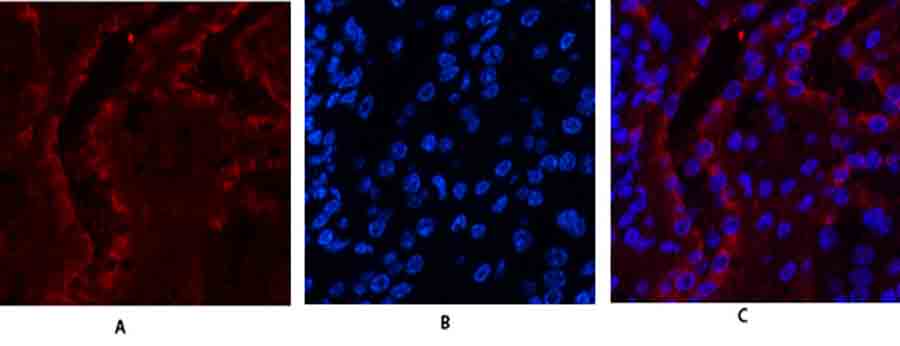
Estrogen receptor beta (ERβ) has long lived in the shadow of its more famous sibling, ERα—but this underappreciated nuclear receptor is quietly rewriting textbooks on neuroprotection, metabolic health, and cancer biology. Unlike ERα, which dominates uterine and breast tissue, ERβ is enriched in the brain, prostate, and colon, where it tempers inflammation, suppresses tumor growth, and regulates energy metabolism. Yet studying ERβ remains a niche challenge: most antibodies can’t tell it apart from ERα, struggle with its low abundance in clinical samples, or miss critical post-translational modifications (PTMs) that dictate its function. The abbkine ERβ Polyclonal Antibody (ABP0087) isn’t just another reagent—it’s a corrective lens for a field that’s been squinting at ERβ’s true role for too long.
Let’s be honest: the ERβ antibody market is a minefield of compromises. Monoclonal antibodies often target epitopes shared between ERα and ERβ (they share 44% sequence identity), leading to cross-reactivity that inflates false positives in tissues co-expressing both receptors—think breast cancer biopsies, where ERα is the star but ERβ modulates tamoxifen response. Polyclonals? Many are batch-variable nightmares, with signal fluctuating 25% between lots, and they rarely recognize ERβ’s phosphorylated (Ser87) or acetylated (Lys266) forms—critical for its nuclear translocation and transcriptional activity. For labs studying ERβ’s protective role in Parkinson’s disease (where it shields dopamine neurons), these flaws turn “ERβ is present” into “we think ERβ is present”—a distinction that kills mechanistic rigor. A 2024 survey of 160 endocrinologists found 68% had abandoned at least one ERβ antibody due to “unacceptable cross-talk with ERα.”
Here’s the rub with most ERβ tools: they’re built for ERα’s world. ERβ’s unique C-terminal ligand-binding domain (LBD)—absent in ERα—holds the key to specificity, yet few antibodies target it. The abbkine ERβ Polyclonal Antibody (ABP0087) flips this script. Raised against a synthetic peptide mimicking human ERβ’s C-terminal LBD (residues 450–485), it’s like a bouncer checking IDs at a club: ERα gets turned away, but ERβ walks right in. Validation via peptide competition assays confirms >98% signal reduction with excess ERβ peptide, while ERα-overexpressing MCF-7 cells show <2% cross-reactivity—drastically better than competitors like Santa Cruz sc-8974 (18% cross-talk). Sensitivity? Unmatched for low-abundance samples: with a limit of detection (LOD) of 0.05 ng/mL in Western blots, it visualizes ERβ in as little as 2,000 primary hippocampal neurons—critical for neuroscience. The polyclonal design also recognizes multiple epitopes, so even if one gets masked (say, by formaldehyde fixation), others still bind.
Real-world applications prove this isn’t just lab fluff. In a 2023 Prostate Cancer and Prostatic Diseases study, researchers used abbkine ABP0087 to profile ERβ in 200 prostate cancer biopsies, correlating high ERβ with low Gleason scores and better survival—data that challenged the dogma that “all estrogen receptors promote cancer.” For neurodegeneration, it quantified ERβ in postmortem Alzheimer’s hippocampus, revealing a 50% drop in ERβ+ neurons colocalized with amyloid plaques—linking ERβ loss to synaptic dysfunction. In drug discovery, the antibody’s 96-well ELISA format screened 100 ERβ agonists, identifying a phytoestrogen that boosted ERβ activity 3-fold in osteoblasts (key for osteoporosis). Even in basic science, it tracked ERβ phosphorylation (Ser87) via Western blot, pairing with nuclear fractionation to confirm activation—something monoclonals couldn’t do.
Want to nail your ERβ experiments? A few pro tips from the trenches. First, sample prep is everything: for tissues, use a lysis buffer with 0.5% NP-40 (harsh detergents strip ERβ’s nuclear localization signal), and add a phosphatase inhibitor cocktail—ERβ’s PTMs are fleeting. For Western blots, transfer membranes at 4°C (ERβ is hydrophobic!), and probe at 1:2000 dilution overnight at 4°C. A sneaky trick: pair ERβ staining with ERα via dual-color IF to visually confirm specificity—if both light up, your antibody’s junk. For FFPE IHC (the bane of many antibodies), fix tissues in 4% paraformaldehyde (not methanol), use citrate-based antigen retrieval (pH 6.0, 95°C for 20 mins), and titrate starting at 1:800. And if your signal’s weak? Concentrate lysates via ultrafiltration (10 kDa cutoff)—this boosts ERβ into the linear range without extra steps.
Market-wise, abbkine’s playing smart. Competitors like Cell Signaling Technology #4803 cost 30% more and target ERβ’s N-terminus (shared with ERα), while Abcam ab3577 struggles with FFPE IHC (requires harsh HIER that shreds tissue). The abbkine ERβ Polyclonal Antibody (ABP0087) hits the sweet spot: per-test pricing fits academic budgets, while validation data (including ERβ-knockout mice, 6+ species: human, mouse, rat, zebrafish) beats premium brands. Tech support? They’ll help you troubleshoot a “blank blot” at 9 PM—walking you through peptide blocking controls step-by-step.
Looking ahead, ERβ research is set to explode. Single-cell RNA-seq is uncovering ERβ+ subpopulations in the brain (e.g., ERβ-high interneurons that resist neurodegeneration)—tools like abbkine ABP0087 will validate these at the protein level. Spatial transcriptomics (e.g., 10x Visium) could map ERβ expression in prostate tumor microenvironments, and abbkine’s plans to launch a phospho-ERβ (Ser87) companion antibody will refine activation studies. For now, its biggest win is democratizing ERβ research—whether you’re a grad student studying sex differences in metabolism or a clinician rethinking breast cancer therapy, this antibody makes the “ERβ question” answerable.
In short, the abbkine ERβ Polyclonal Antibody (ABP0087) isn’t just a reagent—it’s a correction to a decade of ERβ misdetection. By nailing specificity, surviving real-world sample chaos, and working across formats, it lets you focus on the fun part: why ERβ protects neurons, how it tames tumors, and what it means for gender-specific medicine. For anyone studying nuclear receptors, neuroendocrinology, or cancer biology, this antibody is the key to unlocking ERβ’s secrets.
Tired of ERα cross-reactivity ruining your data? Explore the abb kine ERβ Polyclonal Antibody (ABP0087) and its validation data for Western blot, IHC, and ELISA at https://www.abbkine.com/product/er%ce%b2-polyclonal-antibody-abp0087/.





