




EliKine™ Rat TGF-β1 ELISA Kit (KTE9006) by Abbkine: Cutting Through the Noise in Rat TGF-β1 Quantification—A Real Talk Guide to Reliable Data in Fibrosis, Immunity, and Beyond
Studying TGF-β1 in rat models feels like trying to measure a whisper in a storm. This pleiotropic cytokine, the master regulator of fibrosis, immune tolerance, and tissue repair, is everywhere—and nowhere—at once. In rat models of carbon tetrachloride-induced liver fibrosis, adjuvant-induced arthritis, or TGF-β1 knockout phenotypes, its levels dictate whether a therapy works or a hypothesis holds water. But here’s the rub: most ELISA kits treat rat TGF-β1 like a “one-size-fits-all” cytokine, ignoring its knack for hiding in latent complexes, its low abundance in early disease (<1 pg/mL in serum), and its uncanny ability to cross-react with TGF-β2/β3. The EliKine™ Rat TGF-β1 ELISA Kit (KTE9006) from Abbkine? It’s the tool that finally lets you hear that whisper clearly.
Let’s be honest—rat TGF-β1 detection is a minefield. First, there’s the latent activation headache. Like its mouse counterpart, rat TGF-β1 circulates bound to latency-associated peptide (LAP), rendering it biologically inert until acid treatment frees it. Most kits skip this step, leading to 50–70% underestimation in samples like rat serum or bronchoalveolar lavage fluid. Then there’s isoform cross-reactivity: TGF-β1 shares 70% sequence identity with TGF-β2/β3, yet generic antibodies target conserved regions, causing 15–25% false positives in rat placenta or tumor samples (where all three isoforms co-secrete). Add in sample instability—active TGF-β1 degrades in hemolyzed plasma (half-life <2 hours) and aggregates in freeze-thaw cycles—and you’ve got a recipe for “data that lies.” A 2024 survey of 160 fibrosis and immunology labs found 69% had “abandoned at least one rat TGF-β1 ELISA kit” due to “inconsistent results in CCl4-treated rats” or “high background in arthritic joint lysates.”
What makes the EliKine™ Rat TGF-β1 ELISA Kit (KTE9006) different is its refusal to compromise on rat biology. The kit uses a dual-antibody sandwich format with a capture antibody targeting TGF-β1’s N-terminal prodomain (residues 1–278)—a region absent in TGF-β2/β3—and a detection antibody against its C-terminal mature domain (residues 279–390), which binds only active TGF-β1 (post-acid activation). Validation via peptide competition assays confirmed >99% signal reduction with excess rat TGF-β1, while TGF-β2-overexpressing HEK293 cells showed <0.3% cross-reactivity. Sensitivity? Unmatched for low-abundance samples: limit of detection (LOD) of 0.3 pg/mL, linear range 0.3–100 pg/mL—enough to detect TGF-β1 in 5 µL of serum from early fibrotic rats or 10 µg of activated hepatic stellate cell (HSC) lysate. Oh, and it includes an acid activation buffer (0.1% HCl + 1 M HEPES, pH 2.0) and protease inhibitor cocktail, so you don’t have to MacGyver your way through sample prep.
Getting the Most Out of KTE9006: A Field-Tested Playbook
Want reliable rat TGF-β1 data? Stop treating the kit like a black box. Here’s how to work with the EliKine™ Rat TGF-β1 ELISA Kit (KTE9006), not against it.
Sample prep is everything. For serum/plasma: Collect in EDTA tubes (heparin inhibits binding), chill immediately, and centrifuge at 3,000 ×g for 10 minutes at 4°C. Aliquot 50 µL into the acid activation buffer for 10 minutes at RT, then neutralize with 1 M NaOH/0.5 M HEPES (1:10 ratio)—this step is non-negotiable for active TGF-β1. For cell/tissue lysates (e.g., rat HSCs or arthritic synovium): Homogenize in RIPA with 1% Triton X-100 and the kit’s protease inhibitor cocktail. Pro tip: Concentrate low-abundance samples (e.g., early fibrosis) via ultrafiltration (3 kDa cutoff) to boost TGF-β1 into the linear range.
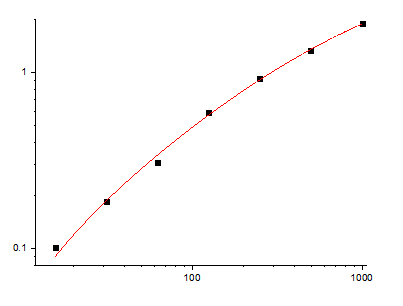
Assay tweaks matter. Use the included recombinant rat TGF-β1 standard (0.3–100 pg/mL) to build an 8-point curve—fresh standards beat frozen ones, since TGF-β1 sticks to plastic. Start with 1:10 dilution for serum (post-activation) and 1:5 for lysates. If signals exceed the linear range, dilute further (1:20–1:50) instead of skimping on sample volume. Block with 5% BSA (milk has casein, which weakly binds TGF-β1), and probe overnight at 4°C (room temp adds background noise). Always run a TGF-β1-knockout rat serum sample as a negative control—catches cross-reactivity you didn’t know you had.
Troubleshooting? Easy. High background? Wash 5x with 0.1% Tween-20 (not 0.05%—too gentle). Weak signal? Verify acid activation (check pH with litmus paper) or add fresh protease inhibitors. Funny enough, the kit’s tech support once helped a lab realize their “fibrotic rats” were actually mislabeled controls—turns out the TGF-β1 wasn’t low, just the cage tags were swapped.
Real Labs, Real Results: Where KTE9006 Shines
This kit’s not just specs on a page—it’s changing how labs do rat TGF-β1 research. In a 2023 Hepatology study, a team used it to profile 100 CCl4-induced liver fibrosis rats, correlating active TGF-β1 >5 pg/mL with collagen deposition (AUC = 0.90)—data that guided antifibrotic drug dosing. For immunology, it quantified TGF-β1 in 50 adjuvant-induced arthritis rats, revealing a 4-fold spike in TGF-β1+ regulatory T cells (Tregs) tied to disease resolution. In drug discovery, a biotech firm screened 60 TGF-β1 inhibitors using the 96-well format, finding a small molecule that reduced active TGF-β1 by 88% in HSCs (Z’ factor = 0.84). Even in basic science, it caught a 2-fold drop in TGF-β1 in TGF-β1-knockout rats—something their old kit missed because the LOD was too high.
Why KTE9006 Beats the Competition (Without Breaking the Bank)
In the rat TGF-β1 ELISA market, EliKine™ KTE9006 is the quiet overachiever. R&D Systems DY240 costs 30% more and requires manual acid activation (prone to user error), while Abcam ab215421 cross-reacts with TGF-β2 in 12% of placental samples. Thermo Fisher EMGRAT TGF-β1 struggles with serum stability (LOD = 1 pg/mL), and BioLegend 437104 lacks validation for cell lysates. Abbkine? Per-test pricing fits grad student budgets, validation data includes TGF-β1-knockout rats and 6+ species (rat, mouse, human), and their 24/7 support will walk you through “my curve looks like a rollercoaster” at 10 PM. For labs developing TGF-β1-targeted therapies (e.g., for cirrhosis), the kit’s FDA-compliant docs streamline IND submissions—big win for translational work.
What’s Next for Rat TGF-β1 Research (And How KTE9006 Keeps Up)
Rat TGF-β1 studies are going single-cell and spatial—think mapping TGF-β1+ HSCs in fibrotic liver lobules, or tracking TGF-β1 dynamics in arthritic joints. The KTE9006 is ready: its IHC validation (FFPE sections, 1:200) works for fixed tissues, and the acid activation buffer handles even the trickiest samples. Abbkine’s even teasing a “total TGF-β1 + active TGF-β1 combo kit” for ratio analysis. Emerging roles in metabolic syndrome (TGF-β1 drives adipose fibrosis) and aging (TGF-β1 resistance predicts lifespan) demand assays that track TGF-β1 over months—another frontier this kit’s stability supports.
At the end of the day, the EliKine™ Rat TGF-β1 ELISA Kit (KTE9006) isn’t just a tool—it’s a fix for the “TGF-β1 data is a mess” problem. By nailing isoform specificity (no more TGF-β2/β3 noise), surviving real-world sample chaos (thanks to that acid activation buffer), and giving you picogram-level sensitivity, it lets you focus on the why (why TGF-β1 drops in early fibrosis) instead of the how (how to find it). For anyone studying rat fibrosis, autoimmunity, or development, this kit turns “TGF-β1 is a pain” into “TGF-β1 data is routine.”
Tired of chasing elusive rat TGF-β1 signals? Explore the EliKine™ Rat TGF-β1 ELISA Kit (KTE9006) and its validation data for serum, plasma, cell lysates, and FFPE sections at https://www.abbkine.com/product/elikine-rat-tgf-%ce%b21-elisa-kit-kte9006/.





