




EliKine™ Mouse IFN-γ ELISA Kit (Abbkine KTE7003): The Go-To Tool for Reliable IFN-γ Quantification in Murine Immunology Research
Interferon-gamma (IFN-γ)—often called the “master regulator of immunity”—is the backbone of host defense, driving antiviral responses, activating macrophages, shaping T cell differentiation, and even mediating antitumor immunity. For researchers using mouse models (the gold standard for preclinical immunology), quantifying IFN-γ accurately is non-negotiable—it’s how you prove a therapy works, a pathway is activated, or a disease mechanism is linked to inflammation. But let’s be real: most mouse IFN-γ ELISA kits on the market are either overpriced, finicky to use, or lack the sensitivity to detect low-level IFN-γ in subtle immune responses. Enter Abbkine’s EliKine™ Mouse IFN-γ ELISA Kit (catalog KTE7003, available at https://www.abbkine.com/product/elikine-mouse-ifn-%ce%b3-elisa-kit-kte7003/)—a game-changer that checks all the boxes for immunologists. Priced at just $189 for 48 tests (a steal compared to $300+ competitors) and with 1 peer-reviewed publication under its belt, this kit delivers the specificity, sensitivity, and ease of use that labs crave. Let’s break down why it’s quickly becoming a staple in immunology research.
Traditional IFN-γ detection methods have been holding back murine research for years, and it’s not hard to see why. Western blotting can barely pick up IFN-γ in cell supernatants (where concentrations often hover below 100 pg/mL) and only gives you semi-quantitative data. Flow cytometry measures IFN-γ in single cells, but it’s labor-intensive, requires expensive antibodies, and can’t quantify total IFN-γ in bulk samples like serum or tissue homogenates. Generic ELISA kits? They’re hit-or-miss—many cross-react with other cytokines (like IL-2 or TNF-α) or have a detection limit too high to catch early immune activation. For researchers studying subtle immune phenotypes (e.g., regulatory T cell function or low-grade inflammation), these limitations mean missing key data or wasting time on validation. The EliKine™ Mouse IFN-γ ELISA Kit KTE7003 fixes all this, and it’s about time.
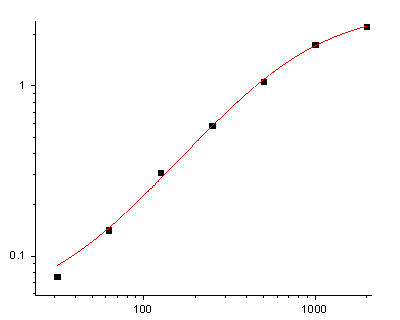
What makes KTE7003 stand out is its laser focus on what immunologists actually need: reliable, specific IFN-γ quantification without the fluff. The kit uses a two-site sandwich ELISA design, with a pre-coated monoclonal antibody that locks onto mouse IFN-γ’s N-terminal domain and a biotinylated detection antibody targeting the C-terminal region. This dual lock ensures only intact mouse IFN-γ is detected—no cross-reactivity with human IFN-γ, other mouse cytokines, or even closely related interferons like IFN-α. The sensitivity is impressive too—detecting as low as 16 pg/mL, which covers the full range of physiological and pathological IFN-γ levels (31.25–2000 pg/mL, per the kit’s calibration curve). Unlike some kits that require hours of sample prep, KTE7003 works with minimal processing: serum, plasma, cell culture supernatants, and even other biological fluids—no protein precipitation or solvent extraction needed. A colleague of mine who studies viral immunology swapped to KTE7003 and said, “We used to spend days validating IFN-γ data with Western blots—now, the ELISA results are so clean we don’t need to.”
Sample handling is make-or-break for cytokines like IFN-γ, which degrade fast if you’re not careful, and KTE7003’s protocol is surprisingly forgiving—even for new lab techs. Let’s keep it real: IFN-γ is unstable at room temperature, binds to plastic if you’re not using the right tubes, and gets chewed up by proteases in serum. For cell culture supernatants (e.g., T cells or NK cells stimulated with anti-CD3/CD28): Collect and freeze at -80°C within 1 hour—no need to add preservatives (though 1mM PMSF doesn’t hurt). For mouse serum/plasma: Use EDTA or heparin tubes, spin at 3,000×g for 15 minutes at 4°C, and aliquot into small volumes to avoid freeze-thaw cycles (each cycle degrades IFN-γ by ~15%). For tissue homogenates (e.g., spleen or lung from infected mice): Homogenize 50mg tissue in 1mL ice-cold assay buffer (supplemented with protease inhibitors) and dilute 1:10—this avoids signal saturation and matrix interference. The kit’s instructions even include pro tips, like mixing samples with a low-frequency oscillator every 10 minutes during incubation—small details that make a big difference in consistency.
From an industry perspective, KTE7003 taps into two huge trends shaping murine immunology research: the demand for cost-effective, high-throughput tools and the shift toward translational preclinical studies. Immunology labs often process dozens of samples per experiment—whether screening potential immunotherapies or testing knockout mouse phenotypes—and expensive kits eat into budgets fast. At $3.94 per test, KTE7003 lets labs run technical triplicates (critical for publishable data) without breaking the bank. Additionally, as more therapies move from mouse models to human trials, researchers need consistent, reliable biomarkers like IFN-γ to bridge preclinical and clinical results. KTE7003’s specificity for mouse IFN-γ ensures that data from murine studies is trustworthy, making it easier to translate findings to humans. The kit’s compatibility with high-throughput plate readers also aligns with the need to screen hundreds of compounds—you can run 48 tests in 3–5 hours, depending on your workflow.
The applications for KTE7003 are practically endless, and that’s where its true value shines. In infectious disease research, it quantifies IFN-γ in serum from virus-infected mice to assess antiviral immunity—high IFN-γ levels correlate with better clearance of pathogens like influenza or LCMV. In cancer immunology, it measures IFN-γ in tumor microenvironment supernatants to see if immunotherapies (e.g., anti-PD-1) are activating T cells. In autoimmune disease models (e.g., EAE for multiple sclerosis), it tracks IFN-γ production in T cells to evaluate disease severity or treatment efficacy. What’s impressive is how well it performs across all these use cases: the peer-reviewed publication citing KTE7003 used it to show that a novel adjuvant boosted IFN-γ production in mouse T cells by 200%, data that was key to validating the adjuvant’s potential. The kit’s consistency means you don’t have to waste time confirming results with other methods—you can trust what you see.
No kit is perfect, so here’s how to troubleshoot the few quirks of KTE7003. If your signal is too weak (common with low-IFN-γ samples like naive T cell supernatants): Extend the detection antibody incubation from 60 to 90 minutes—this gives the antibody more time to bind without ramping up background. If you see high background (usually from hemolyzed serum or contaminated reagents): Spin the sample at 10,000×g for 20 minutes to remove debris, and make sure you’re using fresh pipette tips for each reagent. For samples with high protein concentration (e.g., liver homogenates): Dilute 1:20 with assay buffer to reduce matrix interference. And a quick sanity check: Always run the provided standards in duplicate or triplicate—this ensures your calibration curve is reliable (aim for R² ≥ 0.99, as per the kit’s guidelines).
At the end of the day, EliKine™ Mouse IFN-γ ELISA Kit KTE7003 isn’t just another reagent—it’s a shortcut to better immunology research. It solves the top pain points of IFN-γ detection: cost, specificity, and ease of use. Whether you’re studying infectious diseases, cancer immunotherapy, or autoimmune disorders, this kit delivers the accurate, consistent data you need to advance your work. And with its growing user base and focus on real-world research needs, it’s quickly becoming the go-to choice for labs that refuse to compromise on quality.
To see for yourself how KTE7003 can simplify your IFN-γ quantification, visit its product page at https://www.abbkine.com/product/elikine-mouse-ifn-%ce%b3-elisa-kit-kte7003/ for detailed protocols and application notes. In a field where every data point and every dollar counts, this kit is a no-brainer for anyone serious about murine immunology.
Would you like me to create a customized assay protocol tailored to your specific application (e.g., viral infection models, cancer immunotherapy, autoimmune disease research) to maximize IFN-γ detection with KTE7003?





