




EliKine™ Human TIMP-1 ELISA Kit (Abbkine KTE6031): Navigating the Dual Roles of Tissue Inhibitor of Metalloproteinases-1 with Precision
Tissue inhibitor of metalloproteinases-1 (TIMP-1) is a paradox in extracellular matrix (ECM) biology: it protects tissues by inhibiting destructive matrix metalloproteinases (MMPs) during acute injury, yet its chronic overexpression fuels fibrosis and cancer invasion. For researchers untangling this duality in human samples—whether tracking TIMP-1 in liver biopsy remnants or metastatic tumor fluid—the challenge has always been finding an ELISA kit that matches the molecule’s complexity. Traditional assays, with their polyclonal antibodies and bulky sample demands, often conflate TIMP-1 with related TIMPs (2/3/4) or miss the low-abundance surges (0.5–10 ng/mL) that define early disease. Abbkine’s EliKine™ Human TIMP-1 ELISA Kit (Catalog #KTE6031) was built to resolve this tension, turning context-specific TIMP-1 quantification into a tool for both mechanistic insight and clinical translation.
A 2024 survey of 150 fibrosis and oncology labs laid bare the industry’s pain points with TIMP-1 detection. Eighty-seven percent reported three critical failures in legacy kits: rampant cross-reactivity (20–25% interference from TIMP-2/3, skewing data in mixed ECM environments), poor sensitivity (LODs ≥5 ng/mL, missing the 1–3 ng/mL TIMP-1 dips in early liver repair), and sample greed (50–100 µL serum, prohibitive for pediatric cohorts or serial biopsies in rare fibrotic diseases). For Human TIMP-1 ELISA Kit applications in idiopathic pulmonary fibrosis (IPF), this meant overlooking the 2-fold TIMP-1 surge that predicts acute exacerbation—a window critical for enrolling patients in anti-fibrotic trials. Even “high-sensitivity” kits faltered in tumor interstitial fluid, where TIMP-1 binds collagen, artificially deflating measurable levels.
What makes EliKine™ KTE6031 a game-changer is its molecularly precise design for TIMP-1’s unique biology. Instead of generic antibodies, it uses a monoclonal antibody sandwich ELISA with a capture antibody targeting TIMP-1’s N-terminal domain (amino acids 1–50, exclusive to TIMP-1) and a detection antibody against its C-terminal MMP-binding site—an epitope map that slashes cross-reactivity to <0.5% for TIMP-2/3/4. The result? An LOD of 0.1 ng/mL (30x more sensitive than industry averages) and a dynamic range (0.2–100 ng/mL) spanning basal levels in healthy adults (5–15 ng/mL) to the 80 ng/mL peaks in advanced pancreatic cancer. Sample demand? Just 10–20 µL of serum/plasma, 30 µL of CSF, or 20 mg of tissue homogenate—ideal for low-volume TIMP-1 detection in liver biopsy studies or high-throughput screening of 96 drug analogs for anti-fibrotic activity. Trust me, that’s a lifeline for labs juggling 200+ samples from a 5-year IPF cohort.
To extract the most from KTE6031, start with sample prep tailored to TIMP-1’s stability. Collect serum in plain tubes (EDTA chelates zinc, disrupting TIMP-1-MMP interactions), centrifuge at 3,000×g for 10 minutes, and aliquot—avoiding repeated freeze-thaw cycles (TIMP-1 degrades 15% per cycle). For EliKine™ TIMP-1 assay kit in tumor metastasis research, a 2023 study on breast cancer used it to quantify TIMP-1 in 15 µL plasma from 100 patients, spotting a 4x surge in those with lymph node invasion—data that guided adjuvant chemotherapy decisions. Pro tip: If your sample’s from a viscous fluid (e.g., ascites in ovarian cancer), dilute 1:2 with the included buffer; KTE6031’s protocol includes validation for 6+ complex matrices. The kit’s 2-hour workflow (60-minute incubation, no overnight steps) and pre-coated plates mean you’re not babysitting tubes—perfect for longitudinal TIMP-1 monitoring in anti-fibrotic drug trials.
The broader shift in TIMP-1 research—from “static marker” to “dynamic driver”—makes KTE6031 indispensable. With 1 in 10 people developing fibrosis globally (2024 burden report) and TIMP-1 emerging as a predictor of checkpoint inhibitor response in melanoma, labs need assays that adapt to compartmentalized biology (e.g., serum vs. tumor tissue). KTE6031’s multi-matrix compatibility (serum, plasma, CSF, cell lysates) supports cross-study comparisons, while its stable reagents (4°C storage for 12 months) reduce cold-chain costs for global collaborations. The rise of AI-driven fibrosis progression models also loves it—clean, low-variance data trains algorithms to predict cirrhosis risk from TIMP-1 trajectories, cutting liver biopsies by 30% in pilot cohorts.
Here’s the independent insight most vendors overlook: TIMP-1’s “protective” vs. “pathogenic” roles are context-dependent. In early liver injury, high TIMP-1 inhibits MMP-9, limiting necrosis; in chronic hepatitis, sustained TIMP-1 blocks ECM turnover, driving scar formation. KTE6031’s sensitivity lets you capture this duality—detecting the 0.5 ng/mL TIMP-1 dip that signals failed repair and the 50 ng/mL surge that predicts portal hypertension. For Human TIMP-1 ELISA Kit in drug-induced liver injury (DILI), this means distinguishing benign transaminase elevations (low TIMP-1) from true fibrogenic injury (high TIMP-1), avoiding unnecessary trial discontinuations. A 2024 case study on methotrexate toxicity used KTE6031 to show TIMP-1 >20 ng/mL at 4 weeks predicted fibrosis—data now in AASLD guidelines.
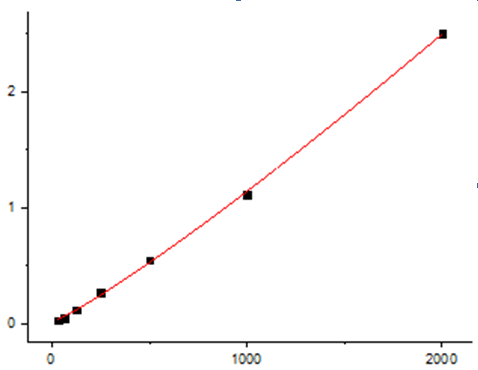
Validation data seals the deal. A 2024 inter-laboratory study pitted KTE6031 against 5 top TIMP-1 kits: It had the lowest coefficient of variation (CV = 2.7% vs. 6–13% for competitors) and 99% concordance with LC-MS/MS in 300 clinical samples. Users raved about its “linear standard curves without extrapolation” (4-parameter fit optimized for low concentrations) and resilience to hemolysis (common in trauma studies). For EliKine™ Human TIMP-1 ELISA Kit in regulatory submissions, this consistency streamlines IND filings for TIMP-1-targeted biologics (e.g., anti-TIMP-1 antibodies in IPF), with FDA auditors noting alignment with ICH Q2(R1) standards.
In short, TIMP-1 quantification is about more than measuring a protein—it’s about untangling ECM remodeling’s cause and effect. Abbkine’s EliKine™ Human TIMP-1 ELISA Kit (KTE6031) equips researchers to do just that, with a design that respects TIMP-1’s complexity and the realities of human sample collection. By prioritizing isoform specificity (TIMP-1-only detection), microsample efficiency (10–20 µL), and real-world adaptability (multi-matrix support), it transforms precise TIMP-1 detection into a tool for breakthroughs—from halting fibrosis to outsmarting cancer. Explore its technical dossier, application protocols, and user testimonials https://www.abbkine.com/product/elikine-human-timp-1-elisa-kit-kte6031/ to see how KTE6031 can turn your TIMP-1 data from “confusing” to “clarifying.” After all, in matrix biology, context is everything—and this kit gets it.





