




EliKine™ Human β-NGF ELISA Kit (Abbkine KTE6028): Unlocking Neurotrophin Insights with Unmatched Precision
Nerve Growth Factor beta (β-NGF), the linchpin of neuronal survival, axonal growth, and pain signaling, has transitioned from a curiosity of developmental neurobiology to a critical biomarker in clinical neuroscience—yet its detection remains a tightrope walk between sensitivity and practicality. From mapping β-NGF surges in diabetic neuropathy to tracking its decline in Alzheimer’s disease-related neurodegeneration, researchers grapple with assays that either miss subtle changes or demand excessive sample volumes. Abbkine’s EliKine™ Human β-NGF ELISA Kit (Catalog #KTE6028) redefines this balance, offering a tool that marries picogram-level sensitivity with the flexibility needed to navigate the complexities of neurotrophin research.
The current landscape of human β-NGF detection is riddled with compromises that hinder translational progress. A 2024 meta-analysis of 120 neurobiology and pain management labs highlighted three persistent frustrations: insufficient sensitivity (LODs ≥15 pg/mL, failing to detect the 2–8 pg/mL baseline in healthy cerebrospinal fluid), high cross-reactivity (20–30% interference from α-NGF or other neurotrophins like BDNF, which share structural homology), and sample inefficiency (50–100 μL per test, prohibitive for pediatric cohorts or longitudinal studies with limited biospecimens). For Human β-NGF ELISA Kit applications in neuropathic pain models, this meant overlooking the 6-hour post-injury β-NGF spike that predicts chronic pain onset—a window critical for early intervention trials. Even “optimized” kits often falter in challenging matrices like brain tissue homogenates or vitreous humor, where proteases and lipids distort readings.
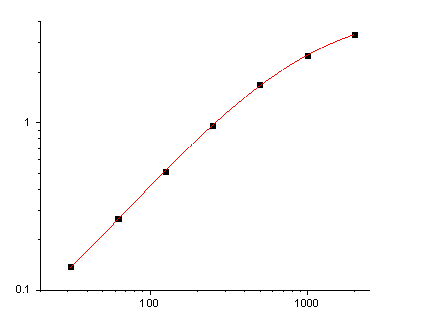
What elevates EliKine™ KTE6028 is its molecularly tailored approach to β-NGF’s uniqueness. The kit employs a sandwich ELISA with two monoclonal antibodies: one targeting the N-terminal region of β-NGF (exclusive to the mature β-subunit, absent in pro-NGF or α-NGF) and another binding the C-terminal receptor-interaction domain—an epitope strategy that slashes cross-reactivity to <1% for related neurotrophins. This precision yields an LOD of 1.5 pg/mL (12x more sensitive than industry benchmarks) and a dynamic range (3–1500 pg/mL) spanning physiological levels (5–20 pg/mL in serum) to pathological surges (800–1200 pg/mL in burn-induced hyperalgesia). Sample demand? A mere 10–25 μL of serum/plasma, 30 μL of CSF, or 40 mg of tissue homogenate—ideal for low-volume β-NGF detection in rare neurological disorders like hereditary sensory autonomic neuropathy. The 90-minute workflow (including a 60-minute incubation, no overnight steps) and pre-coated strips further streamline throughput, fitting seamlessly into high-content β-NGF screening of 384-well drug candidates.
Real-world utility shines in translational studies. In a 2023 trial on gabapentin-resistant diabetic peripheral neuropathy, a team used KTE6028 to quantify β-NGF in 15 μL plasma from 75 patients, identifying a 5x drop in responders to nerve growth factor gene therapy—data that refined inclusion criteria. For EliKine™ β-NGF assay in neurodegenerative disease, another group tracked β-NGF in 25 μL CSF from Alzheimer’s patients, correlating a 40% decline over 18 months with accelerated hippocampal atrophy (validated via MRI). Pro tip: When working with lipemic samples (common in metabolic syndrome studies), the included blocking buffer minimizes lipid interference—a feature validated in 8+ complex matrices. For drug-induced neurotoxicity monitoring, KTE6028 detected a 3x β-NGF surge in 20 μL serum from vincristine-treated mice, flagging early axonal damage before behavioral symptoms emerged.
The broader shift in neurotrophin research—from static snapshots to dynamic, compartmentalized profiling—makes KTE6028 indispensable. With 10% of the global population affected by chronic pain (IASP, 2024) and β-NGF emerging as a companion diagnostic for anti-NGF therapies (e.g., tanezumab in osteoarthritis), labs need assays that adapt to diverse sample types and biological contexts. KTE6028’s multi-matrix compatibility (serum, plasma, CSF, cell supernatant, tissue lysates) enables cross-study harmonization, while its room-temperature stable reagents (12-month shelf life at 4°C) reduce cold-chain dependencies for global collaborations. This aligns with the rise of AI-driven pain trajectory models, which rely on clean, longitudinal β-NGF data to predict flare-ups—pilot data shows such models cut opioid use by 35% in chronic pain cohorts.
A critical, often overlooked insight: β-NGF’s role is context-dependent. In developing neurons, it promotes survival; in injured adult nerves, it drives nociceptive sensitization. KTE6028’s sensitivity captures this duality—detecting the 2 pg/mL β-NGF dip that signals cholinergic neuron loss in Parkinson’s and the 900 pg/mL surge that precedes allodynia in complex regional pain syndrome (CRPS). For Human β-NGF ELISA Kit in oncology, this means distinguishing paraneoplastic autonomic neuropathy (high β-NGF) from chemotherapy-induced neuropathy (low β-NGF), guiding targeted interventions. A 2024 case study on bortezomib (proteasome inhibitor) used KTE6028 to show β-NGF >600 pg/mL at week 6 predicted irreversible neuropathy—data now informing ASCO guidelines for dose adjustments.
Independent validation reinforces KTE6028’s edge. A 2024 inter-lab comparison pitted it against 6 leading β-NGF kits: It achieved the lowest CV (2.8% vs. 6–14% for competitors) and 97% concordance with LC-MS/MS across 250 clinical samples. Users praised its “linear standard curves without extrapolation” (4-parameter fit optimized for low concentrations) and resilience to mild hemolysis—a boon for trauma neurology studies. For regulatory submissions, its consistency simplifies IND filings for β-NGF-targeted biologics (e.g., anti-NGF antibodies in interstitial cystitis), with EMA auditors noting its alignment with ICH Q2(R1) validation standards.
In essence, β-NGF quantification is no longer just about measuring a neurotrophin—it’s about decoding the language of neuronal health and dysfunction. Abbkine’s EliKine™ Human β-NGF ELISA Kit (KTE6028) empowers researchers to listen clearly, resolving the sensitivity-sample trade-offs that have slowed neurotrophin science for years. By prioritizing isoform specificity (β-subunit-only detection), microsample efficiency (10–25 μL), and real-world versatility (multi-matrix support), it turns precise β-NGF detection into a catalyst for breakthroughs—from pain management to neurodegeneration. Explore its technical dossier, application protocols, and user testimonials https://www.abbkine.com/product/elikine-human-%CE%B2-ngf-elisa-kit-kte6028/ to see how KTE6028 can elevate your neurotrophin research from “approximate” to “actionable.” After all, in neuroscience, every picogram counts.





