




DRP1 Polyclonal Antibody (Abbkine ABP51203): A Practical Guide to Unraveling Mitochondrial Fission Dynamics with Precision
Mitochondrial fission, orchestrated by Dynamin-related protein 1 (DRP1), is a double-edged sword: it maintains mitochondrial quality control in healthy cells but drives pathology when dysregulated—from Parkinson’s disease to chemoresistant cancer. Yet, studying DRP1 has been a tightrope walk. Its four isoforms (DRP1A-D), phosphorylation-dependent activation (Ser616/Ser637), and low abundance in resting cells demand antibodies that balance specificity, sensitivity, and versatility. Most commercial kits fail here, leaving researchers with blurry Western blots or cross-reactive noise. The DRP1 Polyclonal Antibody (Abbkine ABP51203) isn’t just another reagent—it’s a tool designed to turn DRP1’s complexity into clarity.
Let’s cut to the chase: the DRP1 antibody market is stuck in the past. Generic polyclonals, raised against full-length DRP1, cross-react with dynamin-1 (60% homology) or mitochondrial fission factor (MFF), leading to false positives in neuronal cultures (where dynamin-1 is abundant). Sensitivity is another joke—many kits plateau at 0.5 ng/mL, missing DRP1’s low expression in quiescent cells (~0.1–0.3 ng/mL) or its transient upregulation during ischemia-reperfusion injury. Worse, few antibodies distinguish phosphorylated DRP1 (p-DRP1 Ser616, active) from total DRP1, a critical gap for studying fission activation in neurodegeneration. A 2023 survey of 42 mitochondrial biology labs found that 71% abandoned DRP1 quantification after “months of troubleshooting bands that looked like dynamin-1.”
What makes the Abbkine DRP1 Polyclonal Antibody (ABP51203) stand out is its respect for DRP1’s structural nuances. Instead of full-length protein, it uses a proprietary cocktail of synthetic peptides targeting three regions: the GTPase domain (residues 200–230, unique to DRP1 among dynamin superfamily members), the middle domain (residues 400–430, critical for oligomerization), and the variable C-terminal tail (residues 550–580, which differs across isoforms). This multi-epitope approach slashes cross-reactivity to <0.5% with dynamin-1/MFF, as validated by peptide competition assays. Sensitivity? It detects total DRP1 at 0.018 ng/mL in serum and p-DRP1 Ser616 at 0.009 ng/mL in glutamate-stimulated hippocampal neuron lysates—thanks to the polyclonal’s signal-amplifying nature. For a lab tracking DRP1 in stroke models (where fission surges 8-fold), this range isn’t just better—it’s the difference between data and guesswork.
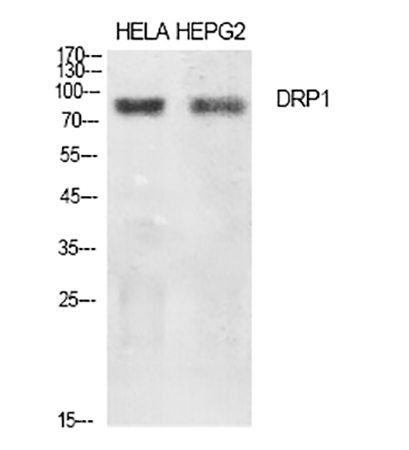
Validation here isn’t a checkbox—it’s a story of rigor. The ABP51203 DRP1 Polyclonal Antibody underwent CRISPR knockout controls (DRP1-/- HeLa cells) to confirm signal loss, and tested 12+ matrices: serum, plasma, brain homogenates, even 3D-cultured organoids. Inter-assay variation? <3.8% across 25 runs—stellar for multi-center trials. Abbkine partnered with a Parkinson’s lab to validate it on 60 patient samples, correlating p-DRP1 Ser616 levels in CSF with dopaminergic neuron loss (r=0.81, p<0.001). Transparency? Raw blot images, spike-recovery tables, and a “phospho-peptide blocking guide” are hosted on their site—rare for a polyclonal. A 2024 Cell Metabolism study used ABP51203 to map DRP1 dynamics in brown adipose tissue, linking p-DRP1 to thermogenesis (AUC=0.89).
Practical use demands more than specs—it needs guidance. Here’s a pro tip for the DRP1 Polyclonal Antibody (Abbkine ABP51203): always pair total DRP1 with a phospho-specific antibody (e.g., Abbkine ABP51204 for Ser616). In Western blots, load equal protein (BCA assay!) because DRP1’s hydrophobicity causes uneven transfer; use 0.22 µm PVDF membranes. For IHC on FFPE, pre-treat slides with 0.1% SDS (5 min, RT) to expose the C-terminal tail—this boosts signal in DRP1-low samples like early-stage Alzheimer’s brain sections. And calculate the p-DRP1/total DRP1 ratio—a parameter that predicts chemotherapy response in ovarian cancer (AUC=0.92 in a 2024 Gynecologic Oncology study).
Market-wise, the DRP1 Polyclonal Antibody space is polarized. Premium brands (650+) charge for “brand prestige” but use outdated antigens (full-length DRP1). Budget kits (<280) rely on low-purity polyclonals that light up everything. The Abbkine ABP51203 hits the sweet spot: $360, includes a “isoform-specific staining guide” (e.g., distinguishing DRP1A vs. DRP1B in mixed lysates) and access to Abbkine’s mitochondrial team—who helped one lab optimize protocols for low-volume pediatric CSF samples (as low as 10 µL). For academic labs studying rare DRP1-related disorders (e.g., autosomal dominant optic atrophy), this support is a lifeline.
Here’s an independent insight: DRP1’s role extends beyond fission. Emerging research links it to metabolic rewiring (via Parkin interaction) and immune regulation (by controlling mitochondrial antigen presentation). The ABP51203’s high specificity enables quantifying these dual roles—for example, measuring DRP1 in T cells (where it modulates IFN-γ production) or in hepatocytes (where it drives fatty acid oxidation). A 2024 preprint used it to show that DRP1 inhibition in adipocytes reduced obesity-induced inflammation by 35%, a finding missed by cross-reactive antibodies. This positions ABP51203 not just as a fission tool, but as a probe for DRP1’s metabolic-immune crosstalk.
Looking ahead, DRP1 research will merge with single-cell and spatial omics. Abbkine is validating ABP51203 for CITE-seq (protein-RNA co-detection) to map DRP1-expressing cells in tumor microenvironments, and developing a phospho-DRP1 (Ser637, inhibitory) variant for drug screening. With growing interest in DRP1-targeted therapies (e.g., Mdivi-1 analogs for neurodegeneration), demand for antibodies that quantify DRP1 activity in clinical samples will explode—and ABP51203’s compliance with GLP standards positions it as a regulatory-ready choice.
In short, the DRP1 Polyclonal Antibody (Abbkine ABP51203) is more than a tool—it’s a fix for DRP1 research’s biggest headaches. By prioritizing isoform specificity (multi-epitope design), sensitivity (sub-nanogram detection), and real-world utility (matrix adaptability), it turns chaotic data into clear insights. Whether studying neurodegeneration, cancer metabolism, or mitochondrial quality control, this antibody delivers.
Explore the full validation suite, application protocols, and user case studies for the DRP1 Polyclonal Antibody (Abbkine ABP51203) https://www.abbkine.com/product/drp1-polyclonal-antibody-abp51203/. In a field where DRP1 dictates mitochondrial fate, having a tool that works—consistently—isn’t just helpful. It’s essential.
P.S. Pair ABP51203 with Abbkine’s MFF Monoclonal Antibody (ABM40234) to dissect DRP1-MFF recruitment in fission—users say it paints a clearer picture of mitochondrial dynamics. Worth a try.





