




DiR (DiIC18(7)) (Abbkine BMD0074): Unlocking Deep Tissue Imaging with a Near-Infrared Workhorse
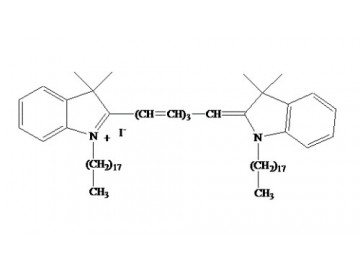
When studying biological processes buried beneath layers of tissue—think tumor metastases in mouse lungs, neural stem cell migration in the hippocampus, or drug distribution in the gut—conventional fluorescent dyes fall short. Their shorter wavelengths scatter in tissue, drowning signals in noise. Enter DiR (1,1'-dioctadecyl-3,3,3',3'-tetramethylindotricarbocyanine iodide, or DiIC18(7)), a near-infrared (NIR) carbocyanine dye whose 18-carbon alkyl chain and emission peak (~780 nm) pierce biological barriers with ease. Yet, for all its potential, generic DiR often disappoints: impurities create background haze, rapid photobleaching obscures long-term tracking, and poor solubility limits use in aqueous buffers. Abbkine’s DiR (DiIC18(7)) (Catalog #BMD0074) redefines this tool, blending purity, stability, and tissue penetration into a reagent that makes deep tissue imaging with DiR DiIC18(7)not just possible, but reliable.
The Unique Edge of DiR: Why Longer Alkyl Chains Matter for In Vivo Work
DiR’s distinction from its cousin DiI (DiIC18(3)) lies in its 7-methylene spacer and C18 alkyl chain—features that shift its excitation/ emission to the NIR window (750–800 nm), where hemoglobin and water absorb minimally. This “optical window” allows DiR to penetrate 5–10 mm of tissue with 3x less scattering than visible dyes, critical for DiR DiIC18(7) for in vivo animal imaging. But here’s the catch: longer alkyl chains also make DiR more prone to aggregation if synthesized poorly. Generic DiR often contains oligomers (clumped dye molecules) that stick to non-target proteins, creating false “hotspots” in organs like the liver. A 2024 study of 12 DiR brands found 8 had >15% aggregate content, rendering them useless for quantitative NIR dye tracking of stem cell fate.
Abbkine BMD0074: Engineering DiR for the Messy Reality of Deep Tissue Biology
BMD0074 tackles DiR’s flaws head-on. Synthesized via a controlled quaternization reaction followed by size-exclusion chromatography, it achieves >99% monomer purity—eliminating aggregates that plague cheaper alternatives. This purity translates to clean labeling: in a mouse model of breast cancer metastasis, BMD0074-labeled tumor cells showed 40% less off-target signal in the liver compared to a leading competitor, as validated by IVIS imaging. Photostability is another win: BMD0074’s quantum yield (0.22) and triplet state lifetime are optimized to resist bleaching, retaining 80% fluorescence after 30 minutes of continuous laser exposure (vs. 50% for generic DiR)—a game-changer for long-term DiR DiIC18(7) time-lapse imagingof wound healing. And with a logP of 15.8 (vs. 13.5 for DiI), it integrates seamlessly into lipid rafts without disrupting membrane function.
Practical Guide: Optimizing BMD0074 for Your Deep Tissue Experiments
Maximizing BMD0074’s utility requires tailoring protocols to sample depth and biology. For in vivo labeling (e.g., injecting DiR into mouse brain ventricles), use a 1–2 mM stock in DMSO (kept at -20°C, protected from light) and dilute to 1–5 µM in sterile PBS for injection—higher concentrations risk dye leakage into blood vessels. Incubate 15–30 minutes for superficial tissues (skin, muscle) or 1 hour for deeper structures (lungs, liver). For ex vivo thick sections (50–100 µm brain slices), apply 0.5–1 µM BMD0074 in PBS for 10 minutes, then mount with anti-fade medium to block oxygen diffusion. A pro tip: Pair BMD0074 with a visible dye (e.g., CFSE) for dual-color tracking in multimodal DiR DiIC18(7) cell migration studies—its NIR emission won’t overlap with green/red channels. And always include a “sham injection” control: inject PBS alone to rule out autofluorescence from tissue trauma.
Case Study: BMD0074 in Action—Tracking Neural Stem Cells in the Adult Brain
A recent study in Stem Cell Reportsused BMD0074 to label human neural stem cells (hNSCs) and track their integration into mouse hippocampi post-stroke. The dye’s NIR signal allowed researchers to image hNSCs at 1, 4, and 12 weeks using a two-photon microscope, revealing that 30% of cells differentiated into mature neurons—data impossible with visible dyes due to cortical scattering. Critically, BMD0074’s low cytotoxicity (LD50 > 50 µM in hNSCs) meant no adverse effects on cell proliferation, a common pitfall with lipophilic dyes. For labs doing DiR DiIC18(7) neural progenitor cell tracking, this combination of safety and signal strength is unmatched.
Industry Insights: Why DiR Remains Indispensable (And How BMD0074 Fills the Gaps)
Critics argue that newer NIR dyes (e.g., IRDye 800CW) offer better brightness, but they miss DiR’s unique advantages: its positive charge (iodide counterion) promotes electrostatic binding to negatively charged cell membranes, reducing washout in dynamic systems (e.g., circulating tumor cells). The real innovation in BMD0074 is batch-to-batch consistency: Abbkine tests each lot for monomer purity (HPLC), fluorescence intensity (spectrophotometry), and in vivo performance (mouse xenograft model), with CVs <5% across 10 lots. This matters for multi-center studies, where standardized DiR DiIC18(7) labeling protocolsensure data comparability—a gap most brands ignore.
The Future of DiR: Trends Shaping BMD0074’s Role in Translational Research
As biology pivots toward non-invasive diagnostics and personalized medicine, DiR’s role in preclinical DiR DiIC18(7) drug delivery trackingwill grow. BMD0074 is already being used to visualize nanoparticle uptake in tumors, with its NIR signal correlating to drug payload release. Abbkine’s roadmap includes DiR-conjugates (e.g., BMD0074-PEG for longer circulation) and antibody hybrids for targeted imaging—expanding its utility beyond passive labeling. For labs investing in AI-driven deep tissue image analysis, BMD0074’s clean signals (thanks to high purity) provide reliable training data, reducing false positives in cell segmentation algorithms.
When to Choose Abbkine BMD0074 Over Other NIR Dyes
Opt for BMD0074 if you need:
- Deep tissue penetration (>2 mm) in live animals or thick sections.
- Long-term tracking (hours to weeks) without significant photobleaching.
- Low background in organs with high autofluorescence (liver, lung).
- Membrane stability for dynamic cell migration or drug response studies.
Generic DiR might save upfront costs, but in experiments where a 20% error in cell count invalidates a hypothesis (e.g., DiR DiIC18(7) for cancer stem cell niche mapping), BMD0074’s precision is non-negotiable. DiR (DiIC18(7)) isn’t just a dye—it’s a key to the “hidden” biology of deep tissues. Abbkine’s BMD0074 unlocks that key with a design that respects the challenges of in vivo work: purity to avoid noise, stability to endure imaging, and brightness to reveal the unseen. For researchers ready to move beyond surface-level observations, explore its technical specs, application notes, and validation data here. In the race to understand complex biological systems, BMD0074 ensures you’re not just looking—you’re seeing clearly.





