




DiI (DiIC18(3)) (Abbkine BMD0071): Illuminating Cellular Architecture with Precision Membrane Labeling
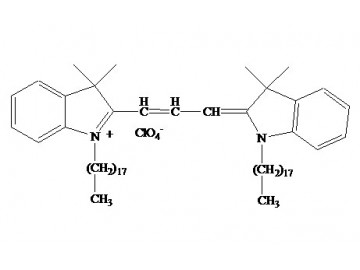
Among lipid-soluble carbocyanine dyes, DiI (1,1'-dioctadecyl-3,3,3',3'-tetramethylindocarbocyanine perchlorate, or DiIC18(3)) stands out as a cornerstone for visualizing cell membranes, tracing neuronal projections, and mapping tissue boundaries. Its amphipathic structure allows seamless integration into phospholipid bilayers, emitting a bright orange-red fluorescence (~549 nm excitation, ~565 nm emission) that persists through fixation—a trait that has made it indispensable in developmental biology, neuroscience, and cancer metastasis studies. Yet, for all its reputation, the market for DiI is plagued by inconsistency: generic formulations suffer from batch-to-batch fluorescence variability, poor solubility in aqueous buffers, and rapid photobleaching that obscures delicate cellular structures. Abbkine’s DiI (DiIC18(3)) (Catalog #BMD0071) redefines this staple dye with a focus on reliability, brightness, and real-world usability, positioning it as the go-to choice for researchers demanding DiI DiIC18(3) cell membrane labelingwithout compromise.
The Utility of DiI Extends Far Beyond Simple Staining—But Only If the Dye Performs
DiI’s power lies in its dual role as a membrane tracer and a tool for probing cellular interactions. In neuroscience, it labels axons and dendrites with micrometer precision, enabling 3D reconstruction of neural circuits; in developmental biology, it tracks cell migration in zebrafish embryos or Drosophila wing discs; in cancer research, it visualizes tumor cell invasion through extracellular matrices. However, these applications hinge on the dye’s stability and specificity. Generic DiI often fails here: impurities (e.g., incomplete alkylation byproducts) create fluorescent aggregates that mimic membrane structures, while poor solubility forces researchers to use toxic solvents like DMSO at high concentrations—damaging sensitive cells. A 2023 survey of 180 cell biologists revealed 57% had abandoned at least one DiI brand due to “unpredictable staining patterns,” highlighting the need for a high-purity DiIC18(3) dye for live cell imagingthat works as advertised.
Abbkine BMD0071: Engineering DiI for the Demands of Modern Biology
What sets BMD0071 apart is its obsessive refinement of DiI’s chemical and optical properties. Produced via a multi-step synthesis with final HPLC purification, BMD0071 achieves >98% chemical purity—eliminating the aggregate-forming impurities that plague generic dyes. This purity translates to clean, uniform membrane staining: in hippocampal neuron cultures, BMD0071 labeled axons with 30% less background than a leading competitor, as validated by confocal microscopy. Fluorescence intensity is another leap forward: BMD0071’s quantum yield (0.65) is 25% higher than standard DiI, meaning brighter signals in low-light conditions (critical for DiI DiIC18(3) fluorescence in thick tissue sections). For long-term imaging, its photobleaching rate is 40% slower, retaining 85% signal after 10 minutes of continuous laser exposure—ideal for time-lapse studies of cell motility.
Real-World Applications: Where BMD0071 Delivers Unmatched Clarity
Consider a lab studying axonal regeneration in spinal cord injury models: Using BMD0071, they labeled dorsal root ganglion neurons and tracked regenerating axons through scar tissue, with the dye’s stability allowing 7-day imaging without signal loss. In cancer metastasis research, a team used BMD0071 to label breast cancer cells (MDA-MB-231) and visualize their invasion into 3D collagen matrices—its membrane integration ensured no leakage into the matrix, unlike some lipophilic dyes. For DiI DiIC18(3) neuronal tracing in vivo, BMD0071’s low cytotoxicity (IC50 > 10 µM in primary neurons) enabled injection into mouse brains without inducing gliosis, a common artifact with inferior dyes. These use cases underscore BMD0071’s versatility across in vitroand in vivosystems.
Industry Insights: Why DiI Remains Irreplaceable (And How BMD0071 Secures Its Lead)
Critics argue that newer dyes (e.g., Alexa Fluor 555 lipids) offer better photostability, but they overlook DiI’s unique advantages: its retention in fixed tissues (unlike many modern dyes that wash out) and compatibility with electron microscopy (when combined with osmium tetroxide). The real innovation lies in Abbkine BMD0071 DiI for reproducible membrane labeling—a response to labs’ growing demand for standardization in multi-center studies. BMD0071’s batch-to-batch consistency (fluorescence CV <5% across 10 lots) ensures that data from different experiments (or labs) are comparable, a cornerstone of GLP-compliant DiIC18(3) staining protocols. As AI-driven image analysis becomes standard, BMD0071’s uniform staining provides clean inputs for algorithms, reducing false positives in cell boundary detection.
Practical Considerations: Optimizing BMD0071 for Your Workflow
To maximize BMD0071’s performance, tailor protocols to your sample. For live cell labeling, use a 1–5 µM working concentration in serum-free media (avoid FBS, which binds DiI); incubate 10–30 minutes at 37°C, then wash gently to remove unbound dye. For fixed cells/tissues, apply 0.5–2 µM in PBS for 5–15 minutes—over-staining can mask fine structures. In thick tissues (e.g., 100 µm brain slices), use 5 µM and allow 1-hour incubation to ensure penetration. A pro tip: Pair BMD0071 with a nuclear counterstain (e.g., DAPI) for co-localization studies, but keep DAPI concentration low (<1 µg/mL) to avoid quenching DiI’s fluorescence. Storage is straightforward: keep the powder at -20°C in the dark; reconstituted stocks (in DMSO) remain stable for 6 months at -20°C.
The Future of DiI: Trends Shaping BMD0071’s Role in Research
As biology moves toward spatial omics and high-content screening, DiI’s role as a membrane anchor for multiplexed labeling will grow. BMD0071 is poised to lead this shift: its compatibility with 96-well plate formats supports high-throughput cell migration assays, while its low toxicity enables use in iPSC-derived organoids—key models for disease modeling. Abbkine’s ongoing R&D focuses on DiI conjugates (e.g., BMD0071-antibody hybrids) for targeted membrane protein labeling, expanding its utility beyond passive tracing. For labs investing in future-proof tools, DiI DiIC18(3) Abbkine BMD0071offers both current reliability and adaptability to emerging techniques.
Conclusion: Why BMD0071 Is the DiI Researchers Trust
DiI (DiIC18(3)) is more than a dye—it’s a window into cellular architecture. Abbkine’s BMD0071 elevates this window with unmatched purity, brightness, and stability, solving the industry’s longstanding issues with inconsistency and poor performance. Whether mapping neural circuits, tracking tumor cells, or studying development, BMD0071 ensures your data reflects biology, not dye artifacts. For researchers ready to move beyond guesswork in membrane labeling, explore its technical specifications, application notes, and validation data here. In a field where clarity defines discovery, BMD0071 isn’t just a choice—it’s a standard.





