




Decoding Soil Health: Industry Pain Points & Technical Breakthroughs of Abbkine’s CheKine™ Micro Soil Dehydrogenase (S-DHA) Activity Assay Kit (KTB4033)
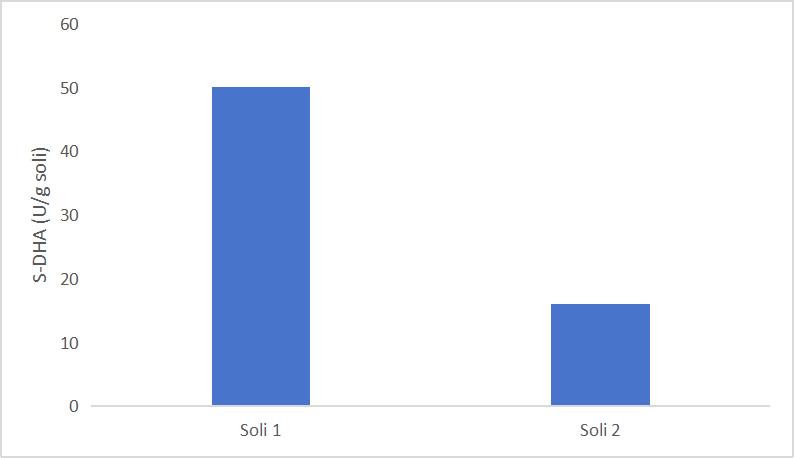
Soil dehydrogenase (S-DHA) stands as the gold standard for evaluating soil microbial metabolic potential, directly reflecting the activity of soil microbial communities and serving as a core indicator in soil quality assessment, heavy metal pollution monitoring, and ecological restoration effectiveness evaluation. With the global focus on soil degradation and ecological conservation intensifying, the demand for accurate, efficient S-DHA detection has surged—yet the current market remains dominated by outdated methods that fail to meet the rigorous requirements of modern research and industrial applications. This gap not only hinders the progress of soil science but also creates bottlenecks for environmental monitoring agencies and agricultural technology enterprises. Abbkine’s CheKine™ Micro Soil Dehydrogenase (S-DHA) Activity Assay Kit (Catalog No.: KTB4033) emerges as a game-changer, addressing long-standing industry pain points through targeted innovations that redefine the standards of S-DHA quantification.
The core challenge plaguing traditional S-DHA detection lies in a trifecta of limitations: excessive sample demand, prolonged detection cycles, and poor anti-interference capability. Conventional biochemical methods typically require no less than 0.2g of soil sample per test, a significant barrier for studies focusing on microhabitats (e.g., rhizosphere soil of rare plants) or small-scale pollution hotspots where sample availability is limited. Worse, these methods often take 2–3 weeks to complete, delaying critical decision-making in time-sensitive projects such as contaminated soil remediation effect assessment. Even more problematic is the interference issue—soil samples contain a wealth of humic acids, pigments, and heavy metal ions that easily disrupt reaction systems, leading to false negative or skewed results. Researchers frequently report negative data when using generic kits, a problem rooted in insufficient sample purification and poor substrate specificity. For academic studies, such unreliability means wasted effort and delayed publications; for industrial applications, it risks misjudging soil health status and compromising the effectiveness of remediation strategies.
What sets CheKine™ Micro Soil Dehydrogenase (S-DHA) Activity Assay Kit KTB4033 apart is its precision-engineered design that directly targets these industry pain points. At the forefront is its microvolume advantage: the kit requires only 50–100 mg of soil sample per reaction, reducing sample consumption by over 50% compared to traditional methods. This not only makes it feasible to analyze scarce or precious soil samples but also enables high-throughput screening of multiple micro-sites within a single study area. To tackle the interference dilemma, the kit integrates a proprietary buffer system with humic acid scavengers and metal ion chelators, which effectively neutralizes the inhibitory effects of humic acids (the primary source of interference) and heavy metals on S-DHA activity. Comparative tests show that KTB4033 maintains a relative error of less than 3.2% even in soil samples with high humic acid content (≥10 g/kg), far outperforming generic kits with error rates exceeding 15% under the same conditions.
The technical rigor of KTB4033 is further underscored by its optimized detection workflow and strict quality control standards. Unlike traditional methods that involve cumbersome sample preprocessing and prolonged incubation, this kit streamlines the entire process to just 90 minutes from sample homogenization to result readout—drastically shortening the detection cycle and improving work efficiency. Its colorimetric detection method (read at 490 nm) is compatible with all standard microplate readers, eliminating the need for specialized and expensive equipment and reducing the threshold for small laboratories and field research stations. Each batch of KTB4033 undergoes rigorous validation, including linearity (R² ≥ 0.995), batch-to-batch consistency (signal variation < 4%), and stability testing (24 months of validity at -20°C), ensuring reproducible results across experiments and institutions. For researchers struggling with data unreliability, this level of consistency is a critical asset for meeting the strict requirements of high-impact journal publications.
A pivotal industry insight is that KTB4033’s design aligns perfectly with the evolving trends of soil detection toward miniaturization, high throughput, and precision. The global soil testing market is projected to grow at a CAGR of 6.2% through 2030, driven by stringent environmental regulations and the rise of precision agriculture. Traditional S-DHA assay methods, with their bulkiness and inefficiency, can no longer keep up with the demand for large-scale soil surveys and real-time pollution monitoring. KTB4033 fills this void by offering a cost-effective, scalable solution: priced at a competitive point for 48 tests, it delivers lab-grade accuracy at a fraction of the cost of premium imported kits. Its compatibility with automated liquid handling systems further supports high-throughput analysis, making it ideal for environmental monitoring agencies tasked with testing hundreds of soil samples daily or agricultural enterprises screening soil quality across multiple fields.
For soil scientists, environmental engineers, and agricultural researchers seeking to overcome the limitations of traditional S-DHA detection, Abbkine’s CheKine™ Micro Soil Dehydrogenase (S-DHA) Activity Assay Kit (KTB4033) represents a rigorously engineered, industry-aligned solution. Its microvolume design, robust anti-interference capability, rapid detection workflow, and consistent performance directly address the most pressing pain points in the field, enabling more accurate, efficient, and cost-effective soil microbial activity assessment. Whether evaluating the effectiveness of contaminated soil remediation, monitoring soil quality in organic farming systems, or studying the impact of climate change on soil ecosystems, this kit delivers publication-ready results you can trust. To explore detailed technical protocols, verify sample compatibility, or secure bulk pricing, visit the official Abbkine product page: https://www.abbkine.com/?s_type=productsearch&s=KTB4033. In an era where soil health is central to global sustainability, KTB4033 is not just an assay kit—it’s a catalyst for advancing soil science and protecting our most vital natural resource.





