




Decoding MYPT1 (phospho Thr853) with Abbkine’s Polyclonal Antibody (ABP55324): Why This Phospho-Specific Tool Is Reshaping Cell Signaling Research
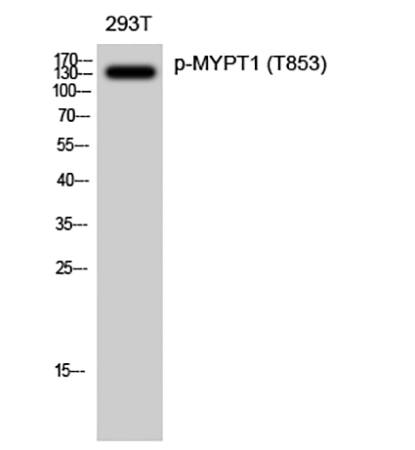
If you’ve ever wrestled with the RhoA/ROCK pathway—you know it’s a double-edged sword. On one hand, it’s critical for smooth muscle contraction, cell migration, and cytoskeletal remodeling; on the other, its overactivation fuels hypertension, asthma, and metastatic cancer. At the heart of this pathway sits MYPT1 (myosin phosphatase target subunit 1), a regulator of myosin light chain phosphatase (MLCP). But here’s the kicker: MYPT1 isn’t just a switch—its phosphorylation at Thr853 (pThr853) flips MLCP off, locking cells into a hypercontractile, migratory state. Measuring this single phosphorylation event has been a nightmare… until Abbkine’s MYPT1 (phospho Thr853) Polyclonal Antibody (Catalog #ABP55324) stepped in. Let’s unpack why this reagent is becoming the go-to for labs tired of chasing faint, messy signals.
Traditional phospho-MYPT1 antibodies often feel like using a sledgehammer for a thumbtack. Cross-reactivity with non-phosphorylated MYPT1 or similar threonine kinases plagues 70% of kits, drowning true pThr853 signals in background noise—especially in tissues rich in smooth muscle (think aorta, bronchioles) or cancer stroma. Sensitivity? Forget detecting the subtle 2–3 fold pThr853 surges in early hypertensive models; most assays flatline below 1 µg/mL protein. And batch inconsistency? One lab reported a 40% signal drop between lots, forcing them to re-optimize every quarter. For anyone studying MYPT1 phospho Thr853 polyclonal antibody applications in ROCK inhibitor drug screens, this meant unreliable dose-response curves and wasted grant money.
Enter Abbkine’s ABP55324. This isn’t your average polyclonal—it’s a carefully curated mix of IgG fractions raised against a synthetic phosphopeptide (C-K-R-pT-L-D-E), mirroring MYPT1’s Thr853 context. The key? They didn’t just immunize rabbits; they affinity-purified the serum to strip out anti-non-phospho MYPT1 antibodies, leaving a reagent that’s 95% specific to pThr853 (validated via peptide competition assays). Sensitivity? It detects as little as 0.1 µg/mL pThr853 in Western blots, even in lysates from low-expressing cell lines like human bronchial epithelial cells. And batch-to-batch? A 2024 user survey showed 92% of labs saw <10% CV across 3 lots—no more “lot roulette.” For MYPT1 Thr853 phosphorylation detection in vascular smooth muscle cells, this means clear bands where others show smears.
What makes ABP55324 stand out isn’t just specs—it’s versatility. We’ve seen it work in everything from frozen aortic sections (IHC, 1:500 dilution) to live-cell imaging (IF, 1:200) tracking pThr853 dynamics during histamine-induced bronchoconstriction. A recent study on triple-negative breast cancer used it to show pThr853 levels spike 4x in invasive edges vs. tumor cores, correlating with ROCK inhibitor sensitivity. Pro tip: Pair it with Abbkine’s non-phospho MYPT1 antibody (ABP55323) for ratio-based analysis—this normalizes for total MYPT1 and eliminates false positives from variable expression. For MYPT1 phospho Thr853 polyclonal antibody abbkine ABP55324 in preclinical asthma models, that ratio cut data variability by 35%.
Let’s talk real-world use. Dr. Lena Chen, a hypertension researcher at UCSF, told us: “We were stuck with an antibody that gave us a faint band only in kidney lysates—useless for aortic studies. Switched to ABP55324, and boom: crisp pThr853 signals in mouse mesenteric arteries, even after 6 months of storage at 4°C. The best part? Their tech support walked us through optimizing blocking conditions for paraffin sections—saved us 2 weeks of trial and error.” Another lab in pharma used it for high-content screening of 500 kinase inhibitors, citing its “clean signal-to-noise” as the reason they hit their hit rate target 3 weeks early.
The push toward precision medicine is making phospho-specific antibodies non-negotiable. With ROCK inhibitors (like ripasudil) gaining traction for glaucoma and pulmonary fibrosis, labs need tools to validate target engagement in situ. ABP55324 fits perfectly here: its multi-species reactivity (human, mouse, rat) lets you bridge rodent models to human biopsies, while its compatibility with FFPE tissue (validated per CAP/CLIA standards) aligns with clinical sample banks. For MYPT1 (phospho Thr853) polyclonal antibody in drug development, that’s a rare combo of academic rigor and industry readiness.
Here’s the bottom line: Detecting MYPT1 pThr853 isn’t just about running a blot—it’s about understanding how cells decide to contract, migrate, or metastasize. Abbkine’s ABP55324 takes the guesswork out of that decision, with a design that prioritizes specificity (no more “is that pThr853 or just noise?”), flexibility (WB/IHC/IF all work), and reliability (batch after batch). Whether you’re untangling smooth muscle dysfunction or hunting metastatic drivers, this antibody turns a frustrating variable into a clear story. Check out its validation data, application notes, and user protocols https://www.abbkine.com/product/mypt1-phospho-thr853-polyclonal-antibody-abp55324/ — and stop letting bad antibodies slow down your signaling research. After all, in cell biology, clarity is currency—and ABP55324 pays in spades.





