




Cleaner Signals, Fewer Headaches: Why Abbkine’s HRP-Streptavidin (A21000) Elevates Lab Results
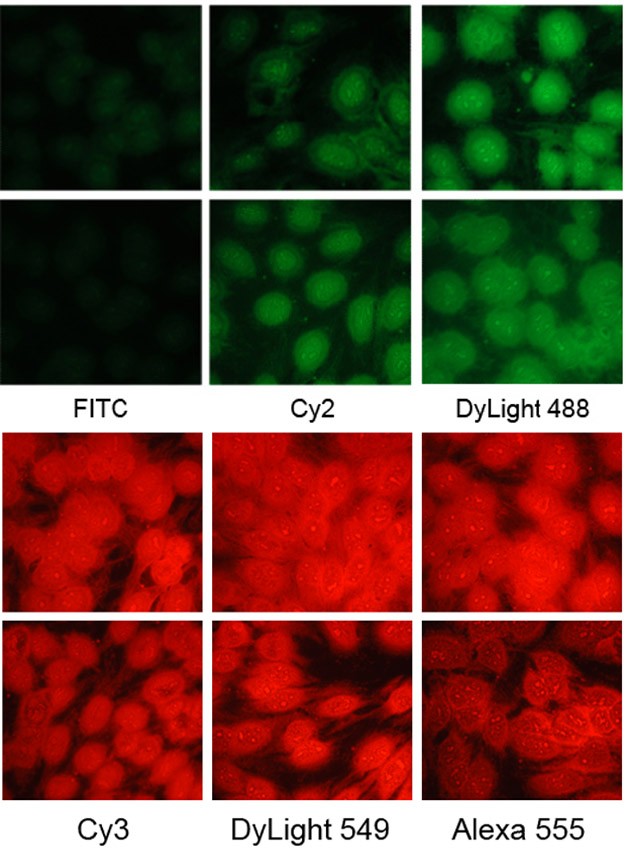
Let’s talk detection. In the intricate dance of modern biology, seeing is believing. Whether you're chasing elusive protein signals in Western blots, mapping cellular architecture with immunohistochemistry, or quantifying biomarkers via ELISA, your signal needs to be clean, bright, and undeniable. This is where the dynamic duo of Horseradish Peroxidase (HRP) and Streptavidin comes into play and why Abbkine’s offering (A21000) deserves a spot on your bench.
The Core Chemistry: A Match Made for Sensitivity
At its heart, this system leverages one of nature's strongest noncovalent bonds: the interaction between biotin (a small vitamin, B7) and streptavidin (or avidin). The affinity? Mindbogglingly high, around 10^15 M^-1. Think of it as molecular Velcro on steroids. Biotinylate your primary or secondary antibody easy to do chemically. Then introduce streptavidin, which grabs onto those biotin tags like a magnet. But here's the clever part: Abbkine conjugates the streptavidin to Horseradish Peroxidase (HRP), an enzyme that acts as a powerful signal amplifier. When you add a suitable substrate (like TMB or ECL), HRP triggers a rapid chemical reaction producing light (chemiluminescence) or a colored precipitate (chromogenic). Boom. Your target is now visible.
Why HRP-Streptavidin? The Practical Edge
Sure, other systems exist (alkaline phosphatase, fluorescent dyes), but HRPStreptavidin remains the workhorse for a reason. It’s about balance. HRP offers excellent catalytic efficiency, meaning lower background noise and stronger signals compared to some alternatives. The speed of the reaction is a huge plus inhighthroughput settings. Plus, the chemistry is robust and wellunderstood across countless applications. You get reliability you can count on experiment after experiment.
Enter Abbkine's A21000: More Than Just a Reagent
So, what sets Abbkine's HRPStreptavidin (A21000) apart from the generic options gathering dust on supplier shelves? It boils down to performance and consistency the two things that make or break an experiment at 2 AM.
- Purity & Specificity: Abbkine emphasizes high-purity streptavidin and minimal cross-reactivity. This translates directly to cleaner blots and slides. Less nonspecific binding means your true signal stands out, reducing frustration and false positives. You spend less time troubleshooting background noise.
- Optimal Enzyme Loading: The conjugation process is critical. Too little HRP, and your signal is weak. Too much, and you risk steric hindrance or increased background. Abbkine's formulation aims for that sweet spot – maximizing sensitivity without compromising specificity. Expect strong, crisp bands in WB and clear staining in IHC.
- Batch-to-Batch Consistency: Anyone who runs repeated experiments knows the headache of lot variability. One batch works great, the next gives you weak signals. Abbkine focuses on stringent manufacturing controls to deliver consistent performance, saving you from re-optimizing protocols unexpectedly. Reliability is key when you're pushing deadlines.
- Practical Formulation: Often supplied in convenient stabilizing buffers, ready for immediate use. No fussing with reconstitution or unexpected precipitates.
Real-World Impact: Where A21000 Shines
Imagine you're developing a new ELISA for a low-abundance cytokine. Signal detection is everything. Using Abbkine's A21000, you achieve a significantly lower limit of detection compared to a competitor's reagent, allowing you to accurately quantify samples previously deemed "below threshold." Or picture troubleshooting a stubborn Western blot where previous attempts showed high background. Switching to A21000 often cleans up the background dramatically, revealing the specific band you were hunting for. These aren't hypotheticals; they're the kinds of tangible improvements labs report when upgrading to optimized reagents like this.
Navigating the Market: Choosing Wisely
The market for detection reagents is flooded. Price is always a factor, sure. But savvy researchers know that cheap reagents often cost more in wasted time, failed experiments, and compromised data quality. Investing in a reliable performer like Abbkine's A21000 isn't just buying a bottle of liquid; it's investing in the integrity and efficiency of your research pipeline. Check out the details and user feedback directly on their product page: https://www.abbkine.com/?s_type=productsearch&s=A21000.
The Bottom Line
In the quest for biological insight, detection sensitivity and reliability are non-negotiable. The HRP-Streptavidin system remains a cornerstone technology because it delivers on both fronts. Abbkine's implementation, particularly the A21000 conjugate, refines this classic approach. By focusing on purity, optimal enzyme loading, and batch consistency, they provide a tool that simply works better and more reliably. If you're looking to push the limits of detection in your Western blots, ELISAs, or immunostainings, giving Abbkine's HRP-Streptavidin (A21000) a try could be one of the most productive decisions you make this year. After all, seeing your results clearly shouldn't be the hard part.





