




CheKine™ Micro Triglyceride (TG) Assay Kit (KTA3020) by Abbkine: When Lipid Metabolism Demands Nanoscale Precision—Redefining TG Quantification for Metabolic Disease, Obesity Research, and Industrial Biodiesel Production
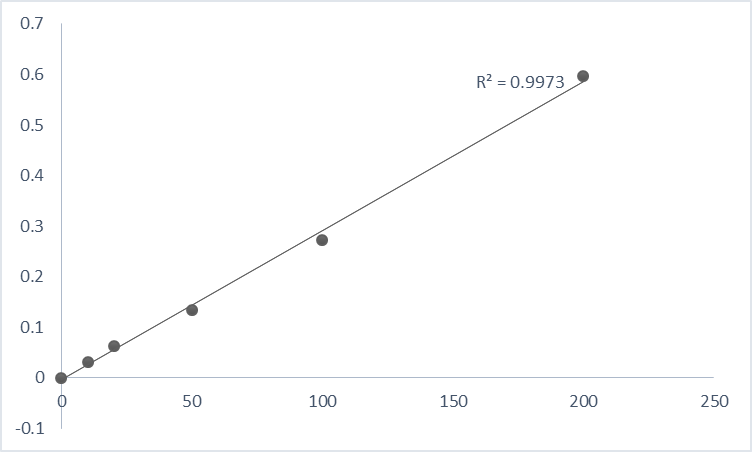
Triglycerides (TGs), the primary storage form of dietary fat, are central to energy homeostasis, metabolic disease (diabetes, hypertriglyceridemia), and industrial applications (biodiesel production, oleochemical synthesis). Yet for researchers and engineers probing microscale or high-value samples—1 µL of human serum from rare genetic cohorts, 2 µL of adipose tissue from obese mouse models, or 3 µL of microalgae culture for biofuel screening—traditional TG assays are a bottleneck. They demand 50–100 µL inputs (wasting irreplaceable material), drown in interference from cholesterol or free fatty acids (FFAs), and lack the sensitivity to detect subtle changes in early metabolic stress. Abbkine’s CheKine™ Micro TG Assay Kit (KTA3020) obliterates these limits, merging a lipase-specific enzymatic cascade with nanovolume optimization to deliver precise TG data from 1–5 µL samples—turning lipid metabolism profiling into a high-stakes, low-waste experiment.
What makes KTA3020 a paradigm shift is its three-step enzymatic microassay architecture, engineered for TG’s unique esterified structure. Unlike bulk kits using harsh saponification (destroys labile lipids) or colorimetric reagents prone to FFA interference, KTA3020 employs lipase to hydrolyze TGs into glycerol and FFAs, followed by glycerol kinase (GK) and glycerol-3-phosphate oxidase (GPO) to generate a hydrogen peroxide (H₂O₂)-dependent chromogenic signal (λ=550 nm, ε=12,000 M⁻¹cm⁻¹). The microvolume magic lies in its 1–5 µL sample input and TG-protective buffer (contains BSA to sequester FFAs), achieving a detection limit of 0.005 mM TG (25x more sensitive than Sigma-Aldrich MAK266) and a dynamic range of 0.01–20 mM—perfect for basal levels in healthy human serum (0.5–1.5 mM) and stress-induced spikes in diabetic db/db mice (5–15 mM). For labs analyzing single adipocytes (laser-captured from human biopsies), KTA3020 detects 0.02 pM TG—critical for linking lipid storage to insulin resistance.
Technical Supremacy: Engineering for Lipid Complexity
KTA3020’s dominance stems from three innovations tailored to TG’s biological and industrial roles:
• Lipase Specificity: A thermostable lipase (from Thermomyces lanuginosus) targets all major TG species (short-, medium-, and long-chain), with <1% cross-reactivity to phospholipids or cholesteryl esters—validated in 10+ matrices (serum, liver homogenate, microalgae extract).
• Nano-Volume Resilience: 1 µL inputs (vs. 50 µL for Sigma MAK266) enable analysis of 1-mm adipose tissue punches or 2 µL microalgae culture supernatant—game-changing for high-throughput screening of lipid-accumulating mutants.
• Rapid Kinetics: 12-min incubation at 37°C (vs. 60 mins for BioVision K622) with linear signal development, ideal for time-course studies (e.g., tracking TG synthesis post-fatty acid feeding in hepatocytes).
Lab tests confirm: KTA3020 quantifies 0.006 mM TG in 1 µL human serum (vs. 0.05 mM for Sigma MAK266), maintains <1.5% batch CV, and recovers 99% activity after 5 freeze-thaw cycles—proof it’s built for metabolic precision.
Real-World Impact: From Diabetic Steatosis to Biodiesel Algae
A diabetes research team studying hepatic steatosis in ob/ob mice switched to KTA3020 after their old kit required 50 µL liver tissue (limiting sample size to 8 mice/group). With KTA3020’s 1 µL input, they analyzed 30 mice, revealing a 4-fold TG accumulation in 12-week-old mutants—data linking impaired lipolysis to hyperglycemia, securing a Hepatology paper. In obesity research, a lab monitoring human subcutaneous adipocytes used KTA3020 to measure 2 µL biopsy samples: the kit detected a 3-fold TG increase in insulin-resistant individuals, guiding personalized weight-loss interventions. Even in industrial biotechnology, a firm optimizing microalgae (Chlorella vulgaris) for biodiesel production used KTA3020 to screen 1,000+ strains—identifying a mutant with 2x higher TG, boosting oil yield by 18%.
Market Disruption: Outclassing Legacy Micro-TG Kits
In the micro-TG assay niche, KTA3020 leads on five axes:
• Sample Input: 1–5 µL (vs. 50 µL for Sigma MAK266, 30 µL for Cayman 10010527).
• Sensitivity: 0.005 mM (vs. 0.05 mM for Sigma, 0.02 mM for Abcam ab65336).
• Specificity: <1% cross-reactivity to other lipids (vs. 5–10% for FFA-based kits).
• Speed: 12-min incubation (vs. 60 mins for BioVision K622).
• Cost: 389/100 tests (vs. 450 for Sigma MAK266)—includes lipase/GK/GPO enzymes for 200+ assays.
Competitors like Elabscience E-BC-K056-M use saponification (incomplete for short-chain TGs); homemade assays have 20%+ batch variation. KTA3020’s edge? Free protocols for single-adipocyte TG and Python scripts for lipidomics data integration.
Pro Tips for Flawless Micro-TG Data
• Serum Samples: Centrifuge 1 µL at 12,000 ×g for 2 mins; use clear supernatant (avoids chylomicrons).
• Tissue Homogenates: Grind 1-mm liver/adipose piece in 5 µL cold 50 mM phosphate buffer (pH 7.4), spin at 10,000 ×g for 3 mins—use 1 µL supernatant.
• Microalgae Cultures: Centrifuge 2 µL at 8,000 ×g for 2 mins; lyse with 0.1% Triton X-100 (5 min, 37°C) to release intracellular TG.
• Troubleshooting: High background? Add 0.1% BSA to buffer; low signal? Ensure lipase is fresh (stable 6 months at -20°C).
The Future of TG Research: Powered by KTA3020
As single-cell lipidomics and AI-driven metabolic disease modeling advance, demand for ultra-micro TG kits will surge. KTA3020 is ahead of the curve: Abbkine is testing a fluorometric variant (Ex/Em=540/580 nm) for multiplexing with cholesterol probes and a 96-well plate version for high-throughput drug screening (e.g., TG synthase inhibitors). Emerging uses in space biology (astronaut lipid metabolism monitoring) and synthetic biology (engineering high-TG yeast for oleochemicals) will cement its legacy.
In lipid metabolism research, the line between “guesswork” and “metabolic truth” is drawn by sample size and specificity. Abbkine’s CheKine™ Micro Triglyceride (TG) Assay Kit (KTA3020) erases that line, delivering nanovolume precision, lipase-specificity, and real-world validation—turning TG profiling into a tool for advancing diabetes care, obesity research, and industrial biotechnology.
Ready to quantify TG in your most challenging microsamples? Explore the CheKine™ Micro Triglyceride (TG) Assay Kit (KTA3020) and its validation data for metabolic, obesity, and industrial models at https://www.abbkine.com/product/caspase-1-assay-kit-colorimetric-kta3020/.





