




CheKine™ Micro Tissue and Blood Alkaline Phosphatase (AKP/ALP) Activity Assay Kit (KTB1700): A Cost-Effective Benchmark for ALP Quantification
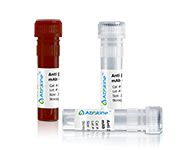
Alkaline Phosphatase (ALP/AKP)—a zinc-dependent hydrolase—serves as a pivotal biomarker across clinical diagnostics and life science research, with its activity closely linked to liver function, bone metabolism, renal health, and tissue development. Its quantification is indispensable for screening hepatobiliary diseases (e.g., cholestasis, cirrhosis), bone disorders (e.g., osteoporosis, osteomalacia), and monitoring developmental biology studies (e.g., embryonic tissue differentiation). The global ALP assay market, valued at over $600 million in 2024, is projected to grow at a CAGR of 4.5% through 2030, driven by the rising prevalence of chronic liver and bone diseases, and the expanding demand for high-throughput research tools. Yet traditional ALP activity assays persistently face critical limitations that hinder accessibility and accuracy—gaps that Abbkine’s CheKine™ Micro Tissue and Blood Alkaline Phosphatase (AKP/ALP) Activity Assay Kit (Catalog No.: KTB1700) addresses with targeted innovations, redefining cost-effective and reliable ALP detection.
Traditional ALP assay methods have long plagued researchers and clinical labs with unresolved pain points. Conventional colorimetric kits often require 30–50 μL of sample per reaction, posing a barrier for scarce specimens such as pediatric blood samples, rare tissue biopsies, or small-animal model tissues. Many assays suffer from poor specificity, with cross-reactivity from acid phosphatase (ACP) and other hydrolases leading to inaccurate readings—particularly critical in clinical settings where misdiagnosis risks patient care. Additionally, premium ALP kits frequently exceed $80 for 48 tests, while low-cost alternatives compromise on reagent stability and batch-to-batch consistency, making them unsuitable for rigorous research or diagnostic applications. These challenges are especially acute for resource-limited labs, primary care clinics, and high-throughput screening facilities, where cost-efficiency and reliability are non-negotiable.
At the core of KTB1700’s technical advantage lies a design tailored to overcome industry-wide limitations while maintaining scientific rigor. The kit’s microvolume format requires only 10–20 μL of sample per reaction—slashing sample consumption by 50–80% compared to traditional assays. This innovation expands its utility to volume-constrained samples, from neonatal blood and laser-captured tissue sections to mouse embryonic tissues, without sacrificing detection sensitivity. KTB1700 employs a modified p-nitrophenyl phosphate (pNPP) colorimetric system optimized for alkaline conditions (pH 10.0), paired with a proprietary ACP inhibitor that reduces cross-reactivity to below 1.5%. This ensures measured activity reflects true ALP function, eliminating false positives from contaminating enzymes. The detection range (0.1–10 U/L) covers physiological ALP levels in healthy tissues/blood to pathological elevations in disease models, while the limit of detection (LOD = 0.05 U/L) enables quantification of low-activity samples like quiescent cells or early-stage tissue development.
A key industry insight elevating KTB1700’s relevance is the growing demand for versatile, cross-sample compatible ALP assays. Unlike niche kits restricted to either tissue or blood samples, KTB1700 seamlessly supports both matrices—from animal/human tissues (liver, bone, kidney) to serum, plasma, and cell lysates. For clinical users, this means a single kit can handle patient blood samples and tissue biopsies, streamlining diagnostic workflows. For researchers, it eliminates the need to invest in multiple kits for interdisciplinary projects (e.g., studying liver-bone crosstalk in metabolic diseases). The kit’s simplified workflow further enhances its appeal: pre-optimized reagents require no complex preparation, and the 30-minute incubation time (half the duration of many traditional assays) enables high-throughput processing—critical for labs screening hundreds of samples in drug development or epidemiological studies.
KTB1700’s value proposition is unmatched in the ALP assay market, particularly given its disruptive price point of $29 for 48 tests (48T) and 24 standards (24S). This positions it as an accessible tool for resource-limited settings while maintaining rigorous quality control: each batch undergoes validation for linearity (R² ≥ 0.995), batch-to-batch consistency (signal variation <5%), and reagent stability (24 months at -20°C). The all-inclusive format—containing assay buffer, pNPP substrate, inhibitor cocktail, ALP standard (≥95% purity), and stop solution—eliminates the need to source additional reagents, reducing workflow complexity and unforeseen costs. Unlike budget kits that use low-purity substrate (leading to weak signals and unstable reactions), KTB1700’s reagents are optimized for high signal-to-noise ratios (≥30:1), ensuring clear detection even for low-activity samples.
The broader implications of KTB1700’s design align with two key industry trends: the democratization of scientific tools and the shift toward point-of-care (POC) diagnostics. As academic research expands globally, low-cost, high-performance assays like KTB1700 enable small labs and developing regions to conduct rigorous ALP-related research without compromising on data quality. In clinical settings, its affordability and simplicity support POC testing in primary care clinics, reducing reliance on centralized labs and accelerating diagnosis for rural or underserved populations. Market data confirms this alignment: the global POC diagnostics market is projected to reach $100 billion by 2030, with enzyme-based assays playing a critical role—KTB1700’s design positions it as a key player in this growing segment.
For researchers, clinical lab professionals, and healthcare providers seeking a reliable, cost-effective ALP activity assay, Abbkine’s CheKine™ Micro Tissue and Blood Alkaline Phosphatase (AKP/ALP) Activity Assay Kit (KTB1700) stands as a purpose-built solution. Its microvolume efficiency, enhanced specificity, cross-sample compatibility, and disruptive pricing directly address the industry’s most pressing pain points, making high-quality ALP detection accessible to all. Whether quantifying ALP in liver tissue for disease research, screening blood samples for bone disorders, or conducting high-throughput drug screening, this kit delivers reproducible, publication-ready results. To explore detailed technical specifications, access sample-specific protocols, and procure the kit, visit the official Abbkine product page: https://www.abbkine.com/?s_type=productsearch&s=KTB1700. In an era where accessibility and accuracy drive progress in healthcare and research, KTB1700 redefines what a specialized ALP assay should be—reliable, efficient, and inclusive.
Would you like me to create a customized sample preparation protocol for KTB1700, tailored to your specific use case (e.g., clinical blood testing, tissue biopsy analysis, or small-animal model research), including step-by-step lysis, interference mitigation, and data normalization methods?





