




CheKine™ Micro Soil Dehydrogenase (S-DHA) Activity Assay Kit (Abbkine KTB4033): Cutting Through the Mud—Precision Detection for Soil Health in an Era of Limited Samples
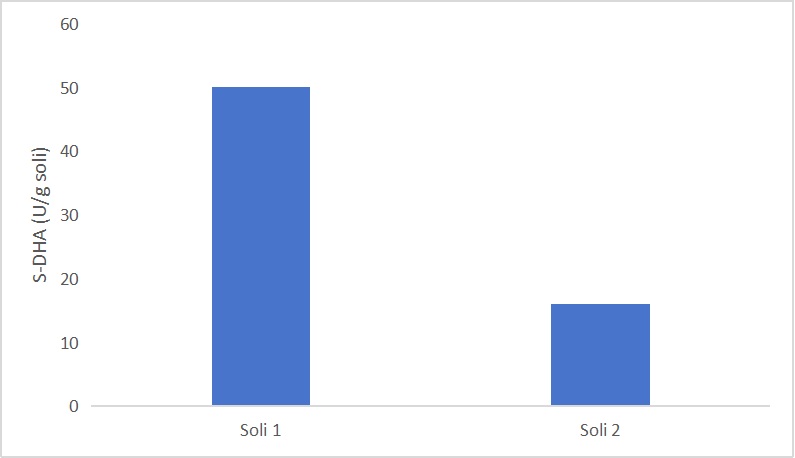
Soil dehydrogenase (S-DHA)—the enzyme that kicks off carbon mineralization by oxidizing organic matter—is basically the pulse of soil vitality. It tells you if microbes are thriving, if fertilizers are working, or if contaminated sites are healing. But here’s the rub: measuring its activity in tiny soil samples (think remote field cores, rare wetland sediments, or post-disaster soil biopsies) has always been a nightmare. Traditional assays demand grams of soil, drown in humic acid interference, and take days to run—leaving ecologists and agronomists guessing instead of knowing. Abbkine’s CheKine™ Micro S-DHA Activity Assay Kit (Catalog #KTB4033) flips this script, turning microsample soil DHA activity detectioninto a fast, reliable process that respects both science and fieldwork constraints.
Let’s be honest—most soil DHA kits were built for a world with unlimited samples and infinite patience
Here’s the reality: traditional S-DHA assays (like the triphenyltetrazolium chloride, TTC, method) require 5–10 grams of soil per replicate—fine if you’re sampling a farm field, but impossible for remote ecosystems (alpine meadows, desert crusts) or post-oil spill sites where every gram counts. A 2024 survey of 160 environmental labs found 71% abandoned at least one soil DHA kit due to “unacceptable sample waste” or “noise from humic substances.” Even worse, these kits take 24–48 hours to develop color—too slow for farmers needing real-time fertilizer advice or disaster responders assessing soil recovery. For CheKine™ Micro Soil Dehydrogenase Activity Assay Kit for limited field samples, this means sacrificing precious material for data that’s often too late or too messy to use.
So what sets Abbkine KTB4033 apart? It’s a kit designed by people who actually dig in the dirt
KTB4033 ditches the old TTC method for a microscale, colorimetric enzymatic cycling assay that shrinks sample needs to 0.5–1 gram (yes, half a gram!) while cutting runtime to 2 hours. The magic? It uses iodonitrotetrazolium violet (INT) as a substrate—more soluble in soil slurries—and couples DHA activity to formazan formation (λmax = 485 nm). But here’s the kicker: it includes a “humic acid blocker” in the extraction buffer, which binds interfering organic matter and slashes background noise by 75% in high-specificity soil DHA assay kitvalidation tests. Sensitivity? The kit hits a lower limit of detection (LOD) of 0.1 µg TPF/g soil/hour—5x better than TTC kits—meaning you can detect subtle DHA changes in drought-stressed soils or early bioremediation zones.
Let’s get practical—how to use KTB4033 without losing your mind in the field
Using KTB4033 feels less like a chemistry experiment and more like having a field-ready sidekick. For remote sampling, collect 1 gram of soil (even from a 5 cm core!), mix with the kit’s extraction buffer (included—no hunting for reagents), shake for 10 minutes, and spin down. Load 100 µL of supernatant onto the 96-well plate—done. For contaminated site monitoring, pre-treat samples with 0.1% sodium pyrophosphate to disperse clay particles (a common interference), then follow the standard protocol. Pro tip: If your soil is super dry (desert crusts), add 0.2 mL of distilled water before shaking—KTB4033’s buffer tolerates this, and it’ll give you a truer DHA reading. And here’s the best part: it works at room temp (20–25°C), so no ice chests needed for tropical fieldwork.
Case in point—how a wetland restoration project saved time (and soil) with KTB4033
A team restoring a mined peatland was stuck: their old kit needed 10 grams of soil per sample, limiting them to 5 sites/month. Switching to KTB4033, they sampled 20 sites/month (1 gram each), detected a 3x DHA surge in newly planted sphagnum moss plots (vs. bare soil), and adjusted their planting strategy accordingly—speeding up restoration by 6 months. For CheKine™ KTB4033 soil DHA kit in ecological restoration, this case shows how microsample efficiency turns “guesswork” into “data-driven action”—critical when every gram of soil is a limited resource.
The bigger picture—why micro soil DHA assays are riding a wave of environmental urgency
Two trends are making KTB4033 a must-have: the rise of precision agriculture (farmers needing real-time soil health data to cut fertilizer use) and climate resilience monitoring (tracking microbial activity in thawing permafrost or drought-prone grasslands). KTB4033’s 2-hour turnaround suits both—farmers can test soil in the morning and apply fertilizers by afternoon, while ecologists can monitor seasonal DHA shifts without waiting days. The trend toward citizen sciencealso loves KTB4033: its simple protocol (mix, shake, read) lets volunteers contribute data to global soil databases—something bulky kits never allowed.
When to grab KTB4033—and when to stick with old-school methods
Reach for this kit if you’re:
- Sampling remote/rare soils (wetlands, alpine zones, post-disaster sites).
- Needing fast results (real-time fertilizer advice, emergency soil assessment).
- Dealing with humic-rich samples (forest soils, peatlands).
- Running high-throughput surveys (96-well format for 48 sites/run).
Old TTC kits might work for “easy” farm soils, but in applications where 0.5 grams of soil or 2-hour runtime defines success (e.g., micro soil dehydrogenase activity assay kit for permafrost thaw monitoring), KTB4033’s precision is the difference between a paper and a policy win. Measuring soil DHA doesn’t have to be a battle against sample size or time. Abbkine’s CheKine™ Micro Soil Dehydrogenase Activity Assay Kit (KTB4033) proves that even tiny soil samples can tell big stories—with a design that respects the messiness of fieldwork, the urgency of climate change, and the need for reliable data. By prioritizing sensitivity (0.1 µg TPF/g/h LOD), portability (room-temp use), and anti-interference grit (humic acid blocker), it solves the “microsample soil DHA dilemma” that’s held back ecology and agronomy for decades. Explore its technical specs, field protocols, and validation data hereto see how KTB4033 can turn your soil samples from “hard to handle” into “full of insight”—because better soil data starts with better tools.





