




CheKine™ Micro Serum Zinc Assay Kit (Abbkine KTB2140): A Reliable Tool for Precise Zinc Quantification in Biological Samples
Zinc, an essential trace element, plays irreplaceable roles in human physiology—regulating enzyme activity, immune function, DNA synthesis, and metabolic pathways. Its serum concentration serves as a critical biomarker for diagnosing zinc deficiency (linked to growth retardation, immune impairment, and neurological disorders) and monitoring conditions like diabetes, chronic kidney disease, and malnutrition. Yet, traditional serum zinc detection methods often present barriers: atomic absorption spectrometry (AAS) requires expensive equipment and specialized training, while generic colorimetric assays suffer from interference by other metal ions (e.g., iron, copper) or sample matrix components. Abbkine’s CheKine™ Micro Serum Zinc Assay Kit (catalog KTB2140, available at https://www.abbkine.com/?s_type=productsearch&s=KTB2140) addresses these industry pain points with a streamlined, specific design. Priced at $79 for 48 tests/48 standards, this newly launched kit combines high specificity, user-friendly operation, and compatibility with standard microplate readers—making accurate zinc quantification accessible to clinical labs, academic researchers, and public health institutions alike. As the demand for rapid, cost-effective trace element detection grows, KTB2140 emerges as a pivotal solution—let’s explore its technical strengths, industry relevance, and the value it brings to diverse applications.
Addressing these limitations, Abbkine’s CheKine™ Micro Serum Zinc Assay Kit KTB2140 leverages a zinc-specific colorimetric reaction to deliver unambiguous results. Unlike non-selective assays that rely on generic metal-chelation chemistry, this kit uses a proprietary chromogenic reagent that forms a stable, colored complex exclusively with Zn²⁺ ions. The complex exhibits a sharp absorbance peak at ~560nm, with intensity directly proportional to serum zinc concentration—ensuring minimal interference from other common metal ions (Fe³⁺, Cu²⁺, Mg²⁺) or serum components like proteins, lipids, and bilirubin. Abbkine’s rigorous formulation optimization includes a chelating buffer that sequesters interfering ions without affecting Zn²⁺-reagent binding, a critical advantage over low-cost kits that require extensive sample pre-treatment. For clinical labs testing patient serum or researchers analyzing biological samples (e.g., plasma, tissue homogenates), this specificity eliminates false positives or inaccurate readings—ensuring that data reflects true zinc concentration, a requirement for diagnostic decision-making and research reproducibility.
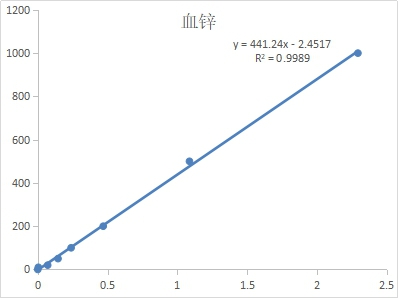
At the core of KTB2140’s utility is its simplified workflow, tailored to meet the needs of high-throughput settings and labs with limited technical resources. The kit’s protocol requires no specialized sample preparation: simply dilute serum samples 1:10 with the provided Sample Dilution Buffer (to reduce matrix effects), add the reaction mix (chromogenic reagent + assay buffer), incubate at 37°C for 20 minutes, and read absorbance on a standard microplate reader. Total assay time is under 1 hour, a significant improvement over AAS (which can take hours per sample) or flame photometry (which requires sample digestion). The 48-test format is ideal for small to mid-sized labs, while the inclusion of 48 pre-calibrated zinc standards (0–20 μmol/L) enables direct standard curve generation—no need to purchase external reference materials. This user-centric design reduces human error, accelerates sample processing, and ensures consistency across batches—critical for clinical diagnostics where result reliability directly impacts patient care.
Beyond serum, the CheKine™ Micro Serum Zinc Assay Kit KTB2140 exhibits broad compatibility with diverse biological and environmental samples, expanding its application scope. It is validated for use with plasma (EDTA or heparin-anticoagulated), tissue homogenates (liver, kidney, muscle), cell lysates (adherent and suspension cells), and even food or feed samples (after appropriate dilution). This versatility makes it a valuable tool for cross-disciplinary research: public health researchers can screen population serum zinc levels for deficiency prevalence, nutrition scientists can quantify zinc in fortified foods, and toxicologists can measure zinc accumulation in tissues exposed to environmental contaminants. The kit’s detection range (0.5–20 μmol/L) covers the physiological serum zinc concentration in humans (10–18 μmol/L) and most biological samples, with adjustable dilution factors to accommodate high-zinc samples (e.g., zinc supplements, industrial effluents). This flexibility eliminates the need for multiple assay kits for different sample types, reducing lab costs and simplifying inventory management.
From an industry perspective, KTB2140 aligns with two key trends shaping trace element detection: the shift toward point-of-care (POC) and low-resource setting compatibility, and the growing emphasis on standardization in clinical and research workflows. Traditional methods like AAS are impractical for fieldwork or resource-limited clinics, creating a gap in global zinc deficiency screening—especially in developing regions where zinc deficiency is endemic. KTB2140’s microplate format and compatibility with portable microplate readers make it suitable for POC testing, enabling on-site zinc quantification without relying on centralized labs. Additionally, the kit’s batch-to-batch consistency (ensured by rigorous quality control testing of each component) supports compliance with clinical laboratory standards (e.g., CLIA, ISO 15189), a requirement for diagnostic labs seeking regulatory approval. As the global focus on micronutrient health intensifies—driven by initiatives like the WHO’s Micronutrient Deficiency Control Program—tools like KTB2140 are becoming essential for scaling screening and monitoring efforts.
Practical optimization of assay protocols further enhances KTB2140’s performance and reproducibility. For serum samples with high lipid content (e.g., from obese patients), centrifuge at 10,000×g for 5 minutes to remove lipid layers before dilution—this prevents light scattering and ensures accurate absorbance readings. For tissue homogenates or cell lysates, use the kit’s Sample Dilution Buffer to dilute samples 1:50 to 1:100, depending on zinc content, to fit the detection range. Incubation time can be adjusted for low-concentration samples: extend to 30 minutes at 37°C to enhance color development without increasing background. A critical best practice: run blank wells (Sample Dilution Buffer + reaction mix) for each assay to subtract background absorbance, especially when testing dilute samples. Storage of kit components is equally important: store all reagents at -20°C, aliquot the chromogenic reagent to avoid repeated freeze-thaw cycles, and protect from direct light to maintain stability—these steps ensure the kit retains performance for up to 12 months.
Cost-effectiveness stands as another key advantage of KTB2140, making high-quality serum zinc detection accessible to labs with constrained budgets. At $79 for 48 tests, the kit offers a cost-per-assay of ~$1.65—far lower than AAS (which requires expensive consumables and maintenance) or specialized zinc assay kits from competitors. For academic labs studying zinc’s role in disease or nutrition, this affordability enables large-scale studies with multiple replicates, improving statistical power. For clinical labs in low-resource settings, it eliminates the need for costly equipment investments, redirecting funds to other critical resources. The kit’s all-inclusive design—containing assay buffer, chromogenic reagent, sample dilution buffer, and zinc standards—further reduces hidden costs, as no additional reagents are required. This balance of performance and affordability positions KTB2140 as a democratizing tool, ensuring that accurate zinc quantification is not limited to well-funded institutions.
In conclusion, Abbkine’s CheKine™ Micro Serum Zinc Assay Kit (catalog KTB2140) is a precision-engineered solution that redefines accessible, reliable zinc quantification. Its zinc-specific colorimetric reaction eliminates interference, simplified workflow supports high-throughput and POC testing, broad sample compatibility spans clinical and research applications, and cost-effectiveness makes it accessible worldwide. As the industry continues to prioritize speed, standardization, and accessibility in trace element detection, KTB2140 aligns perfectly with these goals—empowering researchers, clinicians, and public health professionals to advance understanding and management of zinc-related health conditions. Whether you’re screening for zinc deficiency, quantifying zinc in biological samples, or monitoring zinc levels in food or environmental matrices, this kit delivers consistent, publishable results that drive meaningful impact. To integrate KTB2140 into your workflow, visit its product page at https://www.abbkine.com/?s_type=productsearch&s=KTB2140 and elevate your zinc detection capabilities.
For researchers and clinicians seeking a trustworthy, versatile, and cost-effective serum zinc assay kit, KTB2140 stands out as a leader in its class. Its technical strengths, industry-aligned design, and commitment to accessibility make it an indispensable asset for any lab working with trace element analysis—proving that precision and practicality can coexist in a single, powerful tool.





