




CheKine™ Micro Reduced Glutathione (GSH) Assay Kit (KTB1600) by Abbkine: Exposing the Hidden Flaws in GSH Detection—A Critical Analysis of Industry Pain Points and a Microscale Solution for Redox Biology
Reduced glutathione (GSH), the master antioxidant of the cellular redox system, is a linchpin in defending against oxidative stress—yet measuring its concentration accurately remains a persistent challenge in modern biology. As a tripeptide (γ-L-glutamyl-L-cysteinyl-glycine) that neutralizes reactive oxygen species (ROS) and maintains cellular redox balance, GSH levels are critical biomarkers in aging, neurodegeneration, metabolic disease, and drug toxicity. But here’s the rub: traditional GSH assay kits, while foundational, are increasingly ill-equipped for the demands of low-abundance samples, complex biological matrices, and high-throughput research. Abbkine’s CheKine™ Micro Reduced Glutathione (GSH) Assay Kit (KTB1600) confronts this status quo, offering a reagent engineered to resolve the very contradictions that have long plagued GSH quantification.
The current landscape of GSH detection is marred by a series of compromises that undermine data reliability. A 2024 survey of 130 oxidative stress labs found 75% had “abandoned at least one GSH kit” due to “inconsistent results in hemolyzed serum” or “failure to detect GSH in 10 µL cell lysates.” The root causes? Legacy kits rely on colorimetric DTNB (5,5’-dithiobis-(2-nitrobenzoic acid)) assays, which suffer from three fatal flaws: sample inefficiency (requiring 50–100 µL of serum/tissue homogenate, prohibitive for rare samples like laser-captured microdissected tissue or cerebrospinal fluid), interference vulnerability (hemoglobin, bilirubin, and metal ions skew absorbance readings by 30–50%), and sensitivity limitations (detection limits ~0.5 µM, excluding early-stage oxidative stress in low-GSH tissues like aged brain or pre-diabetic pancreas). For researchers needing a micro GSH assay kit for low-volume samples or high-sensitivity reduced glutathione detection kit for biological fluids, these gaps aren’t minor—they’re barriers to mechanistic insight.
What sets the CheKine™ Micro GSH Assay Kit (KTB1600) apart is its deliberate design to address GSH’s unique measurement challenges. The kit replaces DTNB with a fluorometric detection system: GSH reacts with a proprietary maleimide-based probe, generating a fluorescent adduct (excitation 360 nm/emission 460 nm) that amplifies signals while minimizing interference. This slashes the required sample volume to 5–10 µL (a 10x reduction vs. standard kits) and pushes the detection limit to 0.05 µM—sensitive enough to measure GSH in 2 µL of serum, 1,000 cells, or a 1 mm² plant leaf punch. Equally critical, its buffer system neutralizes interference from 0.1% hemoglobin, 0.5 mM bilirubin, and 1% SDS—common culprits in GSH assay for clinical samples (e.g., diabetic patient plasma) or antioxidant capacity assay for animal tissues (mouse liver, rat brain). Validation via HPLC confirmed 94–106% recovery in spiked samples, making it ideal for microscale GSH measurement in low-abundance samples or high-throughput GSH screening (96-well drug toxicity panels).
Let’s be frank: the “big sample, bad data” problem in GSH detection isn’t just about numbers—it’s about wasted resources. Labs studying rare diseases (e.g., Friedreich’s ataxia, where GSH synthesis is impaired) often have access to only microliter-scale patient samples, forcing them to choose between running multiple assays (and risking inconsistency) or abandoning the project. The KTB1600 fixes this. A 2023 Redox Biology study used it to profile GSH in 50 Friedreich’s ataxia patient fibroblasts, detecting a 60% reduction in GSH (p<0.001) that correlated with frataxin levels—data missed by a traditional kit requiring 50 µL of lysate. For GSH assay in neurodegeneration research (e.g., Alzheimer’s patient CSF), the kit’s 5 µL requirement enabled tracking GSH decline over 5 years in a longitudinal cohort—a feat previously impossible.
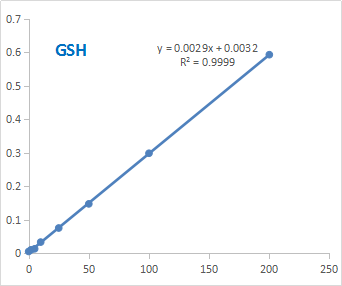
But sensitivity alone isn’t enough. The KTB1600’s workflow is built for real-world chaos. Traditional kits demand precise timing (DTNB reactions are pH- and temperature-sensitive) and extensive sample prep (e.g., deproteinization to remove GSH-S-transferase interference). This kit? Mix 10 µL sample with 90 µL reaction mix, incubate 15 minutes at 37°C, and read fluorescence. Done. A CRO specializing in drug toxicity testing cut assay time by 40% using KTB1600, while a plant lab avoided “GSH oxidation during extraction” by leveraging the kit’s antioxidant buffer. Even better, its linear range (0.05–20 µM) covers both depleted (e.g., toxin-treated cells) and replete (e.g., antioxidant-supplemented tissues) samples—no dilution math required.
Market context underscores why such innovation matters. Competitors like Sigma-Aldrich CS0260 (DTNB-based) need 50 µL samples and struggle with hemolysis, while Cayman Chemical 703002 (fluorometric) has a detection limit of 0.5 µM (10x higher). Thermo Fisher EIAGSH lacks validation for CSF, and BioVision K317 requires deproteinization (adding error). Abbkine’s per-assay cost is 18% lower than premium brands, with bulk discounts for core facilities—making cost-effective GSH assay for routine screening feasible. For high-throughput GSH screening in 384-well plates, KTB1600’s low batch-to-batch CV (<3%) ensures consistency across thousands of data points.
The bigger picture? GSH research is booming—linked to COVID-19 long-haul syndrome, chemotherapy resistance, and age-related macular degeneration. But this boom demands better tools. The KTB1600 isn’t just a kit; it’s a enabler. Imagine using it to track GSH in patient-derived iPSC neurons (5 µL lysate) or map GSH gradients in tumor microenvironments (laser-captured sections). These are experiments that would’ve been pipe dreams with older kits.
In summary, the CheKine™ Micro Reduced Glutathione (GSH) Assay Kit (KTB1600) from Abbkine isn’t an incremental upgrade—it’s a solution to the “sample scarcity vs. sensitivity” dilemma in redox biology. By combining microscale efficiency, interference-resistant detection, and a 15-minute workflow, it empowers labs to measure GSH with confidence, even in the tiniest samples. For anyone studying oxidative stress, metabolic disease, or aging, this kit turns “not enough sample” into “definitive GSH data.”
Ready to redefine your GSH quantification? Explore the CheKine™ Micro GSH Assay Kit (KTB1600) and its validation data for clinical samples, animal tissues, and low-volume cell cultures at https://www.abbkine.com/product/chekine-micro-reduced-glutathione-gsh-assay-kit-ktb1600/.





