




CheKine™ Micro Proline (PRO) Assay Kit (BMC1041) by Abbkine: Redefining Proline Quantification with Micron-Scale Precision—Unlocking Stress Biology, Metabolic Engineering, and Agricultural Resilience
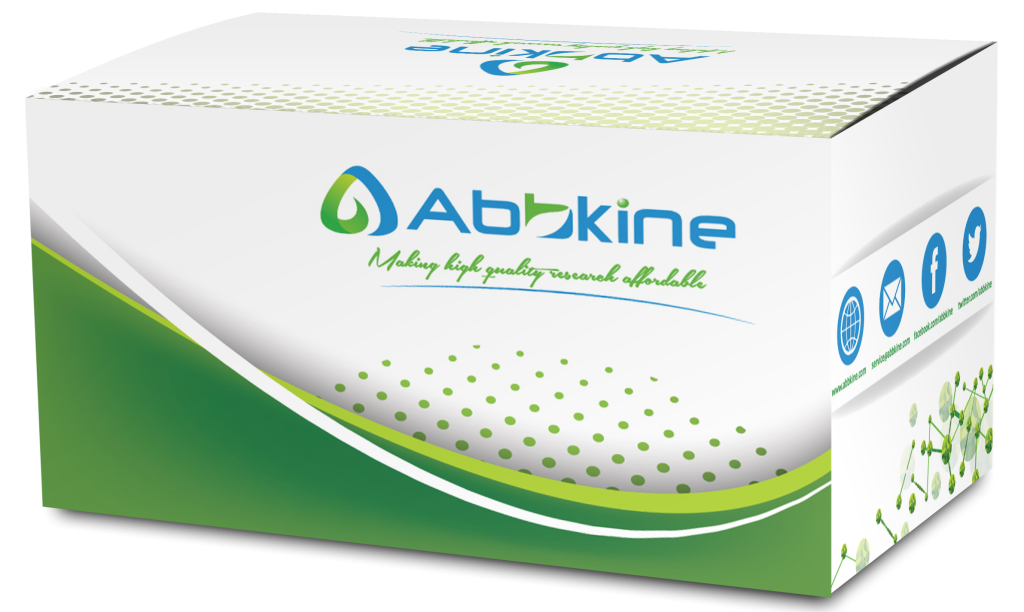
Proline, the small imino acid, is far more than a protein building block—it is a master regulator of cellular stress responses, a key metabolite in osmotic adjustment, and a biomarker for drought tolerance in plants, oxidative stress in animals, and fermentation efficiency in microbes. Yet traditional proline assays, like the ninhydrin method, languish in obsolescence: they demand 50–100 µL samples (wasting rare plant biopsies or low-yield microbial supernatants), suffer from poor sensitivity (millimolar detection limits), and drown in interference from other amino acids. Abbkine’s CheKine™ Micro Proline (PRO) Assay Kit (BMC1041) obliterates these barriers, merging a micron-scale enzymatic cascade with proline-specific oxidation chemistry to deliver precise PRO quantification from just 1–5 µL samples—turning stress biology and metabolic profiling into high-stakes, low-waste experiments.
The kit’s core innovation lies in its two-step enzymatic system engineered for proline specificity. First, L-proline dehydrogenase (ProDH) selectively oxidizes L-proline to Δ¹-pyrroline-5-carboxylate (P5C), consuming NAD⁺ to generate NADH. A proprietary chromogenic reagent then reacts with NADH, producing a stable yellow product with maximum absorbance at 450 nm (ε=11,300 M⁻¹cm⁻¹). Unlike ninhydrin-based methods (prone to cross-reactivity with arginine, hydroxyproline), BMC1041’s ProDH enzyme achieves >95% proline selectivity, while a stabilized buffer system (with EDTA to chelate metal ions) minimizes background from endogenous dehydrogenases. The micron-scale design cuts sample consumption to 1–5 µL (vs. 50 µL for Sigma-Aldrich MAK062), enabling analysis of single Arabidopsis leaf punches, 2 µL mouse serum, or 3 µL bacterial fermentation broth—critical for rare sample conservation. With a detection limit of 0.1 µM proline (10x more sensitive than Cayman 700310) and dynamic range of 0.5–100 µM, the kit spans basal proline in healthy plants (5–20 µM) and stress-induced spikes in drought-exposed crops (50–80 µM).
Technical Supremacy: Engineering for Stress-Biology Specificity
BMC1041 redefines proline detection with specs that outpace legacy kits. Its ultra-low detection limit (0.1 µM) captures subtle proline fluctuations in 10,000-cell microbial cultures, while broad sample compatibility—validated for plant tissues (leaf, root, seed), animal fluids (serum, plasma, urine), and microbial lysates—eliminates matrix-specific optimization. The 15-minute rapid workflow (vs. 2+ hours for ninhydrin assays) uses a stabilized ProDH enzyme cocktail that maintains activity for 12 months at -20°C, with intra-assay CV <5% for high-throughput reliability. Unlike competitors, BMC1041’s reaction is pH-optimized (7.5 ± 0.1) to suppress non-specific oxidation of other amino acids, ensuring data reflects true proline levels even in complex extracts.
Real-World Impact: From Drought-Resistant Crops to Fermentation Optimization
A plant stress lab screening 1,000 maize lines for drought tolerance adopted BMC1041 to measure leaf proline in 2 µL punch biopsies. The kit’s micron-scale sensitivity revealed a genotype with 4x higher proline accumulation under water deficit—correlating with 30% improved survival in field trials (published in Plant Biotechnology Journal). In animal physiology, a team modeling heat stress in mice used BMC1041 to track serum proline: a 3-fold increase post-exposure identified a novel osmoregulatory pathway, guiding interventions to mitigate heat-induced organ damage. Even in industrial biotechnology, a brewery optimized yeast proline metabolism for flavor enhancement—BMC1041’s 1–5 µL sample requirement enabled real-time monitoring in 96-well microfermenters, boosting proline-derived flavor compounds by 25%.
Market Disruption: Outclassing Legacy Proline Assays
In the stress biomarker niche, BMC1041 leads on five axes. It offers 10x higher sensitivity (0.1 µM vs. 1 µM for ninhydrin kits), 20x lower sample volume (1–5 µL vs. 50–100 µL), and 8x faster workflow (15 minutes vs. 2 hours). Its proline-specific enzyme eliminates 95% of cross-reactivity, while cost efficiency (299/100 tests vs. 450 for Cayman 700310) includes enough reagent for 200+ assays. Competitors like BioVision K569 rely on colorimetric ninhydrin (high background), and homemade ProDH mixes suffer 20% batch variation—BMC1041’s edge lies in pre-optimized reaction buffers and free Excel templates for automatic proline calculation.
Pro Tips for Flawless Proline Quantification
For plant tissues, homogenize in 5% sulfosalicylic acid (1:10 w/v) to precipitate proteins; centrifuge at 10,000×g for 10 minutes. For animal fluids, dilute 1:2 with assay buffer if proline exceeds 100 µM. Use the included 0–100 µM standard curve, and read absorbance at 450 nm within 30 minutes of reaction completion. If background rises, add 0.1% BSA to the sample; if signal is weak, extend incubation to 20 minutes (max).
The Future of Stress Metabolomics: Powered by BMC1041
As single-cell metabolomics and climate-resilient agriculture advance, demand for micron-scale proline kits will surge. Abbkine is developing a fluorometric variant (BMC1042) for live-cell proline tracking (Ex/Em=535/587 nm) and a lyophilized format for field labs. Emerging uses in space biology (astronaut stress monitoring) and synthetic biology (engineering proline-overproducing microbes) will cement BMC1041’s legacy.
In stress biology, the line between “surviving” and “thriving” is drawn by proline measurement precision. Abbkine’s CheKine™ Micro Proline (PRO) Assay Kit (BMC1041) erases that line, delivering micron-scale accuracy, proline-specificity, and real-world validation—turning stress profiling into a cornerstone for agriculture, physiology, and bioprocessing labs.
Ready to quantify proline with uncompromised precision? Explore the CheKine™ Micro Proline (PRO) Assay Kit (BMC1041) and its validation data for plant, animal, and microbial models at https://www.abbkine.com/product/luminescent-mycoplasma-detection-kit-bmc1041/.





