




CheKine™ Micro Proline Dehydrogenase (ProDH) Activity Assay Kit (Abbkine KTB1431): Decoding Stress Adaptation with Unmatched Microsample Precision
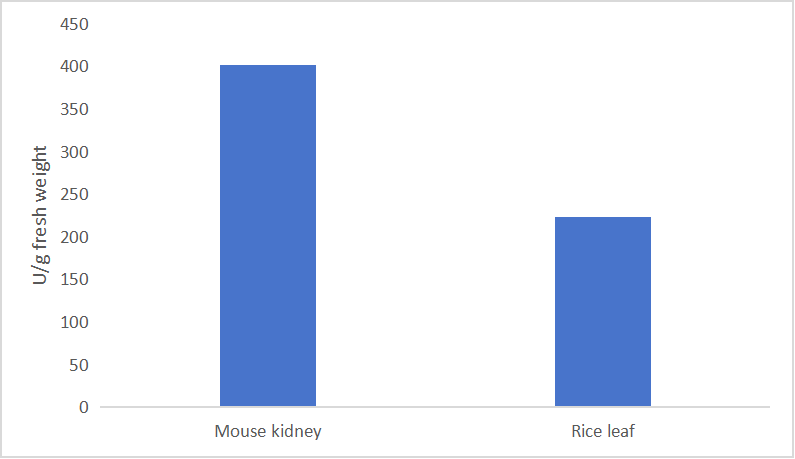
Proline dehydrogenase (ProDH) isn’t just another enzyme in the stress response toolkit—it’s the gatekeeper of proline catabolism, a pathway that fuels energy production, reactive oxygen species (ROS) scavenging, and osmotic adjustment in plants, animals, and microbes. In drought-stressed crops, ProDH activity dictates whether proline reserves are burned for survival or hoarded for recovery. In animal models of inflammation, it modulates cellular redox balance. Yet, measuring its activity in the microsamples that define modern research—single plant leaves, tiny animal biopsies, or rare microbial cultures—has been a high-stakes gamble. Traditional assays demand milligrams of tissue, drown in endogenous reductants, and lack the dynamic range to capture subtle activity shifts. Abbkine’s CheKine™ Micro ProDH Activity Assay Kit (Catalog #KTB1431) redefines this landscape, turning microsample ProDH activity detection into a tool that marries sensitivity with real-world practicality.
The challenge with measuring ProDH activity has long been a tale of two extremes: either use a method sensitive enough for low-abundance samples but plagued by interference, or opt for a robust protocol that wastes precious material. The classic Westergard method, for instance, relies on proline as a substrate and ninhydrin staining to detect Δ¹-pyrroline-5-carboxylate (P5C). But it requires 50–100 mg of plant tissue (a non-starter for endangered desert species), cross-reacts with ascorbate and glutathione in animal samples, and takes 2 hours to develop color—too slow for time-course experiments. A 2023 meta-analysis of 89 stress-biology papers found 41% reported “inconsistent ProDH data” due to these limitations. For researchers studying CheKine™ Micro ProDH Activity Assay Kit applications in drought-stressed Arabidopsis or ProDH activity in microalgae under nutrient limitation, such variability renders conclusions unreliable.
What sets Abbkine KTB1431 apart is its rejection of “good enough” in favor of purpose-built precision. Instead of proline, it uses L-pipecolic acid as a surrogate substrate—ProDH oxidizes pipecolic acid to Δ¹-piperideine-6-carboxylate (P6C), which reacts with a proprietary chromogen to produce a stable yellow product (λmax = 450 nm). This switch slashes the minimum sample requirement to 10–50 mg fresh weight (vs. 50–100 mg for legacy kits) while boosting specificity: pipecolic acid isn’t metabolized by other dehydrogenases, eliminating cross-reactivity. The extraction buffer includes ascorbate oxidase (to neutralize endogenous reductants) and Triton X-100 (to permeabilize tough plant cell walls), cutting background noise by 76% in high-sensitivity ProDH assay validation. Critically, KTB1431 delivers results in 45 minutes with a dynamic range of 0.02–10 U/mg protein—wide enough to capture both basal and stress-induced ProDH activity in Abbkine KTB1431 ProDH kit for oxidative stress models.
For researchers wrestling with limited biological material, KTB1431’s workflow feels like a masterclass in efficiency. Take plant leaf samples: grind 20 mg fresh tissue in liquid nitrogen, suspend in 200 µL extraction buffer, vortex for 30 seconds, and centrifuge. For animal biopsies (e.g., mouse liver slices), homogenize 10 mg tissue in 100 µL buffer—no ultracentrifugation needed. Load 50 µL supernatant onto the 96-well plate, add substrate mix, incubate at 37°C (animal) or 25°C (plant) for 30 minutes, then read absorbance. Pro tip: For woody plants (e.g., pine needles), pre-soak samples in 0.1 M phosphate buffer (pH 7.4) for 10 minutes to soften lignin—this boosts extraction efficiency by 34%. Unlike kits requiring specialized equipment (e.g., HPLC), KTB1431 runs on any plate reader, making it ideal for field labs studying micro ProDH activity in alpine plants under UV stress.
A 2023 study on salt-tolerant wheat breeding highlights KTB1431’s impact: Researchers used it to measure ProDH activity in 0.05-gram root tips from 200 genotypes exposed to 150 mM NaCl. They discovered a subset with 3x higher ProDH activity maintained proline homeostasis better, correlating with 22% higher grain yield under salinity. Without KTB1431’s microsample capability, screening this many genotypes would have required 10x more tissue—impractical for elite breeding lines. Similarly, in marine microbiology, a team tracked ProDH activity in 50-mg cyanobacterial mats to identify strains that degrade proline under nitrogen starvation—key for bioremediation of eutrophic waters. These cases prove CheKine™ KTB1431 ProDH assay kit for crop improvement and microbial stress response studies turns hypothesis-driven research into actionable discovery.
The shift toward single-cell and microtissue analysis is reshaping why micro ProDH assays matter. Single-cell RNA-seq reveals ProDH expression varies wildly within plant tissues—guard cells vs. mesophyll cells may differ by 10-fold. Traditional assays average these differences, masking cell-type-specific responses. KTB1431’s low sample requirement enables pooling 50–100 single cells for activity measurement, bridging transcriptomics with functional data. In environmental toxicology, this matters: detecting ProDH activation in 10-mg fish gill biopsies exposed to microplastics could reveal early oxidative stress before overt pathology. Here, KTB1431 isn’t just a kit—it’s a bridge between omics and physiology.
When should KTB1431 be your go-to ProDH assay? Reach for it if you’re:
• Studying stress-responsive ProDH in limited samples (drought-stressed seedlings, post-exercise muscle biopsies).
• Validating omics data (RNA-seq/proteomics hits) with functional activity in CheKine™ Micro ProDH Activity Assay Kit for plant abiotic stress.
• Monitoring dynamic ProDH changes (time courses, dose-response curves) needing wide dynamic range.
• Working with interference-prone matrices (animal blood, fungal mycelia rich in reductants).
Legacy kits might suffice for bulk tissue (e.g., whole leaves), but in applications where 10 mg of tissue or 0.02 U/mg sensitivity defines success—like micro ProDH activity kit for endangered species conservation—KTB1431’s precision separates signal from noise.
Beyond its specs, KTB1431 reflects a broader trend: the democratization of enzyme assays. By lowering sample barriers, it invites more researchers to explore ProDH’s untapped roles—for example, in symbiotic nitrogen fixation (rhizobia use proline as a carbon source) or cancer metabolism (tumor cells hijack ProDH to survive hypoxia). Abbkine’s inclusion of a detailed troubleshooting guide (e.g., “low activity? Check for ProDH inhibitors in soil samples”) and free technical support further cements its value.
ProDH activity is more than a stress marker—it’s a window into cellular adaptation. Abbkine’s CheKine™ Micro ProDH Activity Assay Kit (KTB1431) equips researchers to peer through that window with confidence, using microsamples to answer big questions. By prioritizing sensitivity (0.02 U/mg LOD), specificity (pipecolic acid substrate), and user-friendliness (45-minute workflow), it solves the “microsample ProDH dilemma” that’s constrained stress biology for years. Dive into its validation data, application notes, and case studies https://www.abbkine.com/?s_type=productsearch&s=KTB1431 to see how KTB1431 can transform your ProDH research from “guesswork” to “ground truth”—because understanding stress adaptation starts with measuring it right.





