




CheKine™ Micro Lipase (LPS) Activity Assay Kit (Abbkine KTB2241): A Practical Guide to Precise Lipase Quantification
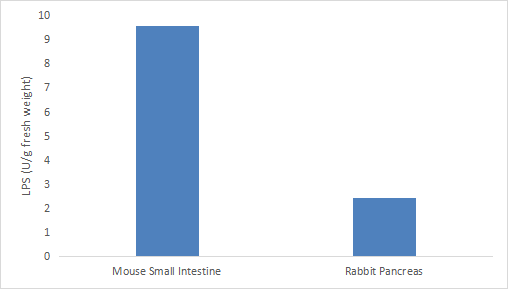
Lipase (LPS) — a key enzyme driving lipid hydrolysis — is indispensable across clinical diagnostics (pancreatitis screening), food biotechnology (oil processing), and microbial research (industrial enzyme production). Yet, inconsistent sample handling, non-specific substrate cleavage, and unaddressed matrix interference often lead to unreliable activity data, frustrating researchers and quality control teams alike. Abbkine’s CheKine™ Micro Lipase (LPS) Activity Colorimetric Assay Kit (catalog KTB2241, available at https://www.abbkine.com/?s_type=productsearch&s=KTB2241) solves these pain points with a specificity-focused, user-friendly design. Priced at $59 for 48 tests/48 standards, this newly launched kit delivers accurate lipase activity measurement across diverse samples — a value proposition that resonates with labs seeking rigor without breaking the bank. This practical guide offers actionable, detail-rich strategies to master the kit, ensuring you unlock its full potential for reproducible, publication-worthy results.
Tailoring sample preparation to preserve lipase integrity is the first line of defense against unreliable activity readings. Different sample types demand targeted handling: for serum/plasma (clinical diagnostics), dilute 1:10 with the kit’s Sample Dilution Buffer to reduce protein matrix interference — avoid hemolyzed samples, as released hemoglobin inhibits lipase activity. For tissue samples (e.g., pancreatic, adipose), homogenize 50mg of fresh tissue in 1ml ice-cold Lysis Buffer (supplemented with 1mM PMSF to prevent proteolysis) using a glass-Teflon homogenizer — keep the homogenate on ice throughout to avoid thermal denaturation. For microbial cultures (e.g., Pseudomonas, Candida), harvest 1×10⁸ cells by centrifugation, resuspend in Lysis Buffer, and lyse via sonication (3×15-second pulses) — clarify lysates at 12,000×g for 10 minutes to remove cell debris. A critical step: quantify total protein concentration (via BCA assay) immediately post-preparation — normalizing lipase activity to protein content eliminates variability from sample concentration differences.
Reagent handling and reaction condition fine-tuning separate accurate lipase activity data from misleading results. Start with reagent preparation: bring all kit components to room temperature (25°C) for 15 minutes — cold substrates or buffers slow lipase-catalyzed hydrolysis (triglyceride → fatty acids + glycerol) and reduce color development. The kit’s proprietary chromogenic substrate is optimized for lipase specificity, but pH and temperature matter: adjust the reaction mix to pH 7.5–8.0 (lipase’s optimal range) using the provided pH-adjustment buffer, and incubate at 37°C (human/animal lipases) or 40°C (microbial lipases). Incubation time is sample-dependent: 30 minutes for high-activity samples (e.g., pancreatic tissue), 60 minutes for low-activity samples (e.g., environmental microbes) — avoid over-incubation, as non-specific esterases may cleave the substrate. Pro tip: Use a multichannel pipette to dispense reaction mix evenly across wells — inconsistent volumes are a top cause of replicate variability.
Even with careful sample and reagent prep, common contaminants can skew CheKine™ Micro Lipase (LPS) Activity Assay Kit KTB2241 results — here’s how to mitigate interference. High concentrations of serum proteins or lipids can block substrate-lipase interactions: add 1% Triton X-100 to the Sample Dilution Buffer for viscous samples (e.g., adipose tissue homogenates) to solubilize lipids. Metal ions like Ca²⁺ or Mg²⁺ may activate or inhibit lipase: include a “metal-free control” by adding 5mM EDTA to a parallel well, then subtract its activity from the test sample to isolate lipase-specific activity. Reducing agents (e.g., DTT) can degrade the chromogenic product: if your lysis buffer includes them, dilute samples 1:20 with assay buffer to minimize impact. A quick validation step: run a “substrate-only blank” (no sample) to subtract background absorbance — this is non-negotiable for low-activity samples where background noise can mask true lipase activity.
Turning raw absorbance values into biologically meaningful lipase activity requires rigorous standardization. First, construct a robust standard curve using the kit’s 48 pre-calibrated fatty acid standards (0–200 μmol/L). Plot absorbance (550nm) vs. fatty acid concentration, using a linear regression model (aim for R² ≥ 0.99) — this converts sample absorbance to fatty acid yield. Calculate lipase activity as “μmol fatty acid released per minute per mg protein” (μmol/min/mg): for example, if a 0.1mg protein sample releases 20 μmol fatty acid in 30 minutes, activity = 20 / (30 × 0.1) = 6.7 μmol/min/mg. For comparative studies (e.g., drug-treated vs. control microbes), express results as fold change relative to the control group — include statistical analysis (t-test or ANOVA) to validate significance. Avoid common pitfalls: never use a single-point standard for calibration, and discard curves with non-linear segments (indicative of substrate depletion).
The versatility of CheKine™ Micro Lipase (LPS) Activity Assay Kit KTB2241 aligns with the growing demand for multi-purpose enzyme assay tools across industries. In clinical settings, it enables rapid pancreatic lipase quantification for acute pancreatitis diagnosis — its 1-hour assay time outperforms traditional turbidimetric methods (3+ hours). In food science, it measures lipase activity in fermented foods (e.g., cheese, yogurt) to optimize shelf life and flavor. In microbial biotechnology, it screens lipase-producing strains (e.g., Bacillus subtilis) for industrial applications (biofuel production, detergent formulation). What sets KTB2241 apart is its balance of specificity and accessibility: unlike costly HPLC-based methods or non-specific esterase assays, it uses a standard microplate reader and delivers lipase-specific data at a cost-per-test of ~$1.23. This democratizes lipase research, making high-quality quantification accessible to academic labs, small biotechs, and quality control teams.
Best practices for storage and kit longevity ensure consistent performance across experiments. Store all components at -20°C, and aliquot the chromogenic substrate into small volumes to avoid repeated freeze-thaw cycles (which degrade substrate stability). The Lysis Buffer and Sample Dilution Buffer can be stored at 4°C for up to 1 month — discard if cloudy or discolored. Once reconstituted, use the reaction mix within 2 hours to maintain substrate activity. For long-term projects, mark batches of the kit and track performance with a positive control (e.g., purified pancreatic lipase) — this identifies batch-to-batch variability early. With proper care, KTB2241 retains activity for up to 12 months, making it a cost-effective choice for labs with ongoing lipase research or quality control needs.
In conclusion, Abbkine’s CheKine™ Micro Lipase (LPS) Activity Assay Kit KTB2241 delivers the specificity, flexibility, and affordability required for precise lipase activity quantification. By following the practical strategies outlined — targeted sample preparation, optimized reaction conditions, interference mitigation, and rigorous data standardization — you can consistently generate reliable results that advance your work, whether in clinical diagnostics, food science, or microbial research. This kit’s user-centric design and professional-grade performance make it an indispensable tool for anyone working with lipase enzymes. To integrate KTB2241 into your workflow, visit its product page at https://www.abbkine.com/?s_type=productsearch&s=KTB2241 and elevate your lipase activity analysis.
Would you like me to create a customized protocol template for your specific sample type (e.g., clinical serum, microbial cultures, food samples) to further streamline your experiments with KTB2241?





