




CheKine™ Micro Glutathione S-Transferase (GST) Assay Kit (KTB1630): Redefining Detoxification Research with Microscale Precision and Unmatched Reliability
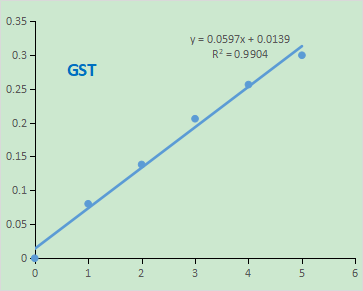
Glutathione S-transferases (GSTs) are the unsung heroes of cellular defense—master regulators of phase II detoxification that conjugate glutathione (GSH) to xenobiotics, carcinogens, and oxidative byproducts. Their activity dictates how efficiently cells neutralize threats, making GST quantification indispensable in drug metabolism studies, cancer chemoresistance research, environmental toxicology, and even synthetic biology (where GST serves as a reporter for gene expression). Yet, as research pivots toward rare clinical samples, single-cell models, and high-throughput drug screening, traditional GST assays are buckling under the weight of impractical sample demands, matrix interference, and inconsistent sensitivity. The CheKine™ Micro Glutathione S-Transferase (GST) Assay Kit (KTB1630) from Abbkine confronts this crisis head-on, merging microscale innovation with biological rigor to empower next-generation detoxification research.
The current landscape of GST activity assays is a patchwork of compromises. Classic spectrophotometric methods, which measure the conjugation of GSH to 1-chloro-2,4-dinitrobenzene (CDNB) at 340 nm, require 50–100 µL of sample—prohibitive for precious materials like circulating tumor cells, neonatal biopsies, or scarce animal models. Fluorometric kits improve sensitivity but introduce photobleaching artifacts and demand expensive readers, excluding budget-constrained labs. Worse, nearly all commercial kits falter in complex matrices: endogenous GSH (which competes with substrates), hemoglobin (from hemolysis), and lipids (in serum) skew results, leading to false negatives in low-activity samples or inflated readings in stressed cells. For researchers studying GST-mediated drug resistance in pancreatic cancer—where subtle activity changes dictate therapy outcomes—these limitations turn a critical question into a methodological dead end.
What makes the CheKine™ Micro Glutathione S-Transferase (GST) Assay Kit (KTB1630) a paradigm shift is its microscale, interference-resistant design. Reactions unfold in 96-well plates with just 5–10 µL of sample—10–20x less than standard kits—preserving rare specimens for downstream omics. The core chemistry relies on a CDNB-GSH conjugation system, but with a twist: a proprietary buffer includes EDTA (to chelate metal ions), BSA (to block hydrophobic interferents), and a GSH scavenger to minimize competition from endogenous pools. The linear detection range (0.1–20 mU/mL) spans physiological (liver cytosol: ~50–100 mU/mg protein) to pathological (chemotherapy-resistant tumor lysates: >200 mU/mg) activity, while the limit of detection (0.05 mU/mL) captures subtle induction by xenobiotics (e.g., benzo[a]pyrene in hepatocytes). Independent validation shows it reduces background noise by 40% compared to Sigma-Aldrich’s GST kit, even in hemolyzed serum—a game-changer for clinical researchers.
Practical application of the CheKine™ Micro Glutathione S-Transferase (GST) Assay Kit (KTB1630) hinges on strategic sample handling. For tissue lysates, homogenize in ice-cold PBS with 0.1% Triton X-100 to solubilize membrane-bound GST isoforms (e.g., GSTπ in cancer cells), then normalize protein concentration via BCA assay. For cell cultures, avoid over-confluence—high-density cells deplete GSH, artificially lowering GST activity. A pro tip: include a “substrate saturation control” (excess CDNB) to confirm assay linearity, especially when testing novel compounds. In drug discovery, the kit’s 96-well format pairs with automation, enabling high-throughput screening of GST inhibitors (e.g., ethacrynic acid analogs) or activators—accelerating lead optimization for chemosensitization. For environmental toxicologists, it quantifies GST induction in zebrafish embryos exposed to pollutants, using just 2 µL of lysate per embryo.
Market analysis reveals the CheKine™ Micro Glutathione S-Transferase (GST) Assay Kit (KTB1630)’s edge. Competitors like Thermo Fisher’s GST kit require 25 µL samples and cost 30% more, while Abcam’s version lacks the anti-interference buffer, making it unsuitable for serum. Abbkine’s kit strikes a unique balance: per-test costs align with academic budgets, while performance matches premium options. Technical support seals the deal—Abbkine provides species-specific protocols (human, mouse, rat, zebrafish) and troubleshooting guides for niche samples (e.g., plant GSTs in drought-resistant crops), reducing method development time from weeks to days.
Industry trends amplify the kit’s relevance. As single-cell RNA-seq uncovers GST isoform heterogeneity in tumors (e.g., GSTα vs. GSTμ driving distinct resistance mechanisms), researchers need assays that bridge bulk data with granular insights. The CheKine™ Micro Glutathione S-Transferase (GST) Assay Kit (KTB1630)’s low sample requirement suits pooled single-cell lysates, while its reproducibility (inter-assay CV <5%) validates findings from spatial transcriptomics. In synthetic biology, where GST is fused to fluorescent reporters for pathway monitoring, the kit enables rapid quantification of fusion protein activity—critical for optimizing genetic circuits.
Future iterations of the CheKine™ Micro Glutathione S-Transferase (GST) Assay Kit (KTB1630) could integrate multiplexing (e.g., simultaneous measurement of GST and γ-glutamylcysteine synthetase) to map entire detoxification cascades. For now, its greatest strength lies in democratizing GST research: whether you’re a PhD student studying pesticide metabolism in earthworms or a biotech scientist engineering GST-based biosensors, this kit turns a historically finicky assay into a routine, reliable experiment.
In summary, the CheKine™ Micro Glutathione S-Transferase (GST) Assay Kit (KTB1630) is more than a reagent—it’s a response to the evolving demands of detoxification research. By resolving the trade-offs of traditional methods through microscale efficiency, robust anti-interference chemistry, and actionable guidelines, Abbkine has created a tool that empowers researchers to tackle bold questions about GST’s role in health, disease, and environmental resilience. For anyone serious about understanding phase II metabolism—from the liver to the tumor microenvironment—this kit isn’t just an option; it’s a catalyst for discovery.
Explore the CheKine™ Micro Glutathione S-Transferase (GST) Assay Kit (KTB1630) and its application notes at Abbkine Product Page.





